
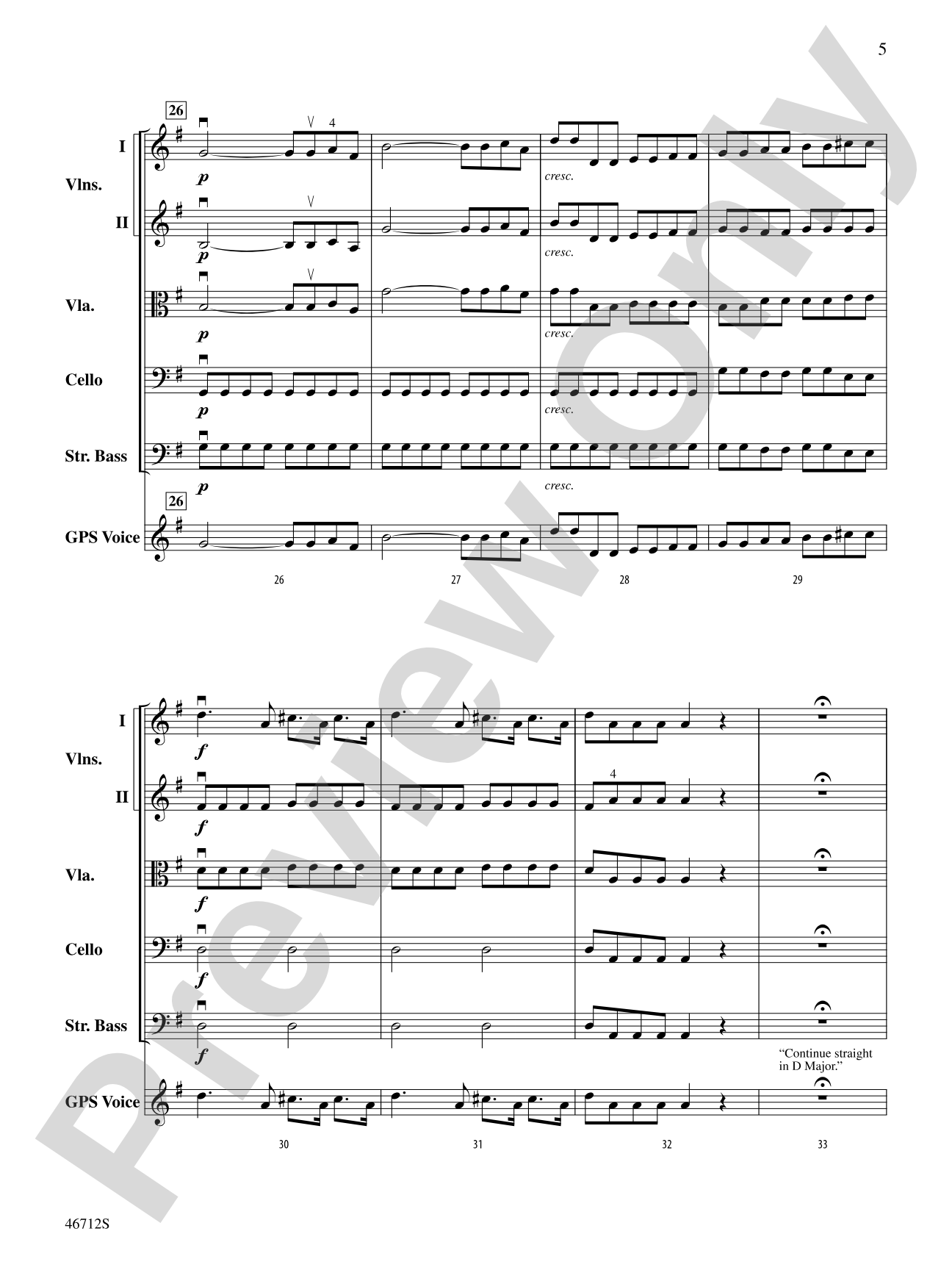
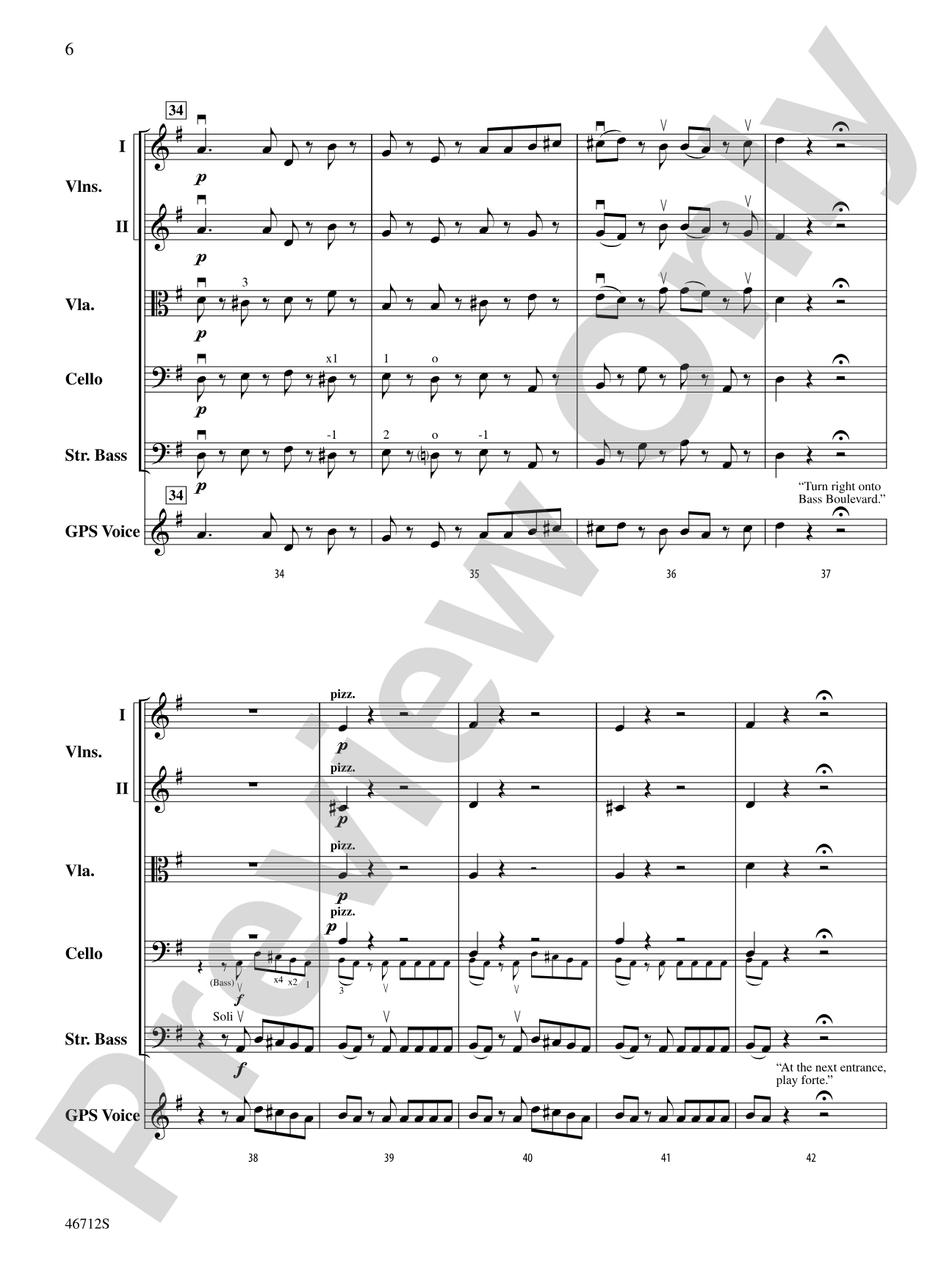
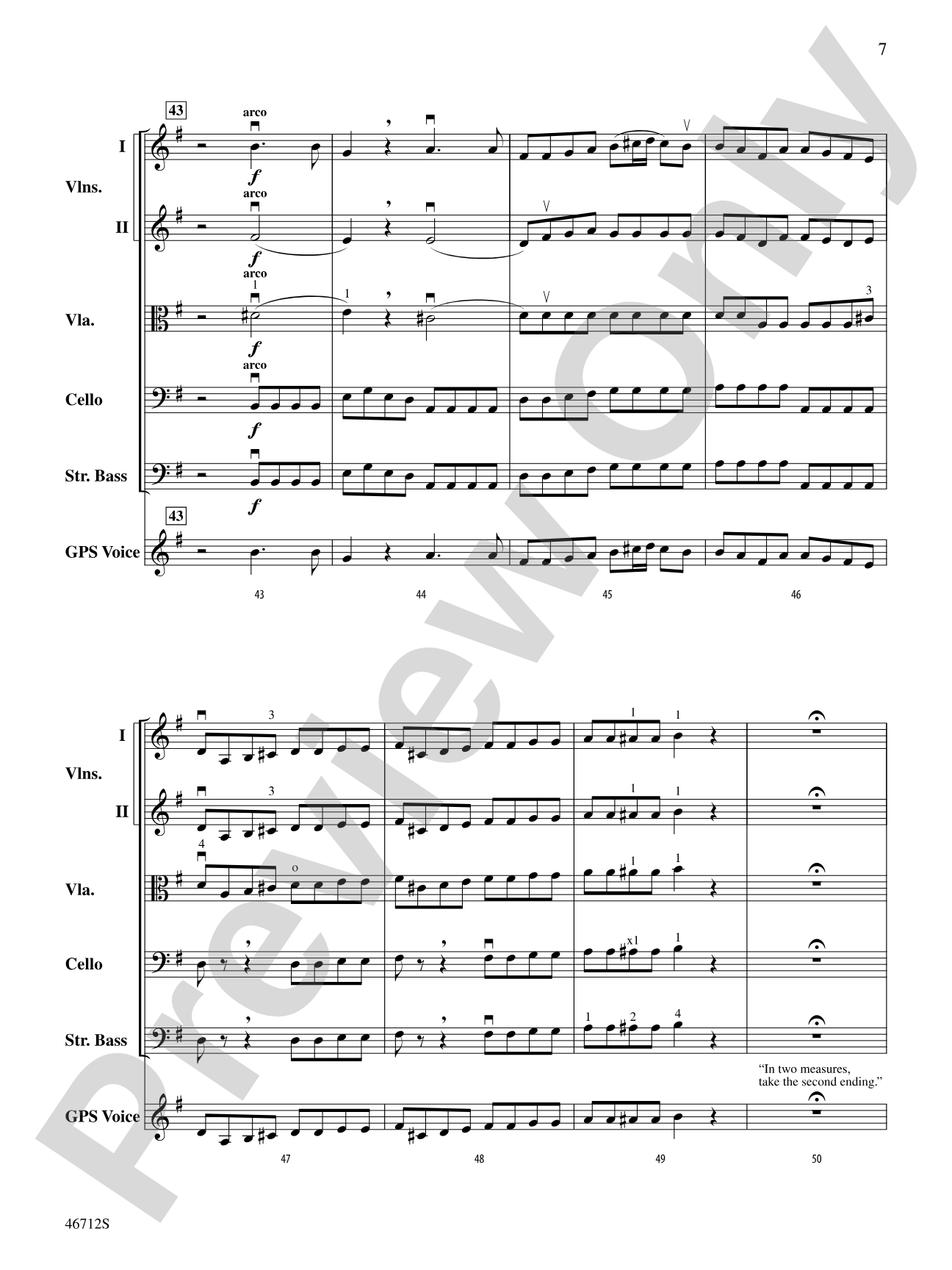
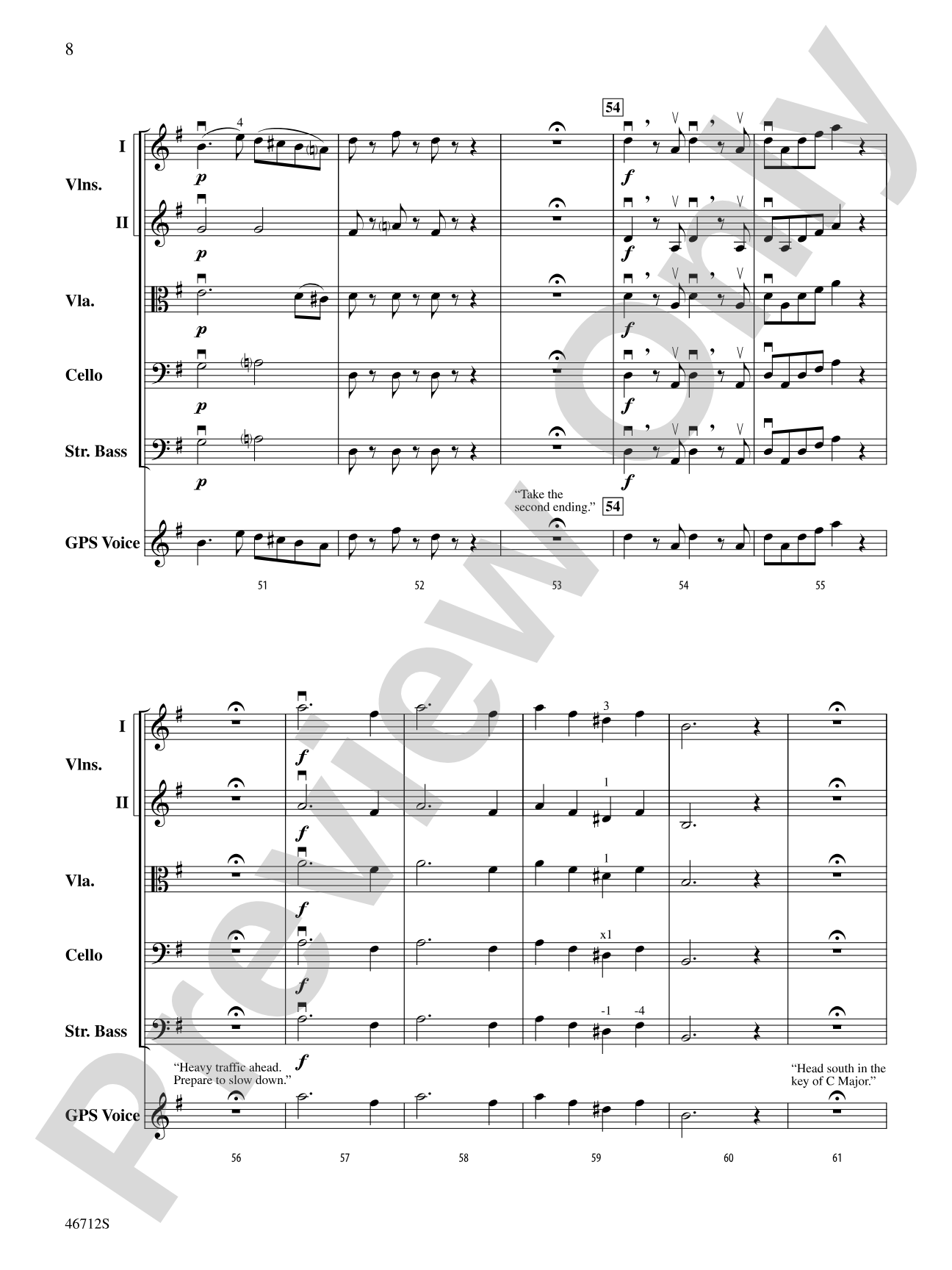
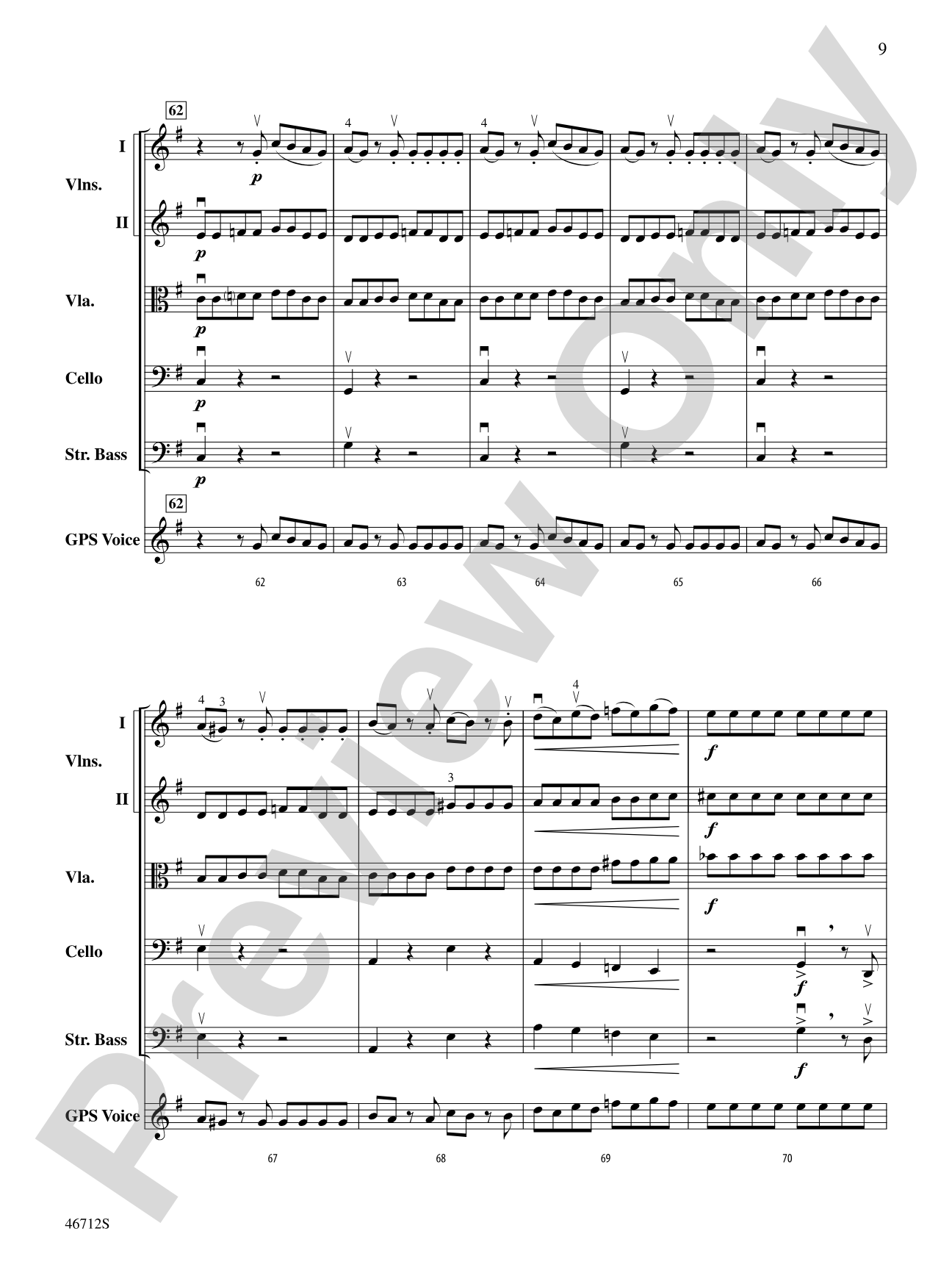
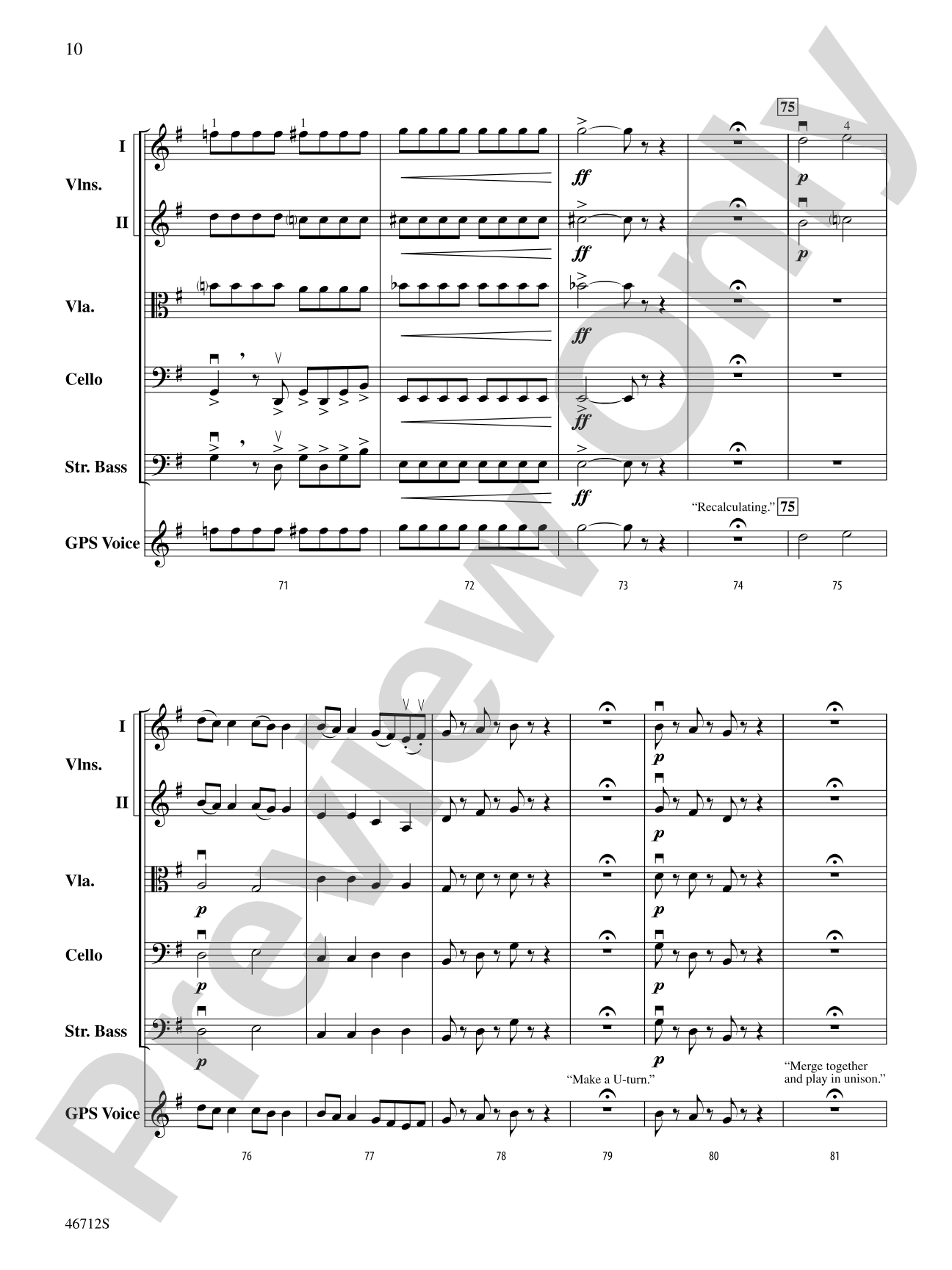
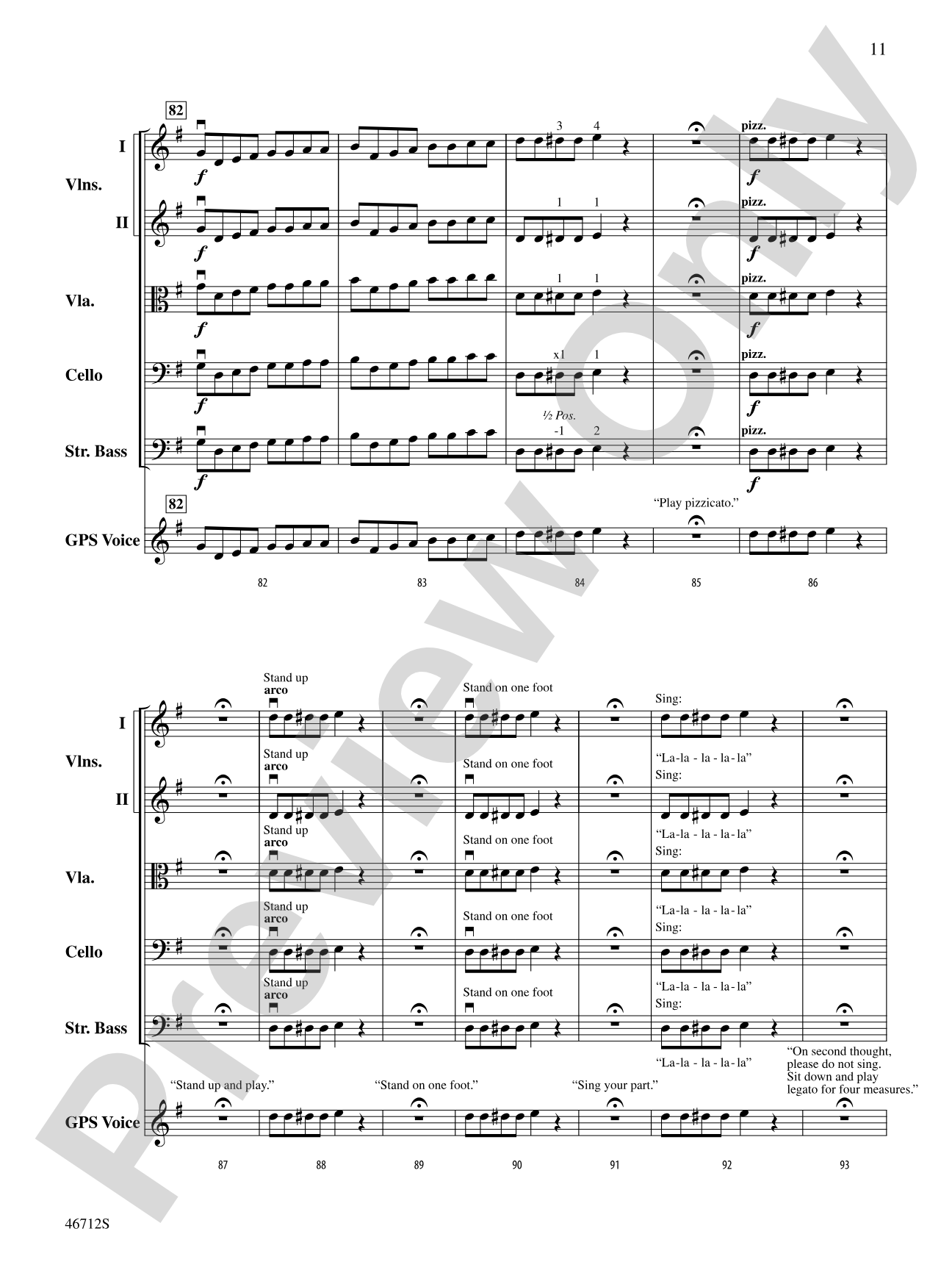
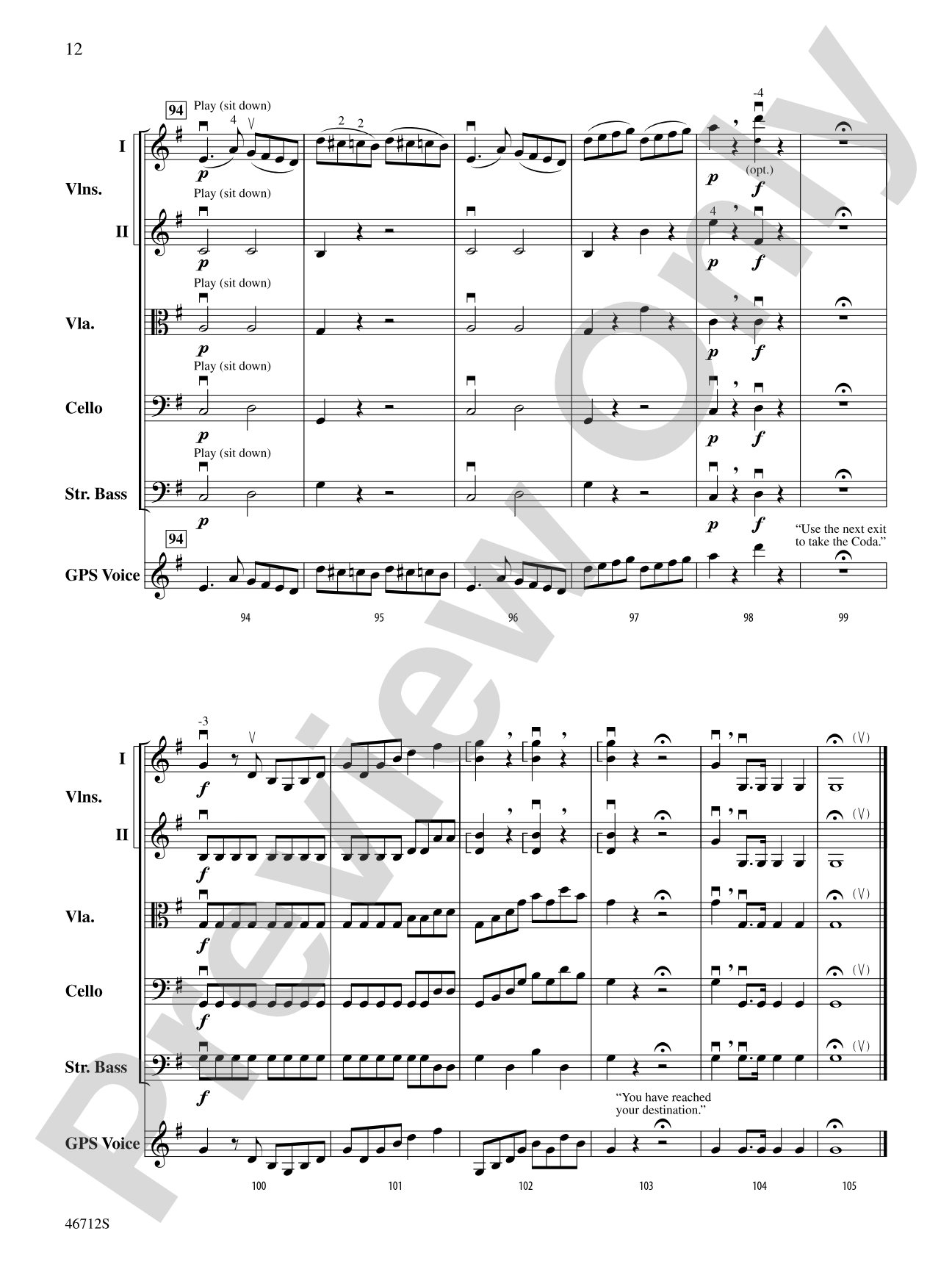

GPS: String Orchestra Conductor Score & Parts
By Wolfgang Amadeus Mozart / arr. Richard Meyer
Grade: 2
Item: 00-PK-0007554

$49.00
Pickup currently not available
Buy Extra Parts (Digital PDF Download)
| Product | Price | Quantity |
|---|---|---|
| GPS: Score | $9.00 | |
| GPS: 1st Violin | $5.99 | |
| GPS: 2nd Violin | $5.99 | |
| GPS: Viola | $5.99 | |
| GPS: Cello | $5.99 | |
| GPS: String Bass | $5.99 | |
| GPS: Narrator | $5.99 |
Parts Added to Cart!
Description
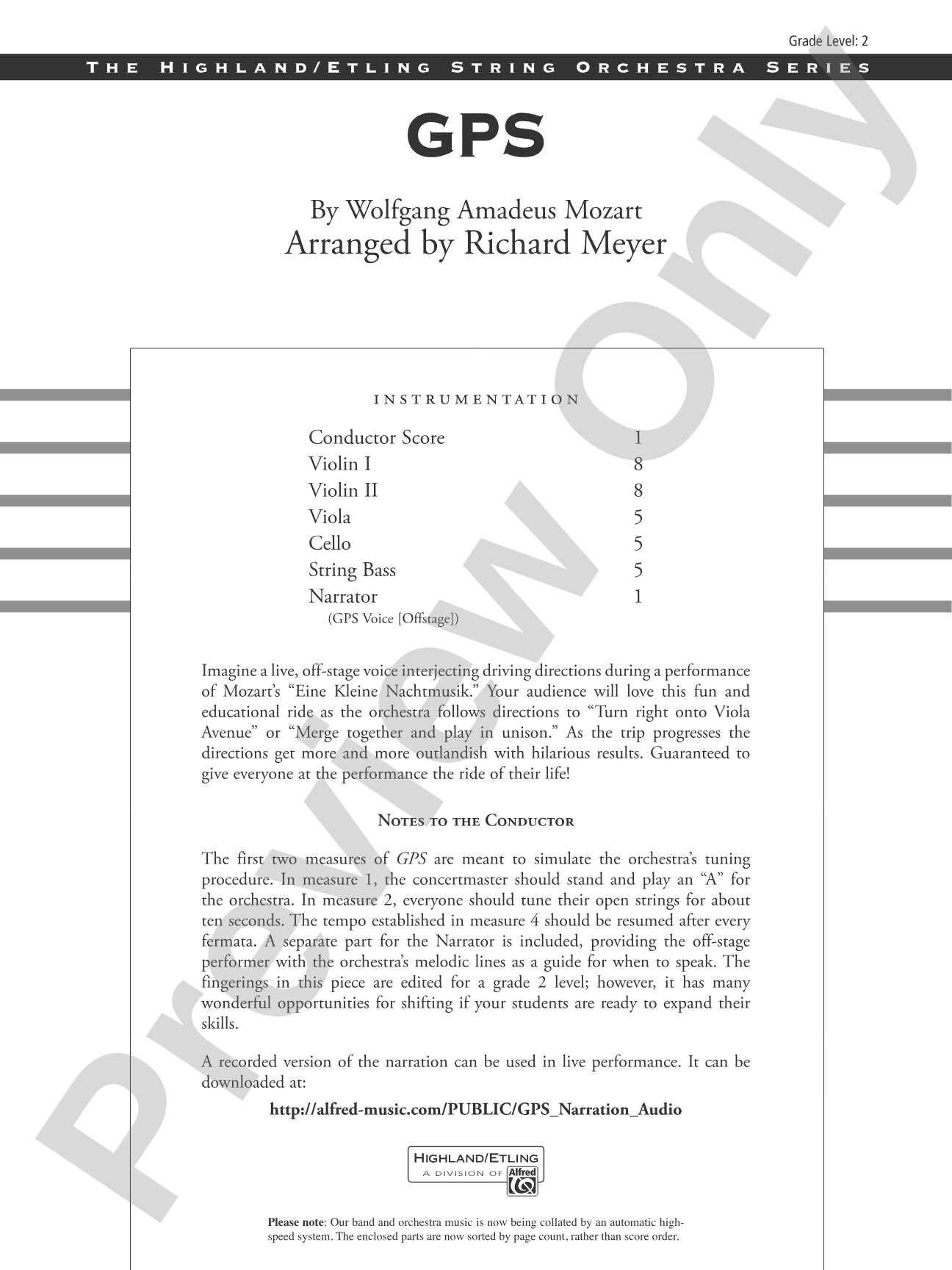
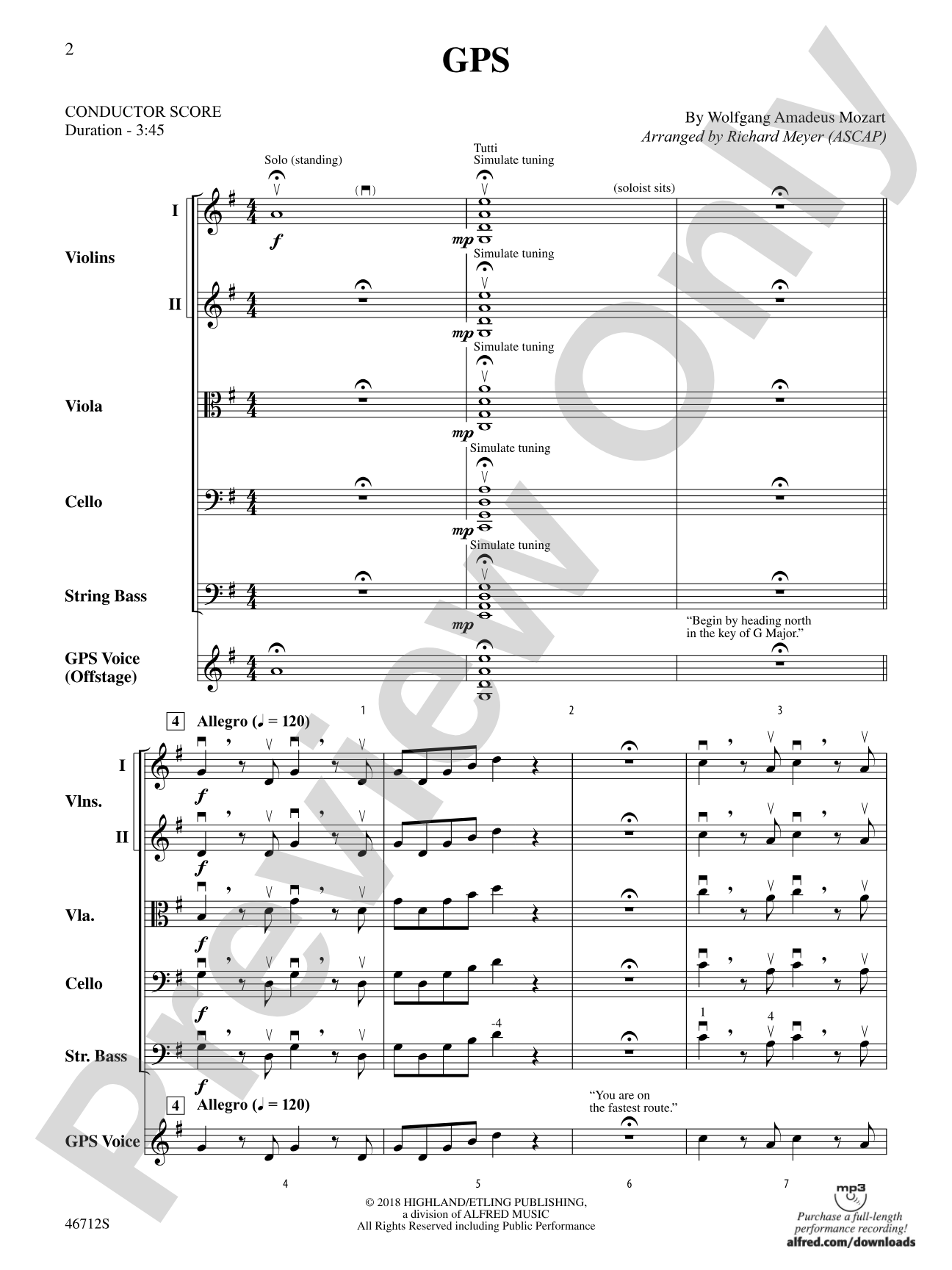
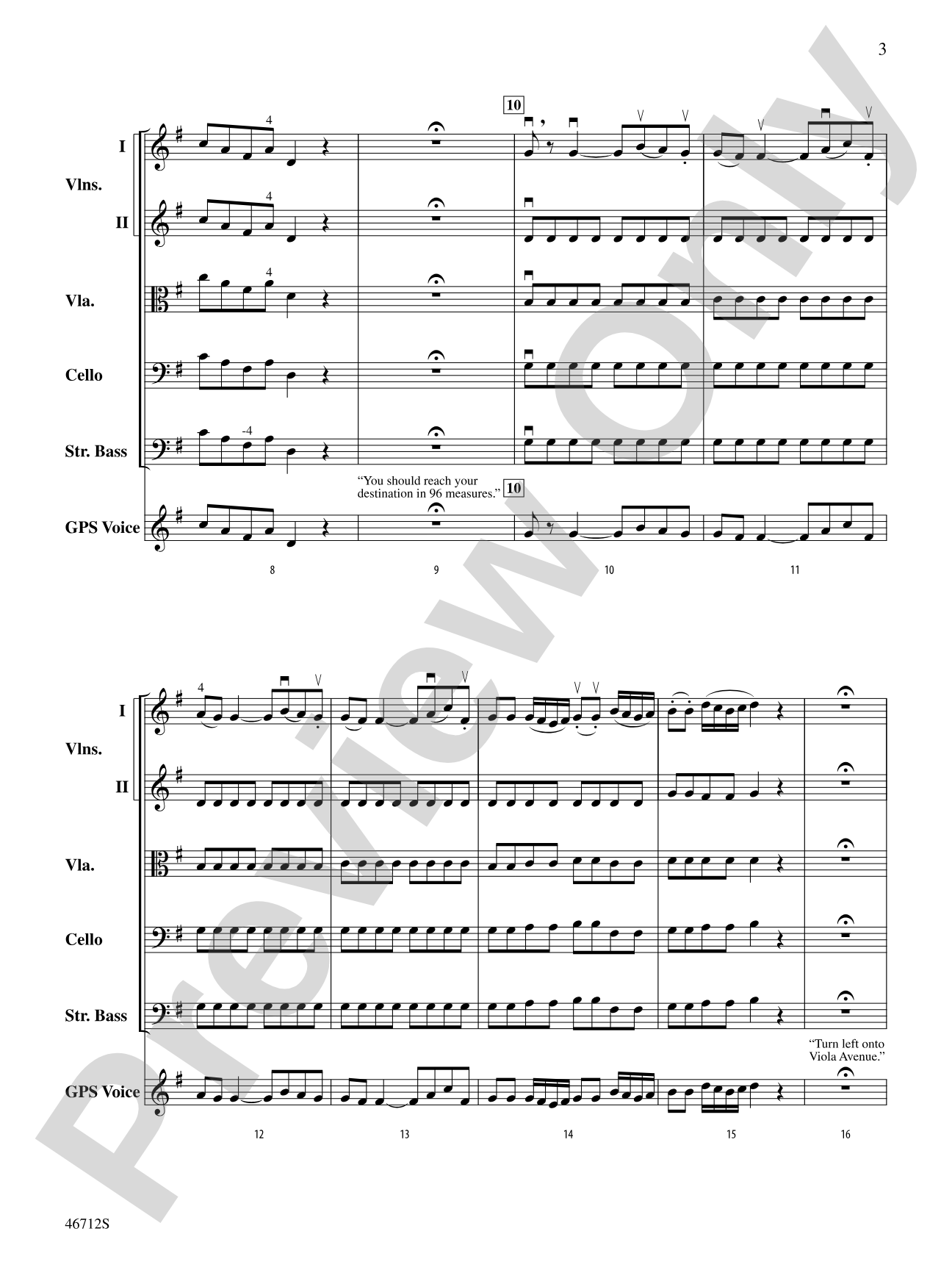
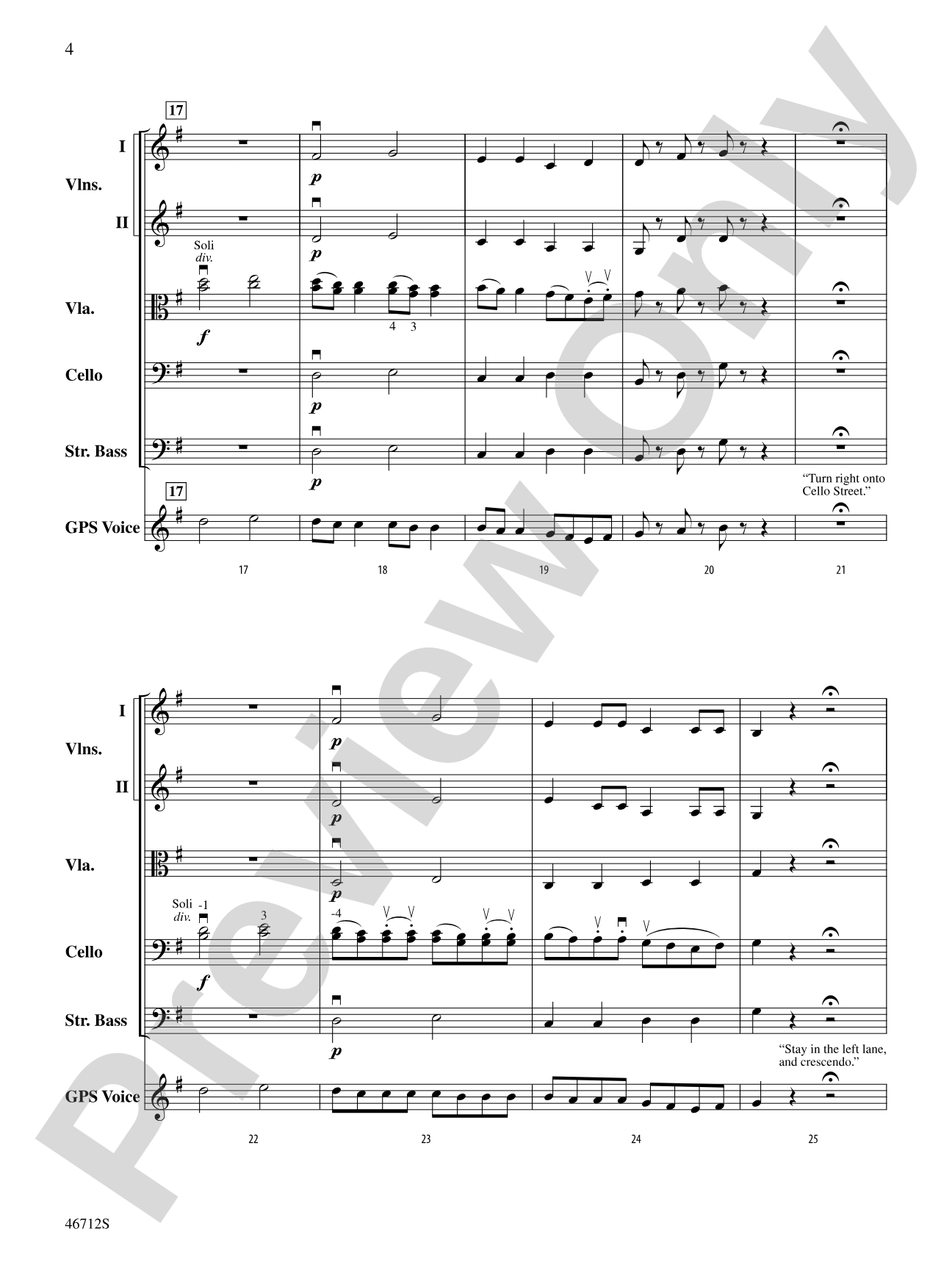
Imagine a live, off-stage voice interjecting driving directions during a performance of Mozart's Eine Kleine Nachtmusik. Your audience will love this fun and educational ride as the orchestra follows directions to "Turn right onto Viola Avenue" or "Merge together and play in unison." As the trip progresses, the directions get more and more outlandish with hilarious results. Richard Meyer's "GPS" is guaranteed to give everyone at the performance the ride of their life! This title is available in MakeMusic Cloud.


Don't just read it, hear it, play along with it, and watch your students grow with it. In MakeMusic Cloud, GPS: String Orchestra Conductor Score & Parts comes alive with professional accompaniment, adjustable tempo, and built-in practice tools that turn solo practice into real progress.
Open in the Player
Jump straight in and assign it today.
Start Your Free Trial
Open this title and explore the full library in minutes.
Sample Audio
1
Audio File
--:--
0:00
0:00
Sample Video
Additional Details
Series:
Highland/Etling String Orchestra
Publisher:
Alfred Music
Page Count:
128
SKU:
00-PK-0007554
More about this title
About the Composer: Wolfgang Amadeus Mozart
Wolfgang Amadeus Mozart (1756-1791) composed Eine Kleine Nachtmusik in 1787, a work that remains one of the most performed pieces in the classical repertoire. Written during his final years in Vienna, this serenade demonstrates his gift for melody, structural clarity, and the kind of accessible charm that has made it a cornerstone of music education for generations.
Why we love this
Richard Meyer's arrangement transforms one of classical music's most recognizable melodies into a full theatrical event without overshadowing the source material. The humor lands because the musical framework remains elegant and familiar; the GPS directions feel like they're happening to Mozart's genius rather than mocking it. Your audience leaves smiling, your students remember the piece forever, and you've given them a genuine reason to engage with a masterwork.
What to expect
The familiar, graceful opening of Eine Kleine Nachtmusik suddenly collides with absurdist comedy as a voice shouts navigation commands from offstage. The orchestra dutifully follows, shifting into unexpected keys, unison passages, and rhythmic detours while the music itself remains unmistakably Mozart. It's sophisticated playfulness: your audience laughs, but they're laughing at clever writing, not cheap gags.
Who it's for
String orchestras at the intermediate level looking for repertoire that entertains audiences without compromising musical integrity. This works equally well for school concerts, community orchestras, and young musician showcases where you want to celebrate both classical tradition and the joy of ensemble playing.
How to get the most out of it
- Keep the conductor's cues sharp and deliberate so the orchestra catches each direction change cleanly; the humor depends on precision, not sloppiness.
- Balance the off-stage voice so it feels like a natural part of the ensemble rather than a recorded announcement drowning out the strings.
- Lean into the musical phrasing during the straight sections of Eine Kleine Nachtmusik; the contrast between classical elegance and comedic interruption is what makes the piece work.
How to use it
Program this as a palate cleanser between more serious works or as a finale that sends the audience out happy. It's particularly effective in a concert that otherwise leans classical or traditional, where the novelty creates a memorable moment without feeling out of place. The piece also works well for family concerts or educational demonstrations where you want to keep non-musician listeners engaged.
Skills your students will build
- Responding to sudden conductor cues and directional changes mid-phrase
- Maintaining ensemble cohesion while executing unison passages and key modulations
- Executing fast rhythmic transitions and articulation changes
- Listening across sections to coordinate ensemble entries