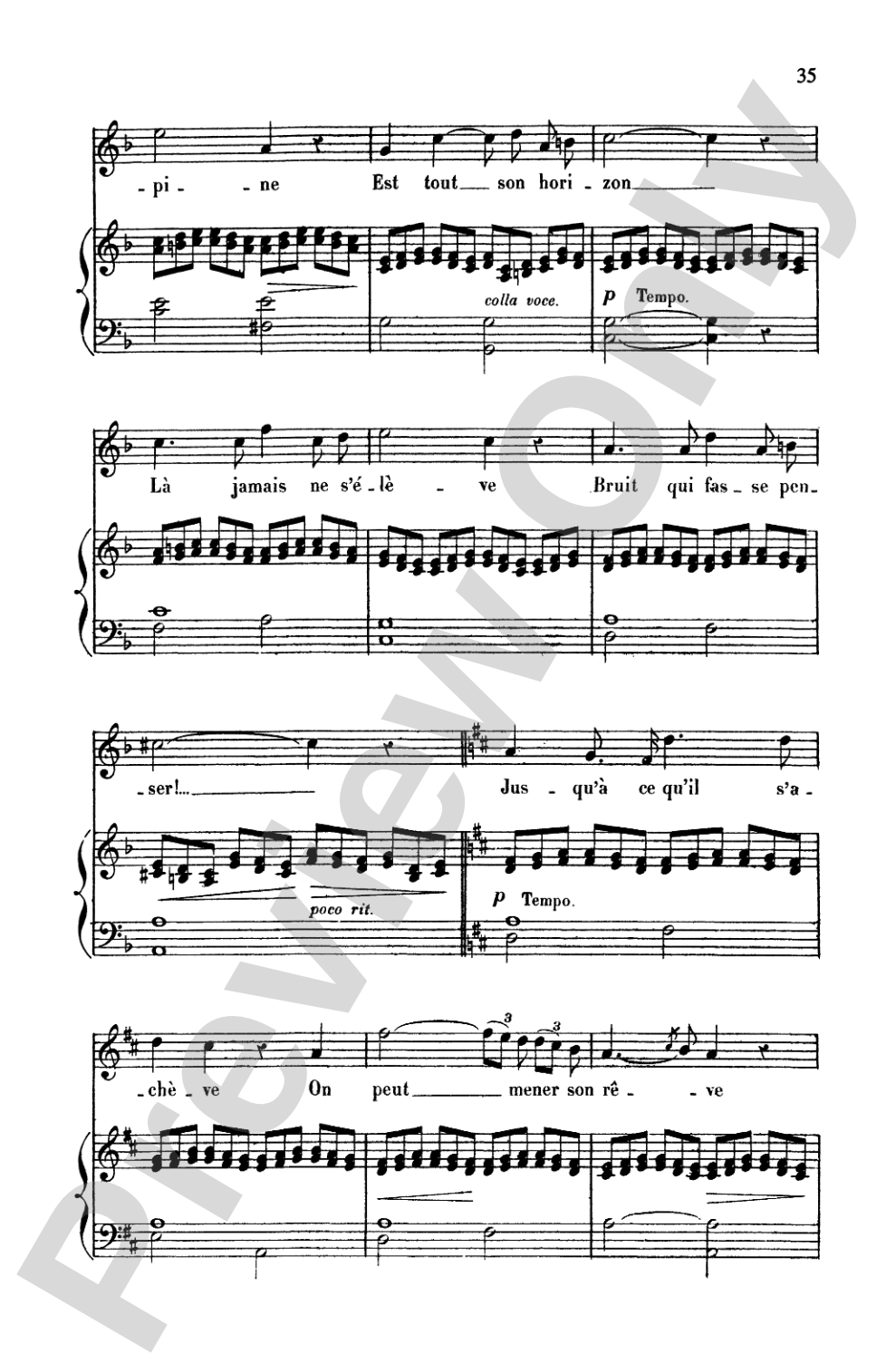
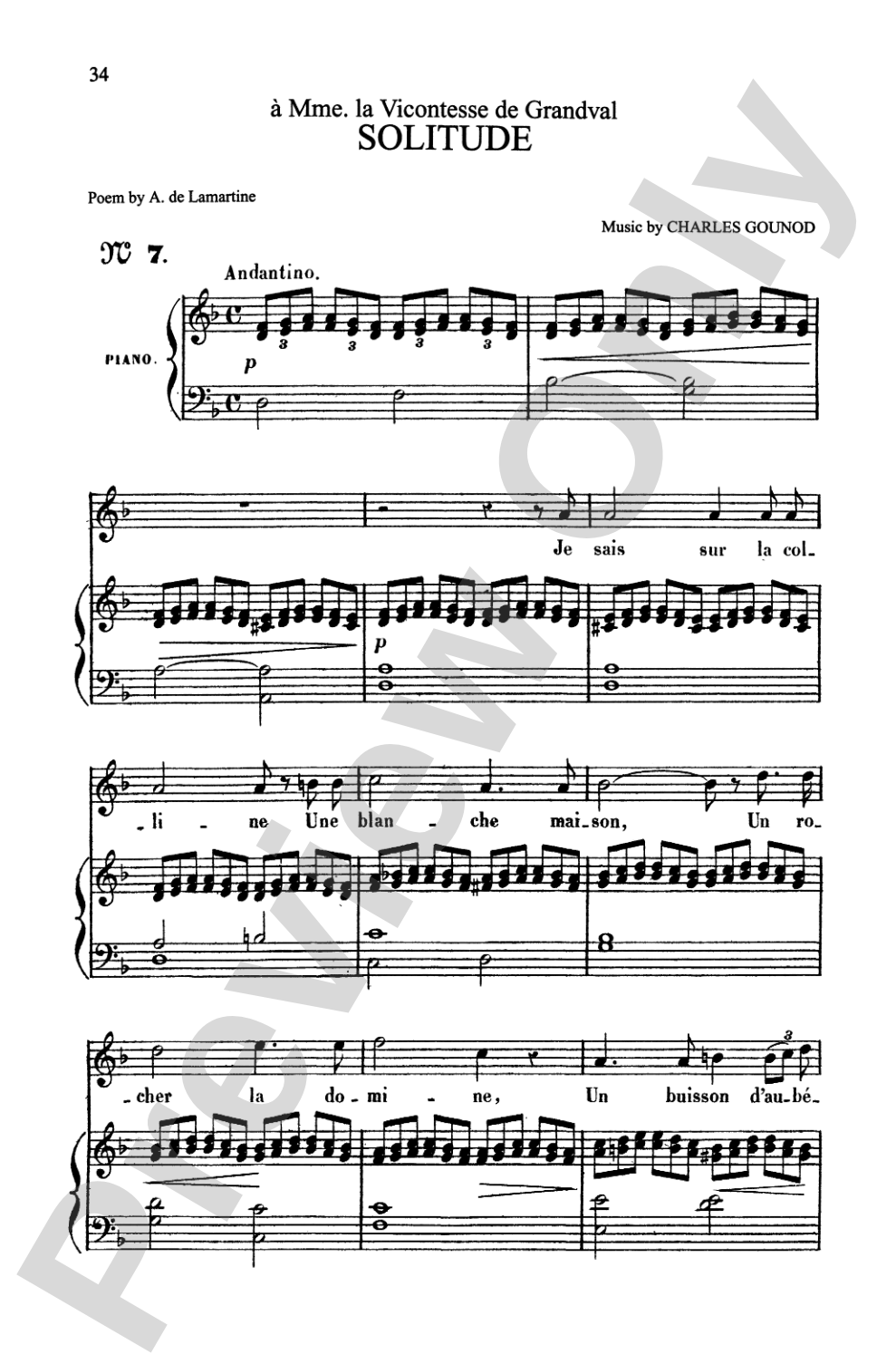
Gounod: Songs, Volume II, High Voice (French) Sheet Music Preview

Gounod: Songs, Volume II, High Voice (French)

By Charles François Gounod

Item: 00-PC-0003085

Digital Download
$0.99
Description
Volume two of this four-volume series again features twenty songs with French text by Charles Gounod. As with the other volumes, we offer this in three voicings for high, medium and low voice, each complete with piano accompaniment.

Don't just read it, hear it, play along with it, and watch your students grow with it. In MakeMusic Cloud, Gounod: Songs, Volume II, High Voice (French) comes alive with professional accompaniment, adjustable tempo, and built-in practice tools that turn solo practice into real progress.

Sample Audio
No sample audio found.
Sample Video
Additional Details
Series: Kalmus Edition
Publisher: Alfred Music
Page Count: 128
SKU: 00-PC-0003085

More about this title

About the Composer: Charles François Gounod

Charles François Gounod (1818-1893) was a French composer whose gift for melody made him one of the most performed composers of the nineteenth century. Though best known for his operas, particularly Faust, Gounod devoted considerable energy to the art song, creating a substantial catalog of mélodie that showcases his gift for wedding elegant piano writing to expressive vocal lines.

Why we love this

This volume collects twenty of Gounod's finest mélodies, each one a masterclass in how to shape a lyrical phrase and sustain a singer's engagement across French poetry. The writing sits comfortably for high voices while the piano accompaniments are musically substantial; they're not mere harmonic scaffolding but integral parts of the musical narrative. Programming these songs builds a singer's command of French diction and Romantic expression without the technical demands of operatic arias.

What to expect

These songs breathe with the elegance and emotional restraint characteristic of French Romantic taste. The melodies unfold with lyrical generosity, moving effortlessly across phrases that feel both inevitable and subtly shaped. The piano writing often captures intimate atmospheric detail—a rustling, a whispered thought, the play of light—that transforms each song into a small but complete dramatic moment.

Who it's for

This collection serves high voice singers who have developed basic technical control and are ready to engage with French Romantic art song repertoire. It's ideal for advanced high school singers, undergraduate voice majors, and serious vocal students preparing recital programs or developing performance portfolios.

How to get the most out of it

  • Attend carefully to the French vowels, particularly the distinction between closed and open vowel sounds in the nasal consonants (on, an, in, un). The precision of your vowel shapes will clarify the melodic line and honor Gounod's harmonic language.
  • Collaborate closely with your pianist on the relationship between voice and accompaniment. Many of these songs feature evocative piano introductions and interludes that establish the emotional landscape; resist the urge to oversing against them.
  • Shape phrases with the text's natural accent and sense, not arbitrary breath points. Gounod's melodies follow the contours of the French language; respecting those contours will make the music speak more clearly.
  • Vary your dynamic palette within individual songs rather than settling into a single volume. These mélodies often move through distinct emotional territories, and your dynamic choices should reflect that journey.

How to use it

Include one or two of these mélodies in a vocal recital to establish an art song set alongside German Lieder or Italian mélodies, or program a group of three to four from this volume to showcase French vocal heritage and your singer's linguistic flexibility. These pieces also work well in salon-style concert formats or as part of a French cultural celebration program.

Skills your students will build

  • French vowel formation and diction clarity
  • Reading and interpreting Romantic-era vocal music
  • Shaping lyrical phrases across longer formal structures
  • Collaborative listening with piano accompaniment
  • Expressive use of vibrato and dynamic control

You May Also Like