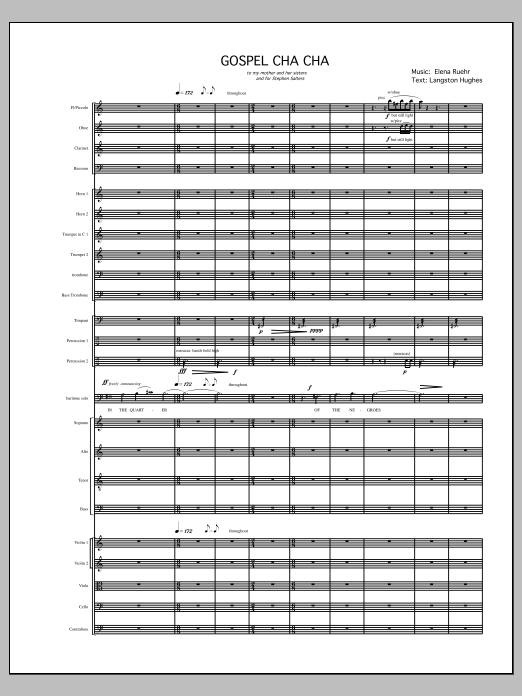
Elena Ruehr is a composer and arranger whose work bridges contemporary classical music with vernacular American traditions. Her arrangements honor the textual and cultural specificity of her source material while creating orchestral soundscapes that serve the poetry rather than overshadow it.
Why we love this
Ruehr's setting transforms Hughes' powerful poem into a theatrical work that demands genuine engagement with text and meaning. The combination of baritone soloist, chorus, and string orchestra creates an ensemble experience where every voice matters, making this equally rewarding for ambitious community orchestras and university programs seeking repertoire with cultural weight.
What to expect
The cha cha rhythm infuses the work with an infectious, propulsive energy that contrasts beautifully with the lyrical depth of Hughes' words. The sound is contemporary yet grounded, swinging without sacrificing the serious emotional core of the poetry.
Who it's for
String orchestras at the intermediate to advanced level, particularly those with access to a strong baritone soloist and a prepared chorus. This works well for programs seeking repertoire that integrates literature, cultural history, and orchestral craft into a single meaningful performance.
How to get the most out of it
Establish the rhythmic foundation of the cha cha early in rehearsals so the ensemble can internalize the characteristic pulse without overthinking it.
Balance the baritone soloist carefully against the chorus and orchestra; test levels throughout the piece since the texture shifts significantly across the 18 minutes.
Pay close attention to the text setting with the chorus. Clarity of diction serves the poetry and keeps the performance from becoming purely decorative.
Use the recorded version from the Avie Records release as a reference for tempi and interpretive choices, especially during the rhythmic passages.
How to use it
Program this as a centerpiece for a concert exploring American musical traditions or cultural narratives in classical music. At 18 minutes, it anchors a program and pairs naturally with chamber works or other vocal repertoire that shares thematic concerns. Consider it for spring concert programming when you have rehearsal time to build the interpretive nuance it deserves.
Skills your students will build
Coordinating with vocal soloists and chorus while maintaining orchestral balance
Rhythmic independence within a syncopated, dance-based framework
Responding to text and poetry as interpretive guides
Managing longer formal structures with multiple ensemble combinations
You May Also Like
Scan to Complete Your Purchase
Use your phone's camera to scan the code below
You'll log in on your phone and the order will be added to your account