
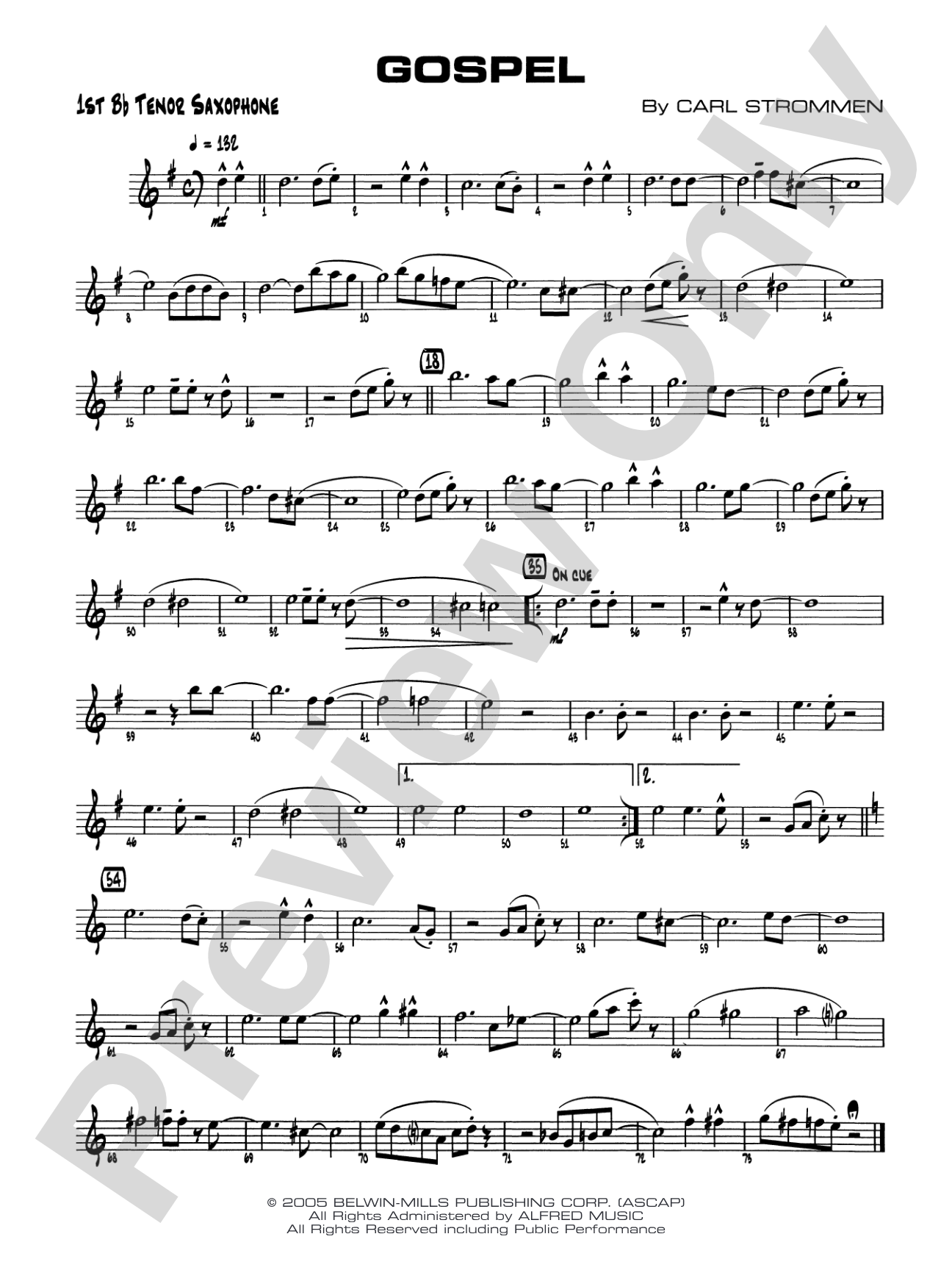

Gospel: B-flat Tenor Saxophone
By Carl Strommen
Grade: 1 (Easy)
Item: 00-PC-0017801_TX1
$3.00
Pickup currently not available
Description
Composer/arranger Carl Strommen delivers this gospel style swing chart for the easy red series. Carl starts things off with an a cappella section for the winds, then brings in the rhythm section on the second chorus to boost the energy. Written solos for 1st alto saxophone and 1st trumpet and an uplifting modulation bring it home. This great chart has easy ranges and sounds full with reduced instrumentation. This title is available in MakeMusic Cloud. (2:31)


Don't just read it, hear it, play along with it, and watch your students grow with it. In MakeMusic Cloud, Gospel: B-flat Tenor Saxophone comes alive with professional accompaniment, adjustable tempo, and built-in practice tools that turn solo practice into real progress.
Open in the Player
Jump straight in and assign it today.
Start Your Free Trial
Open this title and explore the full library in minutes.
Sample Audio
1
Audio File
--:--
0:00
0:00
Sample Video
No sample videos found.
Additional Details
Series:
First Year Charts for Jazz Ensemble
Publisher:
Alfred Music
Page Count:
42
SKU:
00-PC-0017801_TX1
More about this title
About the Composer: Carl Strommen

Carl Strommen stands among the most frequently performed composer/arrangers across band, orchestra, jazz ensemble, and choral repertoires in the United States and beyond. His music appears regularly in concert halls, on television, and in film scores, and he maintains an active schedule as both a clinician and commissioned composer. His consistent recognition includes the annual ASCAP Standard Writers Award, reflecting the breadth and quality of his catalog.
Strommen holds a degree from the City College of New York and has served on the faculty at C.W. Post Campus of Long Island University, where he teaches orchestration and composition. He divides his time between Long Island and Colorado, where he spends extended periods with family in Denver and Boulder.
Why we love this
Strommen writes for real ensembles with real constraints, and this chart proves it. An a cappella wind chorale that blooms into full ensemble energy, written solos that students can actually handle, and a modulation that lands with genuine lift rather than gimmickry, all within Grade 1 ranges. You get a piece that sounds sophisticated and complete without asking your section to do anything impossible.
What to expect
The piece breathes with spiritual warmth before the groove takes hold. Those opening measures without rhythm section create space and vulnerability; when the drums and bass lock in on the second chorus, the energy shifts into an infectious swing. The mood stays uplifting throughout, with a sense of celebration rather than melancholy.
Who it's for
Jazz ensemble directors working with beginning to intermediate players who want a genuine gospel-swing chart without excessive technical demands. This piece works equally well for first-year jazz programs looking to establish style and feel, or for established ensembles programming a concert with gospel flavor.
How to get the most out of it
- Shape the a cappella opening with phrase breathing and dynamic contour; this section sets the emotional foundation before the rhythm section enters to amplify the groove.
- Lock the written solos (1st alto and 1st trumpet) with the rhythm section's pocket during rehearsal, then let them breathe slightly ahead of the beat to capture the jazz phrasing that makes this chart swing.
- Approach the modulation as a moment of arrival, not a surprise. Build momentum into it through the preceding chorus so the key change feels inevitable and celebratory.
- Balance the full ensemble carefully after the rhythm section enters. The chart is designed to sound full with reduced instrumentation, so avoid over-blowing; let the arrangement do the work.
How to use it
Program this as part of a jazz concert set where you want to shift the emotional temperature toward joy and accessibility. It also serves as an excellent festival entry for groups competing at the Grade 1 level, since it demonstrates both stylistic maturity and reasonable execution standards. The piece works well mid-program to bridge technical showcase material and ballads.
Skills your students will build
- Gospel and swing phrasing and rhythmic feel
- A cappella ensemble blend and intonation without accompaniment
- Written jazz solo interpretation and improvisation foundation
- Modulation navigation and ensemble cohesion through key changes
- Rhythm section pocket awareness and time feel