
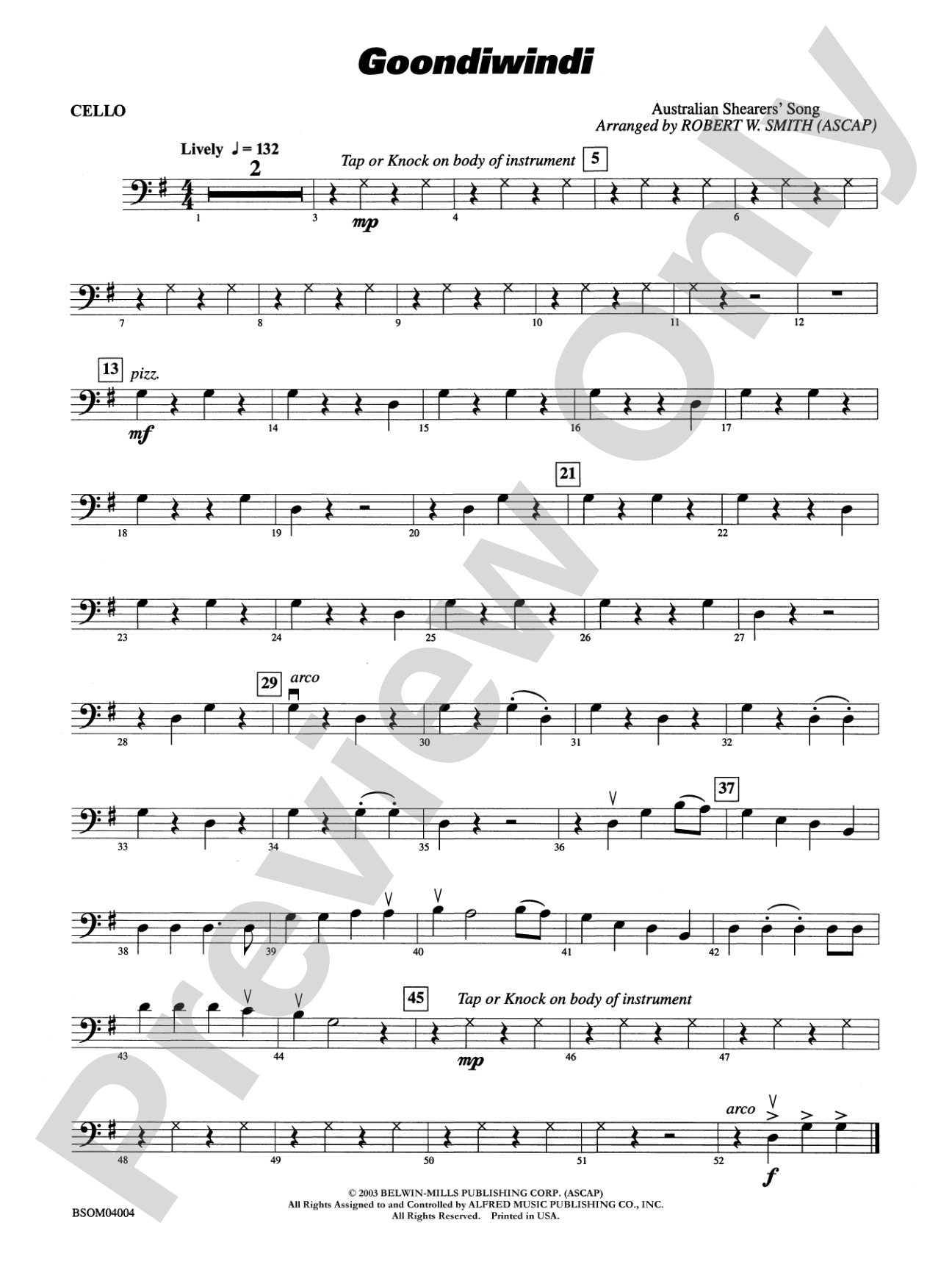

Goondiwindi: Cello
Australian Shearers' Song / arr. Robert W. Smith
Grade: 1
Item: 00-PC-0014694_VC1
$5.99
Pickup currently not available
Description
The distinctive title matches the unique nature of this delightful Australian folk song which is traditionally sung during shearing time. The song features melodic material that moves across all the instruments in the string family. And, charismatically adding the unique sound of tapping on the instruments, you can expand the variety of sounds and reinforce independent techniques. Multicultural and dynamic, this is a wonderful addition to the literature targeted for students in the middle phase of Orchestra Expressions™ Book Two. (1:33) This title is available in MakeMusic Cloud.


Don't just read it, hear it, play along with it, and watch your students grow with it. In MakeMusic Cloud, Goondiwindi: Cello comes alive with professional accompaniment, adjustable tempo, and built-in practice tools that turn solo practice into real progress.
Open in the Player
Jump straight in and assign it today.
Start Your Free Trial
Open this title and explore the full library in minutes.
Sample Audio
1
Audio File
--:--
0:00
0:00
Sample Video
No sample videos found.
Additional Details
Series:
Orchestra Expressions
Publisher:
Alfred Music
Page Count:
64
SKU:
00-PC-0014694_VC1
More about this title
About the Composer: Robert W. Smith

Robert W. Smith has established himself as a major voice in American orchestral and concert band composition, with more than 400 works published primarily through Alfred Music. He holds degrees from Troy State University and the University of Miami, and his original compositions have been performed by ensembles across North America, Europe, Australia, and Asia. His symphonic works, including The Divine Comedy and The Odyssey, along with pieces for developing ensembles like The Tempest, have become central to the standard repertoire.
Beyond the concert hall, Smith's music has reached audiences through television broadcasts, Olympic ceremonies, and major public events ranging from the Macy's Thanksgiving Day Parade to opening day at Dodger Stadium. As a conductor and clinician, he has worked extensively with musicians in the United States, Canada, Japan, Australia, and Europe, bringing firsthand knowledge of what works in rehearsal and performance.
Why we love this
Smith captures the spirit of an Australian folk tradition while creating a piece that teaches genuine orchestral independence. The tapping effect adds an unexpected sonic dimension that students find genuinely engaging, and the melodic material weaving through the string family keeps every player invested across the entire arrangement.
What to expect
Bright and unpretentious, with the warmth of a working song from the Australian outback. The tapping creates a percussive texture that feels almost conversational, as if the strings are having a friendly dialogue with themselves while sharing a well-known melody.
Who it's for
Young string orchestras working at the intermediate level, particularly those ready to explore techniques beyond standard bowing and to engage with music from diverse cultural traditions. This piece fits squarely into Orchestra Expressions Book Two, making it ideal for ensembles that have mastered basic ensemble fundamentals.
How to get the most out of it
- Establish the tapping technique in separate rehearsals before integrating it with the melodic material; decide whether you'll use actual mallets, fingernails, or wooden spoons based on your ensemble's comfort and your acoustic goals.
- Balance the melody as it passes between sections by cueing clearly and reminding players that their moment might be brief but vital to the storytelling.
- Let the piece breathe at phrase endings; resist the urge to rush through the folk melody, which gains character from its natural rhythmic phrasing.
How to use it
Program this as a lighter moment in a concert that might include more demanding contemporary or classical works; it works equally well as a festival piece that showcases your ensemble's musical personality and willingness to embrace cultural repertoire. The modest 1:33 duration makes it an excellent pairing with longer works or a charming standalone selection for young audience concerts.
Skills your students will build
- Extended playing techniques (pizzicato, tapping, and sustained bowing in new contexts)
- Listening across the section as melodic material passes between instrument groups
- Rhythmic independence while maintaining ensemble cohesion
- Cultural awareness through Australian folk music traditions