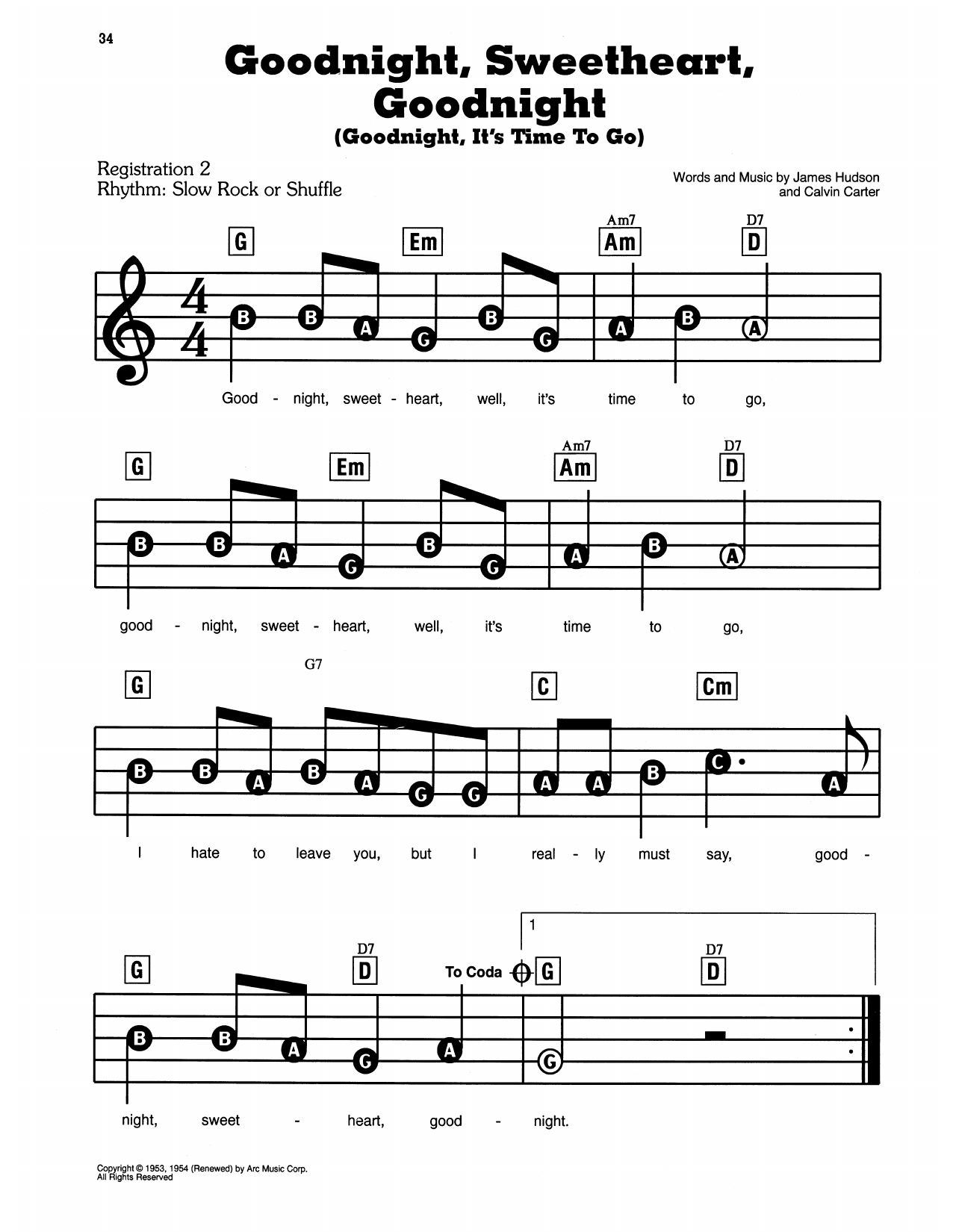
Goodnight, Sweetheart, Goodnight (Goodnight, It's Time To Go) Sheet Music Preview

Goodnight, Sweetheart, Goodnight (Goodnight, It's Time To Go): E-Z Play Today

As performed by Chuck Berry / As performed by McGuire Sisters / As performed by Tokens

Item: 35-DS01865728

Digital Download
$4.99
Description

Goodnight, Sweetheart, Goodnight (Goodnight, It's Time To Go): E-Z Play Today isn't in MakeMusic Cloud just yet...but it could be. Let us know you'd like to see it, and you'll help shape what comes next. In the meantime, start a free trial and dive into thousands of interactive titles your students can play along with today.

Sample Audio
No sample audio found.
Sample Video
Additional Details
Publisher: Hal Leonard
Page Count: 2
SKU: 35-DS01865728

More about this title

About the Artist: Chuck Berry

Chuck Berry stands as one of rock and roll's foundational figures, a guitarist and songwriter whose influence shaped popular music across generations. His contributions to the electric guitar vocabulary and his gift for crafting infectious, memorable melodies established templates that countless artists would follow. Though Berry is often associated with harder-edged rock material, his work spans a broader emotional range, including the gentler, more introspective territory of songs like this one.

Why we love this

This tune sits comfortably in the sweet spot between familiarity and freshness. Students recognize it immediately, which builds confidence and engagement, while the straightforward piano arrangement keeps the focus on clean voicings and expressive control rather than technical gymnastics. It's an ideal choice for reinforcing jazz chord vocabulary in a pop context.

What to expect

Warm, nostalgic, and comforting. The melody unfolds like a gentle conversation, with harmonies that support rather than embellish. There's an unhurried quality that invites listeners into a moment of quiet connection.

Who it's for

Pianists working toward interpretive independence and intermediate students building a pop standards repertoire. It serves equally well for ensemble pianists accompanying singers or for solo recital programs aimed at younger audiences.

How to get the most out of it

  • Let the left hand breathe. These chord changes don't require busy accompaniment; subtle rhythmic variation between measures keeps the arrangement from feeling static.
  • Shape each phrase toward its peak rather than treating the melody as a series of equal notes. The sentiment hinges on emotional contour.
  • Lean into the chromatic movement when it appears. A light touch on passing tones preserves the song's intimate character.
  • Consider tempo flexibility in the final phrase. A gentle ritardando honors the finality of a lullaby without feeling heavy-handed.

How to use it

Pair this with other standards from the same era to trace how popular song evolved across decades. It works beautifully in a concert celebrating the legacy of early rock and roll figures, particularly when programmed alongside pieces that show different sides of those artists' catalogs.

Skills your students will build

  • Recognizing and playing jazz chord extensions (sevenths, ninths) in a pop context
  • Shaping melodic lines with intentional phrasing rather than relying on notation
  • Accompanying a vocalist with supportive rather than competing textures
  • Interpreting lead sheet notation and making orchestration choices

You May Also Like