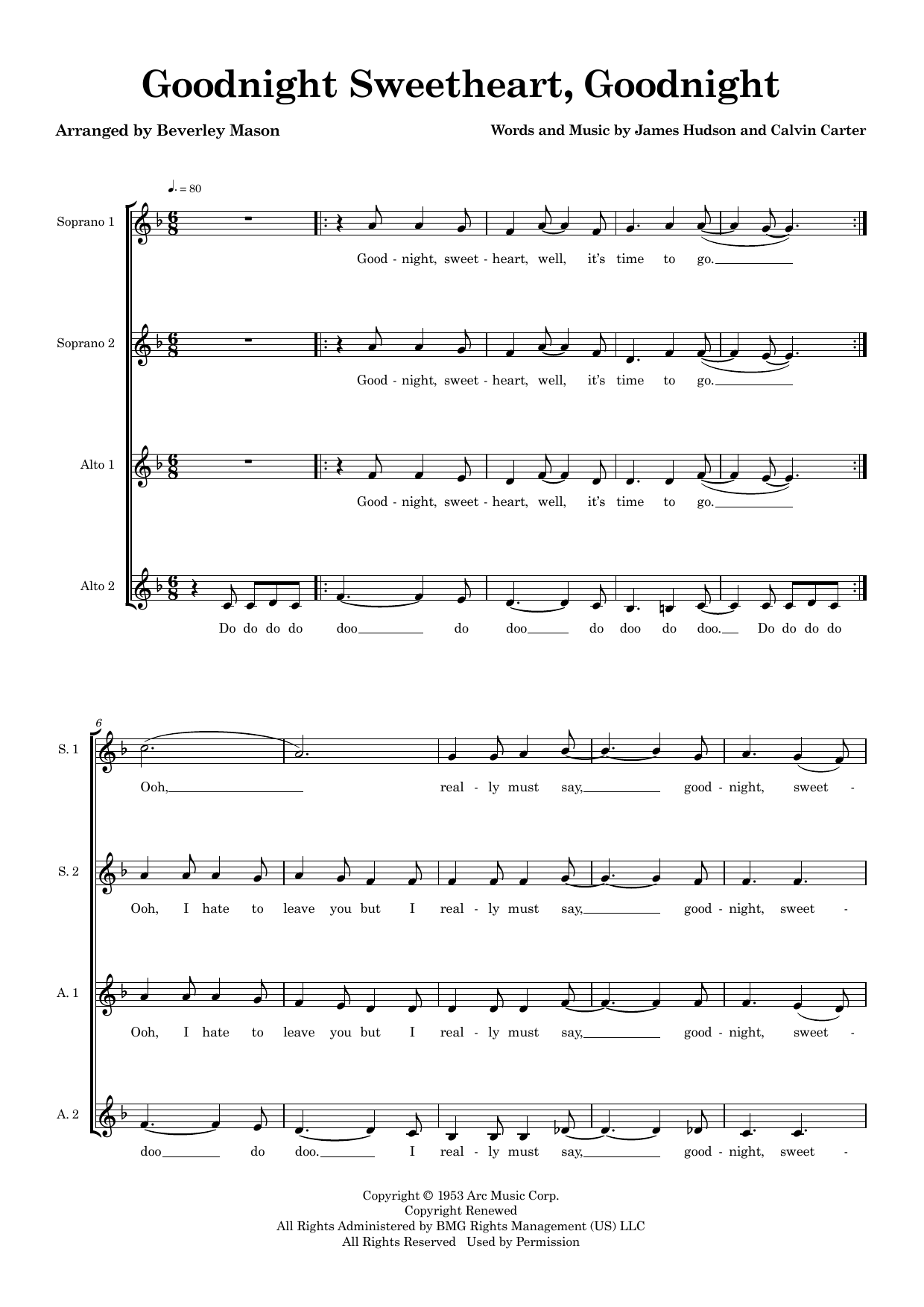
The Spaniels were a Chicago-based R&B group who recorded "Goodnight Sweetheart, Goodnight" in 1954, bringing the doo-wop sound into the mainstream with their smooth harmonies and infectious vocal interplay. Their version became a defining recording of the early rock and roll era, influencing countless vocal groups and establishing the template for close-harmony arranging that choral directors still draw from today.
Why we love this
Beverley Mason's arrangement captures the warmth and accessibility that made the original recording so enduring while writing specifically for the choral context. The piece gives singers the joy of part-singing without sacrificing the song's inherent charm, making it equally at home in a pop concert or as a palette cleanser in a more traditional program.
What to expect
Warm, intimate, and gently swinging. There's a nostalgic quality to the harmonic language that feels both retro and timeless, with enough rhythmic lift to keep the piece from ever feeling stodgy. The melody sits naturally in the voice, inviting singers to add personality and soul to the storytelling.
Who it's for
This arrangement works well for developing choirs ready to explore pop and R&B repertoire with more sophisticated harmonic texture. It's especially useful for singers who thrive on accessibility and want to understand how classic doo-wop sensibilities translate to the choral stage.
How to get the most out of it
Emphasize the call-and-response sections between voice parts; they're the engine that drives the song's energy forward, so balance them carefully rather than blending everything uniformly.
Keep the tempo conversational and unhurried, letting the lyrics breathe naturally as if the singers are genuinely saying goodnight to someone they care about.
Bring out the rhythmic precision in the background parts without letting them overshadow the melody; the accompaniment should feel supportive, not intrusive.
How to use it
Pair this with other mid-century pop standards to create a short nostalgia set, or use it as a concert closer when you want to send the audience home smiling. The three-page length and straightforward part-writing also make it ideal for a spring or fall pop concert that wants to include both new material and audience favorites.
Skills your students will build
Doo-wop harmonic vocabulary and voicing conventions
Call-and-response phrasing between sections
Maintaining rhythmic precision in background parts while supporting a melodic line
Balancing part independence with blend in a secular pop idiom
You May Also Like
Scan to Complete Your Purchase
Use your phone's camera to scan the code below
You'll log in on your phone and the order will be added to your account