Good Will to Women Cover Image

Good Will to Women: SATB Choral Octavo

$2.25 USD
Sale price  $2.25 USD Regular price 
Skip to product information
Good Will to Women Cover Image

Good Will to Women: SATB Choral Octavo

By Dave Brubeck

Item: 00-28886

makemusic Cloud badge

Need it now?

Buy Digital Version
$2.25
Shipped

One moment…

Description

Don't just read it, hear it, play along with it, and watch your students grow with it. In MakeMusic Cloud, Good Will to Women: SATB Choral Octavo comes alive with professional accompaniment, adjustable tempo, and built-in practice tools that turn solo practice into real progress.

Sample Pages

Sample Audio
No sample audio found.
Sample Video
Additional Details
Series: Lawson-Gould: The Dave Brubeck Series
Publisher: Alfred Music
Page Count: 12
UPC: 038081309507
SKU: 00-28886

More about this title

About the Composer: Dave Brubeck
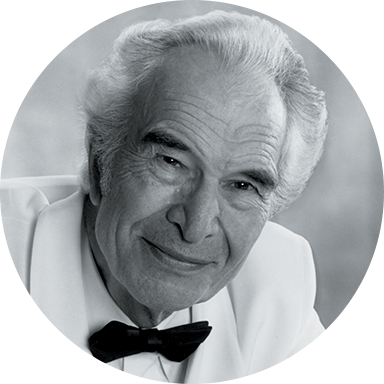
Dave Brubeck

Dave Brubeck stands as one of the twentieth century's most important musical innovators, a jazz pianist whose improvisational command was matched only by his skill as a composer of fully notated concert works. Beyond his iconic contributions to jazz (including "Take Five" and the album "Time Out," the first jazz record to sell over a million copies), Brubeck wrote extensively across genres: choral works, hymns, orchestral pieces, chamber music, ballets, and large-scale compositions for chorus and orchestra. His education at the College of the Pacific and subsequent study with Darius Milhaud at Mills College shaped a compositional voice that wove together jazz vernacular and classical rigor.

Brubeck's cultural impact extended far beyond the concert stage. He was a pioneering force in racial integration during the mid-twentieth century, and his sacred music has been performed internationally from Germany and Austria to Russia and throughout the English-speaking world. Honors accumulated throughout his lifetime include the Presidential Medal of the Arts, a Grammy Lifetime Achievement Award, selection into the American Classical Music Hall of Fame (2003), and a lifetime achievement award from the London Symphony Orchestra (2007). His mass "To Hope!" and oratorios including "The Voice of the Holy Spirit" and "Beloved Son" have been recorded by major orchestras and ensembles, cementing his legacy as a composer of serious intent and lasting craft.

Why we love this

Brubeck's gift for melody and harmonic sophistication shines in this Christmas octavo, which feels fresh precisely because it avoids sentimentality. The piece carries the same compositional integrity that made his concert works significant, making it a natural fit for choirs that want to offer audiences something genuinely musical during the holiday season rather than reaching for another familiar carol arrangement.

What to expect

The piece carries warmth and sincerity without treacle, grounded in the harmonic sophistication Brubeck brought to all his composition. There is an almost contemplative quality to the expression of goodwill, making it feel earned rather than imposed.

Who it's for

Choirs with intermediate to advanced vocal facility and an ear for contemporary classical writing will find this piece most rewarding. It suits both professional choirs and skilled community or church ensembles comfortable with Brubeck's harmonic language and the demands of twelve-page SATB writing.

How to get the most out of it

  • Balance the text clarity with Brubeck's harmonic language; his chord progressions occasionally mask the syllables, so articulation and vowel shape are your keys to keeping the message legible.
  • Take advantage of any natural rubato the phrase structure allows, particularly at cadences, to let the goodwill theme breathe without losing ensemble cohesion.
  • Listen carefully to how each voice part contributes to the harmonic color; Brubeck's writing often distributes the melody across voices, so section leaders should track the primary melodic line even when it's not in their part.

How to use it

Program this as the centerpiece of a Christmas concert section devoted to twentieth-century sacred writing, pairing it with Brubeck's other choral works if available, or position it alongside contemporary Christmas pieces by composers like Eric Whitacre or Morten Lauridsen to frame a "Christmas beyond the carol" aesthetic. Its length and substance also make it suitable as a substantial offering in a holiday concert that mixes traditional and modern repertoire.

Skills your students will build

  • Reading and performing contemporary harmonic language (seventh chords, chromatic voice leading, non-functional progressions)
  • Sustaining focused ensemble blend across longer phrases with complex harmonic movement
  • Tracking melodic lines distributed across multiple voice parts
  • Articulating text clearly within sophisticated musical contexts

You May Also Like
