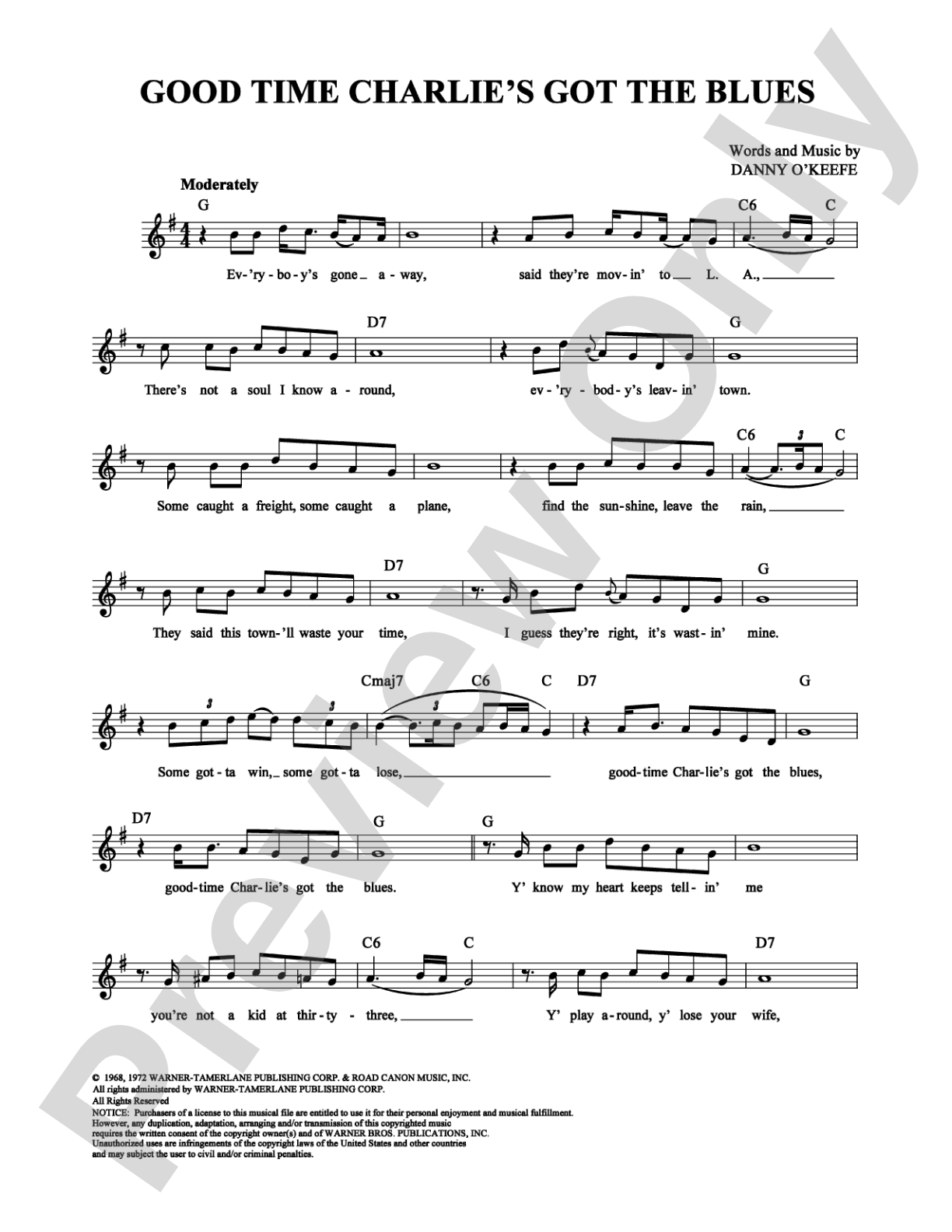
Good Time Charlie's Got the Blues: Lead Sheet Digital Sheet Music

Good Time Charlie's Got the Blues: Lead Sheet Digital Sheet Music

Danny O'Keefe

Item: 00-PS-0008804

Digital Download
$1.99
Description

Good Time Charlie's Got the Blues: Lead Sheet Digital Sheet Music isn't in MakeMusic Cloud just yet...but it could be. Let us know you'd like to see it, and you'll help shape what comes next. In the meantime, start a free trial and dive into thousands of interactive titles your students can play along with today.

Sample Audio
No sample audio found.
Sample Video
Additional Details
SKU: 00-PS-0008804

More about this title

About the Artist: Danny O'Keefe

Danny O'Keefe is an American singer-songwriter and guitarist who rose to prominence in the 1970s with a blend of folk, rock, and country sensibilities. His 1973 hit "Good Time Charlie's Got the Blues" became his signature song, showcasing his conversational lyrical style and memorable melodic hooks that resonated across radio and remained a staple of popular music.

Why we love this

This lead sheet captures a song with immediate melodic appeal and genuine emotional directness. It's the kind of tune that works equally well as a jazz interpretation, a guitar-driven arrangement, or a vocal feature, giving you real flexibility in how you present it to students or audiences.

What to expect

Warm, reflective, and gently sardonic. The song carries an easygoing confidence without pretension, with a melody that feels lived-in and lyrics that invite genuine connection. There's an undercurrent of resilience beneath the casual surface, making it engaging rather than sentimental.

Who it's for

This lead sheet works for vocalists exploring 1970s pop-rock repertoire, jazz musicians seeking accessible standards with character, and music students learning how to interpret and arrange familiar songs. It's equally valuable for guitarists working on chord-melody approaches or those building jazz and contemporary music literacy.

How to get the most out of it

  • Pay attention to the phrasing in the melody; the song's strength lies in conversational, natural-sounding delivery rather than overly technical precision.
  • The harmonic progression is straightforward, which makes it ideal for exploring reharmonization or comping variations if you're working with jazz or contemporary music students.
  • Lock the rhythm section into a steady, groove-oriented feel; this song thrives on pocket and pocket feel rather than strict metronomic precision.

How to use it

Include this as a bridge between classical standards and contemporary repertoire in a jazz or pop vocal concert. It also serves well as a teaching piece for students learning to arrange familiar songs or exploring how melody and harmony interact in popular music from the 1970s.

Skills your students will build

  • Reading lead sheet notation and chord symbols
  • Interpreting melody with conversational phrasing
  • Understanding harmonic function in pop-rock contexts
  • Exploring reharmonization and arrangement possibilities

You May Also Like