
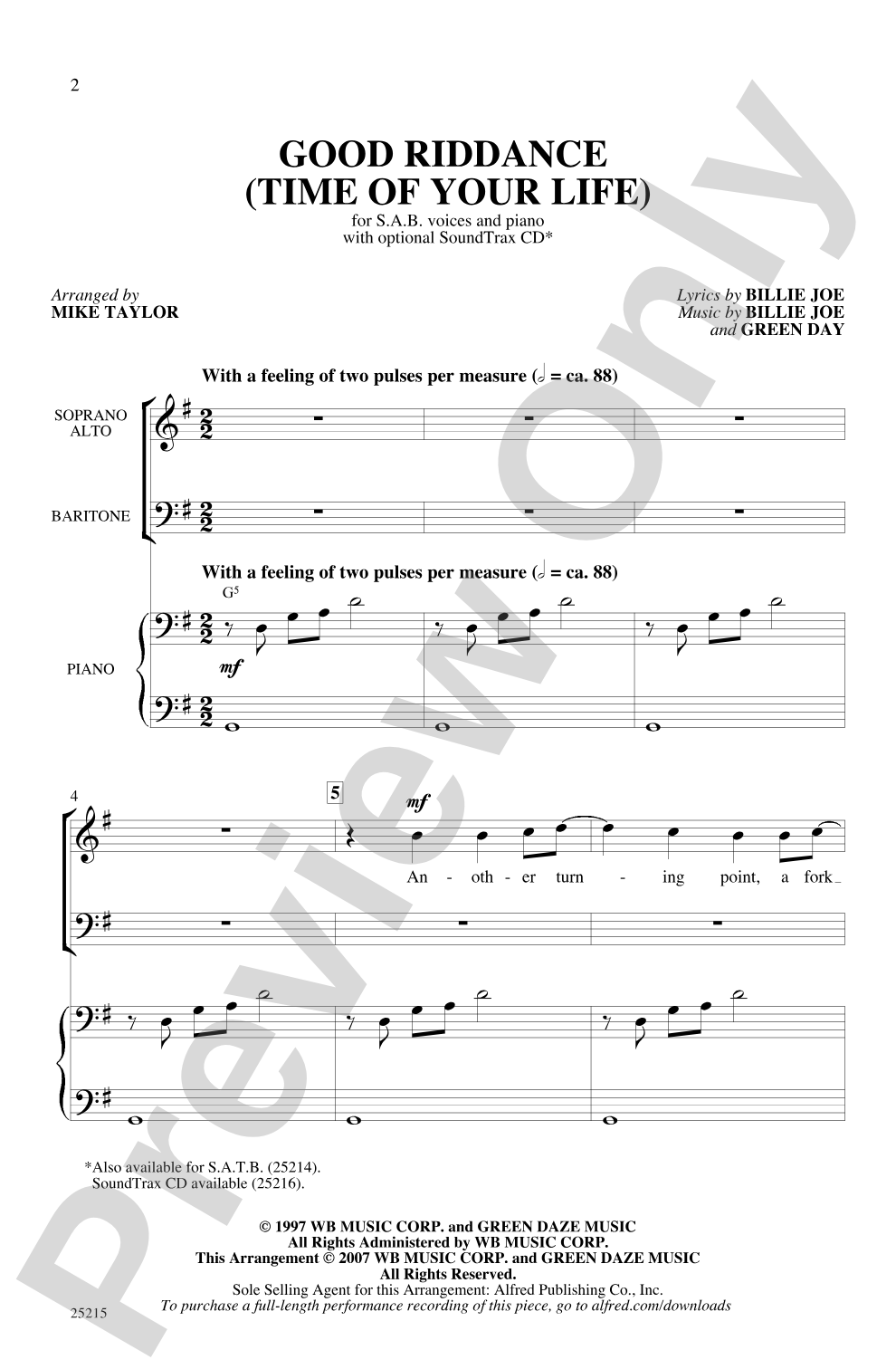
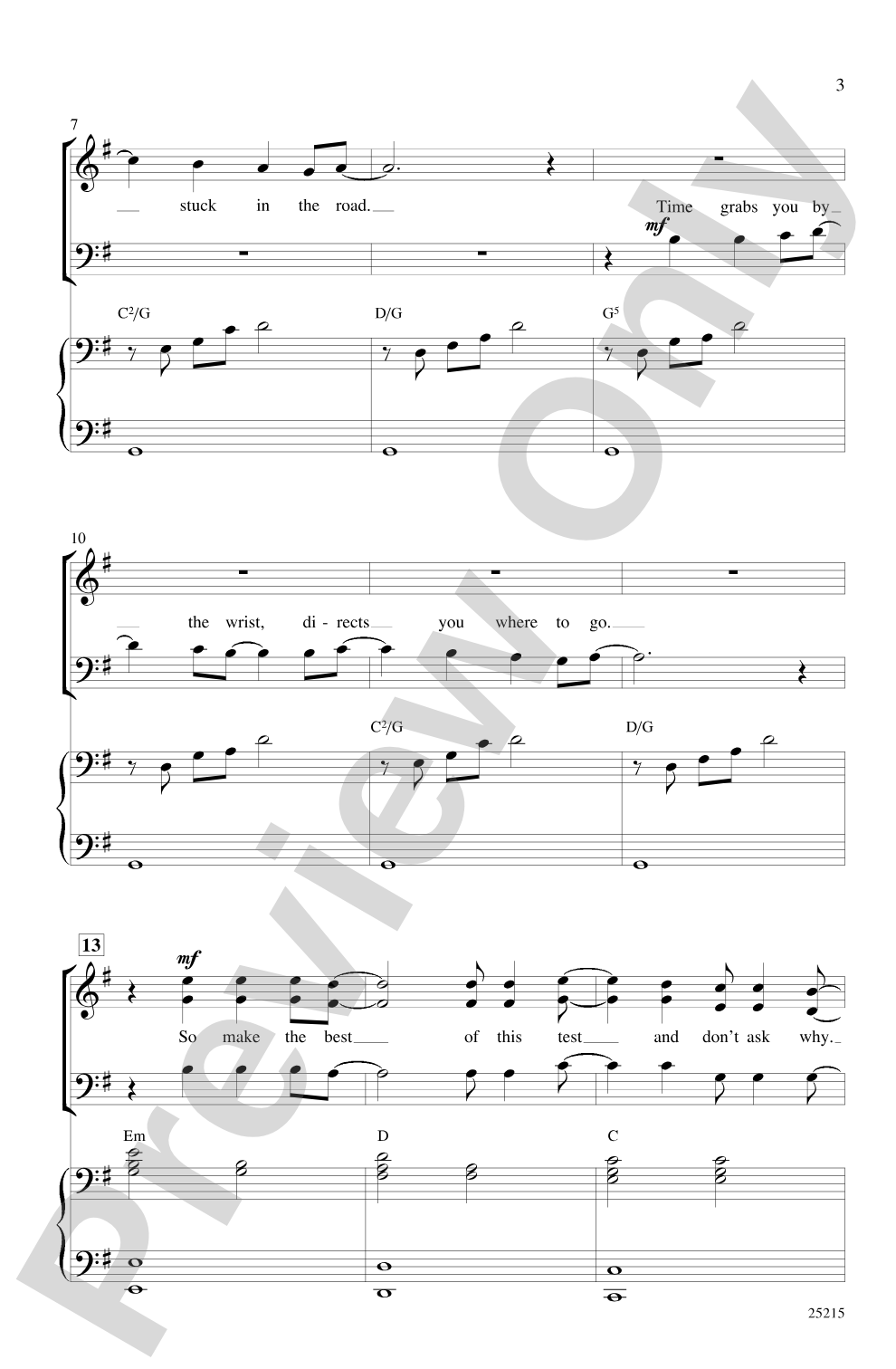

Good Riddance (Time of Your Life): SAB Choral Octavo
Lyrics by Billie Joe, music by Billie Joe and Green Day / arr. Mike Taylor
Item: 00-PO-0002251
$2.10
Minimum order quantity: 20 copies
One moment…
Related Items
Good Riddance (Time of Your Life): SoundTrax Digital Audio Download |
$27.99
|
View | |
Good Riddance (Time of Your Life): SATB Choral Octavo |
$2.10
|
View | |
Good Riddance (Time of Your Life): SATB Choral Octavo |
$2.10
|
View | |
Good Riddance (Time of Your Life): SAB Choral Octavo |
$2.10
|
View | |
Good Riddance (Time of Your Life): Choral Octavo SoundTrax CD |
$27.99
|
View |
Description
We've gotten several requests for this song from choral directors. From the rock group Green Day comes this hit song arranged for choral groups by Mike Taylor. The lyrics are perfect for graduation or end of year concerts: "It's something unpredictable, but in the end is right. I hope you had the time of your life." Some listeners may remember this song as featured in the final episode of the TV sitcom "Seinfeld." This title is available in Music Prodigy.


Good Riddance (Time of Your Life): SAB Choral Octavo isn't in MakeMusic Cloud just yet...but it could be. Let us know you'd like to see it, and you'll help shape what comes next. In the meantime, start a free trial and dive into thousands of interactive titles your students can play along with today.
Request This Title
Tell us you want it.
Start Your Free Trial
Explore everything that's ready to play right now.
Sample Audio
1
Audio File
--:--
0:00
0:00
Sample Video
No sample videos found.
Additional Details
Series:
Alfred Pop Choral Series
Publisher:
Alfred Music
Page Count:
12
SKU:
00-PO-0002251
More about this title
About the Composer: Green Day
Green Day emerged from the Berkeley, California punk scene in the 1980s and became one of the defining rock bands of the 1990s and beyond. The trio, led by Billie Joe Armstrong, built their reputation on energetic performances and emotionally resonant songwriting that spoke directly to their generation. Their 1997 album "Nimrod" produced "Good Riddance (Time of Your Life)," a stripped-down acoustic track that proved the band could write introspective, universally moving material alongside their high-energy anthems.
The song's crossover appeal comes from its genuine sentiment and accessible melody. Armstrong's lyrics capture the bittersweet feeling of transition without resorting to cliché, making it a natural fit for choral settings. For music educators, Green Day's catalog offers a bridge between popular music students actually listen to and legitimate songwriting craft.
Why we love this
This arrangement gives you a contemporary song with immediate relevance to your singers' lives, while the SAB voicing keeps it accessible for mixed ensembles without requiring extensive vocal range. The emotional restraint of the original translates beautifully in a choral setting, and directors consistently report that students connect deeply with material they recognize and care about.
What to expect
The song carries a reflective, slightly melancholic quality that builds toward quiet hope. There's a sense of looking backward with gratitude rather than forward with anxiety, making it feel mature and grounded despite its rock origins. The arrangement maintains the original's acoustic simplicity, letting voices carry the emotional work.
Who it's for
Directors programming graduation ceremonies, end-of-year concerts, or any occasion that calls for music with genuine emotional weight. This works equally well for high school choirs, community groups, and college ensembles seeking contemporary repertoire that audiences will recognize and singers will want to perform.
How to get the most out of it
- Honor the song's quiet intimacy. Resist the urge to oversell the arrangement; let the lyrics and melody speak.
- Balance the soprano and alto lines carefully in passages where they diverge. This creates textural clarity without muddying the harmonic foundation.
- Use the recorded accompaniment to establish a consistent tempo and feel, then gradually pull away from it in rehearsals so singers develop independent confidence.
- Pay attention to vowel shape on sustained notes. Clean, unified vowels will let the emotional core of the song shine through.
How to use it
Pair this with other contemporary songs to show your choir's range and relevance, or position it as a closing number for a concert where you want audiences to leave with something they genuinely remember. It's particularly effective on graduation programs where the text directly addresses the occasion without feeling forced.
Skills your students will build
- Blend and balance in three-part mixed voicing
- Sustaining sustained melodic lines with consistent tone
- Phrasing that serves lyrical content rather than musical convention
- Confidence singing contemporary material alongside classical repertoire
- Connection between ensemble sound and emotional communication