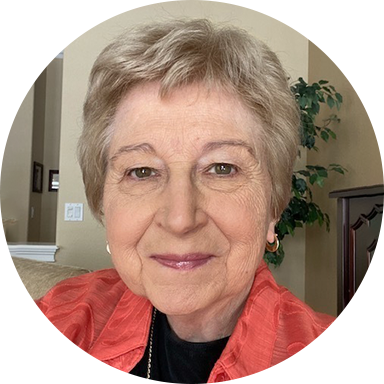
Mary Donnelly grew up in Reno, Nevada, where she earned a Bachelor of Arts in English and French from the University of Nevada before discovering her passion for music education. While still an undergraduate, she organized children's choruses and found the work so rewarding that she pursued teacher certification and eventually a Master's Degree in Education from Lesley College, focusing on arts integration across the curriculum. She spent thirty years teaching general music and choir in Washoe County schools, bringing that same collaborative spirit to every classroom.
In 1985, Donnelly met George Strid while co-teaching sixth grade music. When their principal challenged them to write a musical for Reading Week, they created The Million Dollar Mystery, launching a partnership that has now produced over two hundred songs and twenty-five full musicals. Their work bridges the gap between accessibility and artistry, rooted in three decades of direct experience with student singers.
Why we love this
Donnelly and Strid write with genuine understanding of what engages young singers. This arrangement brings vocal warmth and textural interest to a 2-part voicing without overcomplicating the parts, making it approachable for less experienced ensembles while remaining musically satisfying. The pop-inflected writing keeps energy high and gives singers memorable melodies to perform.
What to expect
This piece radiates optimism and warmth. The 2-part voicing creates clean harmonic moments without density, letting the text shine through with clarity and conviction.
Who it's for
Middle school and high school choirs seeking accessible yet musically rewarding winter repertoire. Directors building skills in part singing will find the writing clear and supportive, while the pop-concert fusion holds student interest beyond the rehearsal room.
How to get the most out of it
Balance the vocal blend by having singers listen across parts rather than solely to their own line; the harmonic colors emerge when both sections work as one voice.
Let the rhythm breathe naturally with the text. These composers understand how syllables land in time, so rhythmic clarity comes from singing the words, not fighting the notation.
Shape the phrasing around the emotional arc of the text rather than the page breaks. Plan breath points together so the ensemble moves as a single unit.
How to use it
Slot this into a winter concert as a palate cleanser between heavier selections or as an opener that sets a celebratory tone. Its moderate technical demands make it ideal for mid-year programming when you want to introduce divisi concepts without overloading your singers.
Skills your students will build
Reading and sustaining independent melodic lines in 2-part texture
Harmonic listening and blend across vocal parts
Rhythmic accuracy in pop-influenced phrasing
Clear diction in text-driven arrangements
Confidence in ensemble balance without instrumental support
You May Also Like
Scan to Complete Your Purchase
Use your phone's camera to scan the code below
You'll log in on your phone and the order will be added to your account