Good Night Sweetheart: Piano Digital Sheet Music

Good Night Sweetheart: Piano Digital Sheet Music

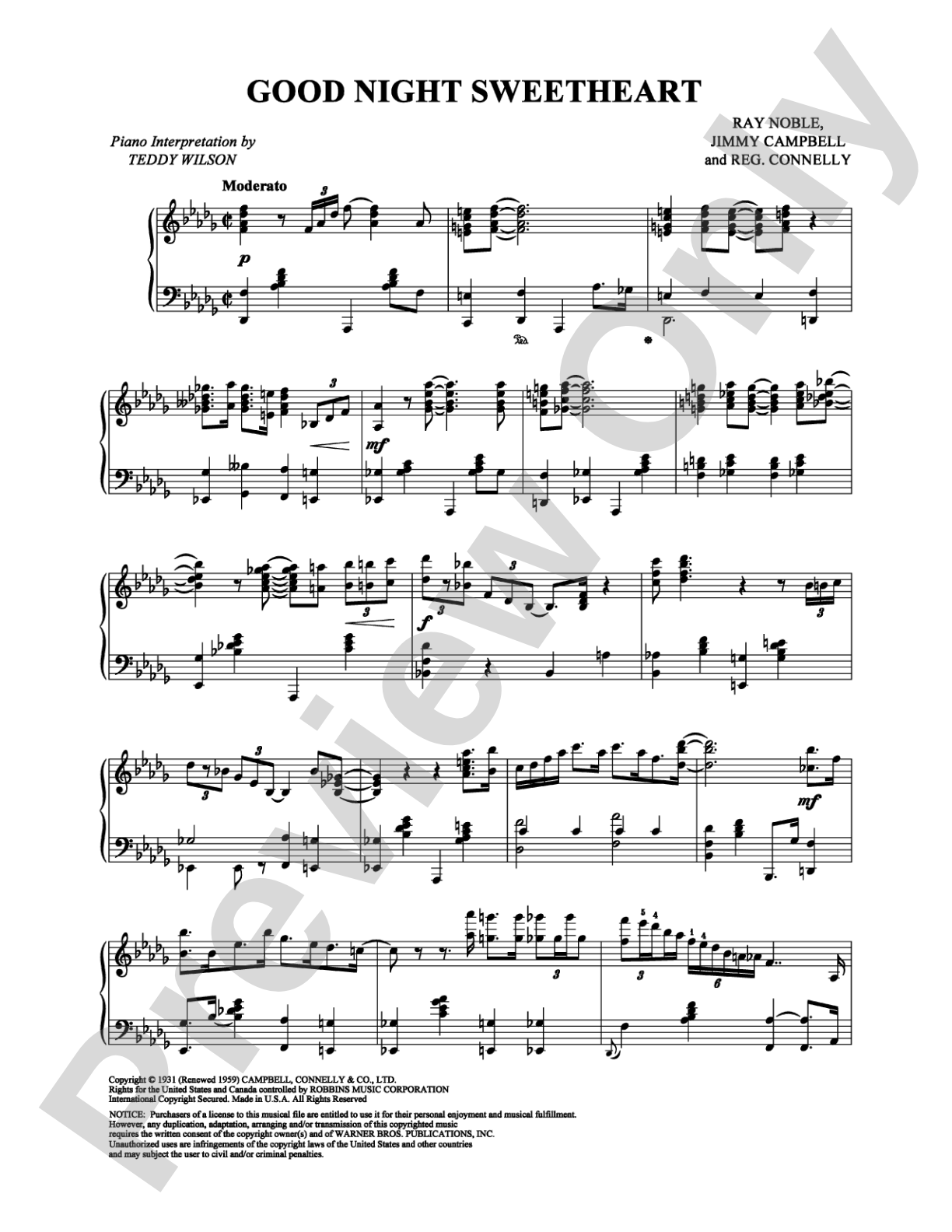
Ray Noble, Jimmy Campbell, Reg Connelly, Teddy Wilson

Item: 00-PS-0000695

Digital Download
$3.99
Description

Good Night Sweetheart: Piano Digital Sheet Music isn't in MakeMusic Cloud just yet...but it could be. Let us know you'd like to see it, and you'll help shape what comes next. In the meantime, start a free trial and dive into thousands of interactive titles your students can play along with today.

Sample Audio
No sample audio found.
Sample Video
Additional Details
SKU: 00-PS-0000695

More about this title

About the Artist: Teddy Wilson

Teddy Wilson (1912-1986) was a pianist and bandleader who fundamentally shaped the sound of swing jazz. His delicate touch, harmonic sophistication, and ability to accompany singers made him one of the most recorded pianists of the 1930s and 1940s. Wilson's work with Benny Goodman's integrated small groups broke racial barriers in jazz at a time when that mattered enormously.

Beyond his role as a sideman and leader, Wilson was a dedicated educator who taught at Julliard and mentored younger pianists in the craft of jazz accompaniment and solo playing. His recordings remain essential study material for anyone learning how jazz pianists balance restraint with swing.

Why we love this

This standard gives pianists a genuine entry point into the swing era without demanding virtuosic chops. Wilson's arrangement sits comfortably under the fingers while preserving the harmonic sophistication and relaxed swing feel that made his trio recordings so influential.

What to expect

Intimate and unhurried, like a conversation happening late in the evening. The melody is warm and familiar, but Wilson's harmonic choices and sparse texturing create a gentle sophistication that invites close listening rather than demanding attention.

Who it's for

Pianists with foundational jazz reading skills who want to study how a master accompanist voices chords and manages space. Students exploring swing standards will find Wilson's voicings and phrasing model both the restraint and sophistication that define his style.

How to get the most out of it

  • Listen to Wilson's original recording before you begin; his touch and sense of space are inseparable from how the piece breathes.
  • Treat the left hand as a conversational partner, not a metronome. Drop chords, let silence happen, and respond to the melody rather than fill every moment.
  • Keep the tempo relaxed and walking. Rush the tempo and the swing feel collapses into something mechanical.
  • Pay attention to dynamic shaping. The piece gains warmth from subtle dynamic shifts, not from playing everything at a consistent volume.

How to use it

Use this as a teaching example of how swing standards live in trio formats, or program it on a jazz recital where the focus is on small-group tradition rather than flashy display. It pairs well with other early swing repertoire and offers a natural counterpoint to more modern approaches to the standard.

Skills your students will build

  • Comping and harmonic voicing in jazz idiom
  • Swing rhythm and the relationship between written notes and performed feel
  • Listening actively to recorded models as part of learning jazz repertoire
  • Dynamic control and space management in solo playing
  • Reading and realizing jazz lead sheets with musicality

You May Also Like