

Good Morning: 2-Part Choral Octavo
From Singin' in the Rain
Words by Arthur Freed, music by Nacio Herb Brown / arr. Steve Zegree
Item: 00-PO-0001921
$1.95
Minimum order quantity: 20 copies
One moment…
Description
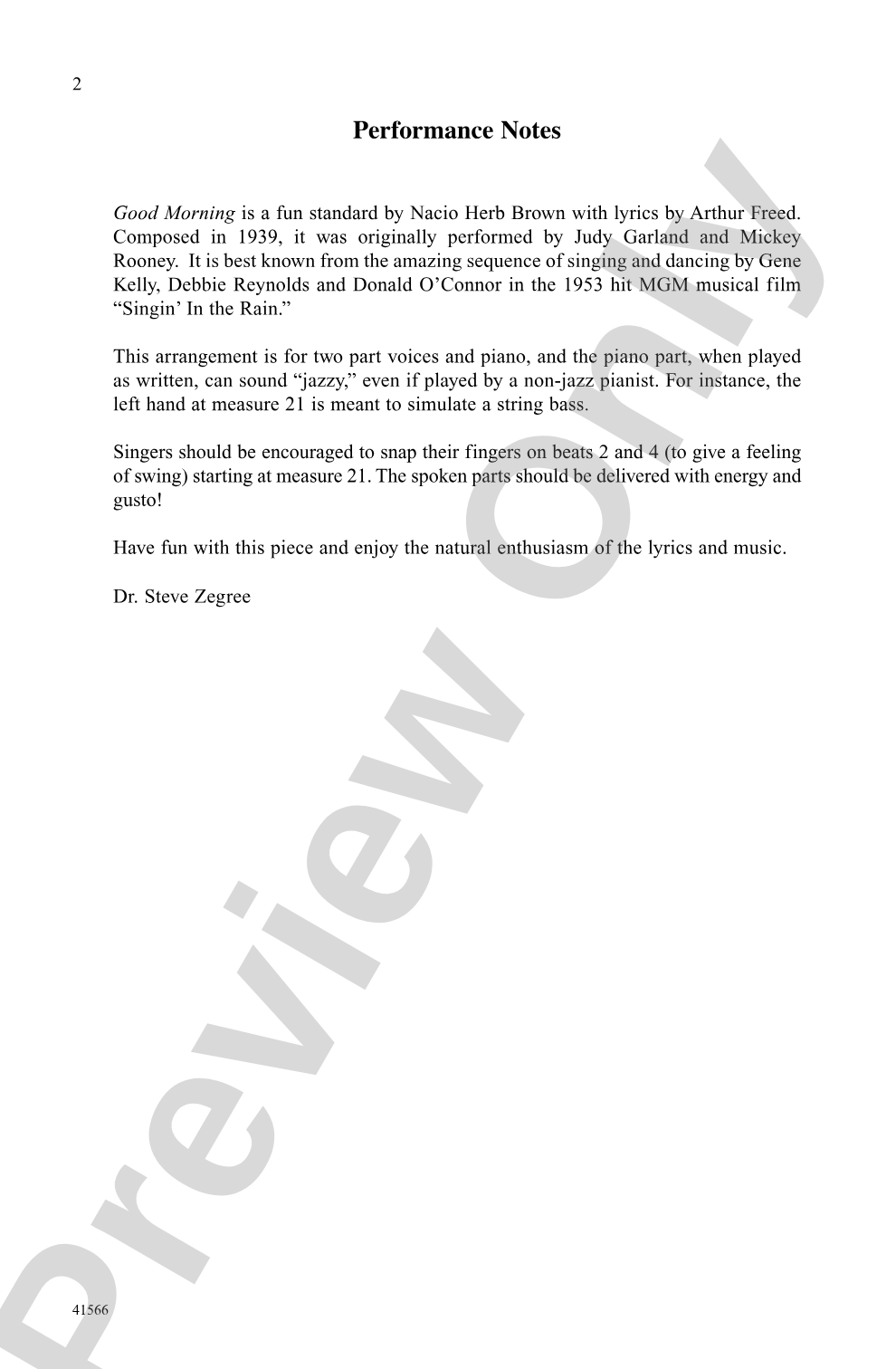
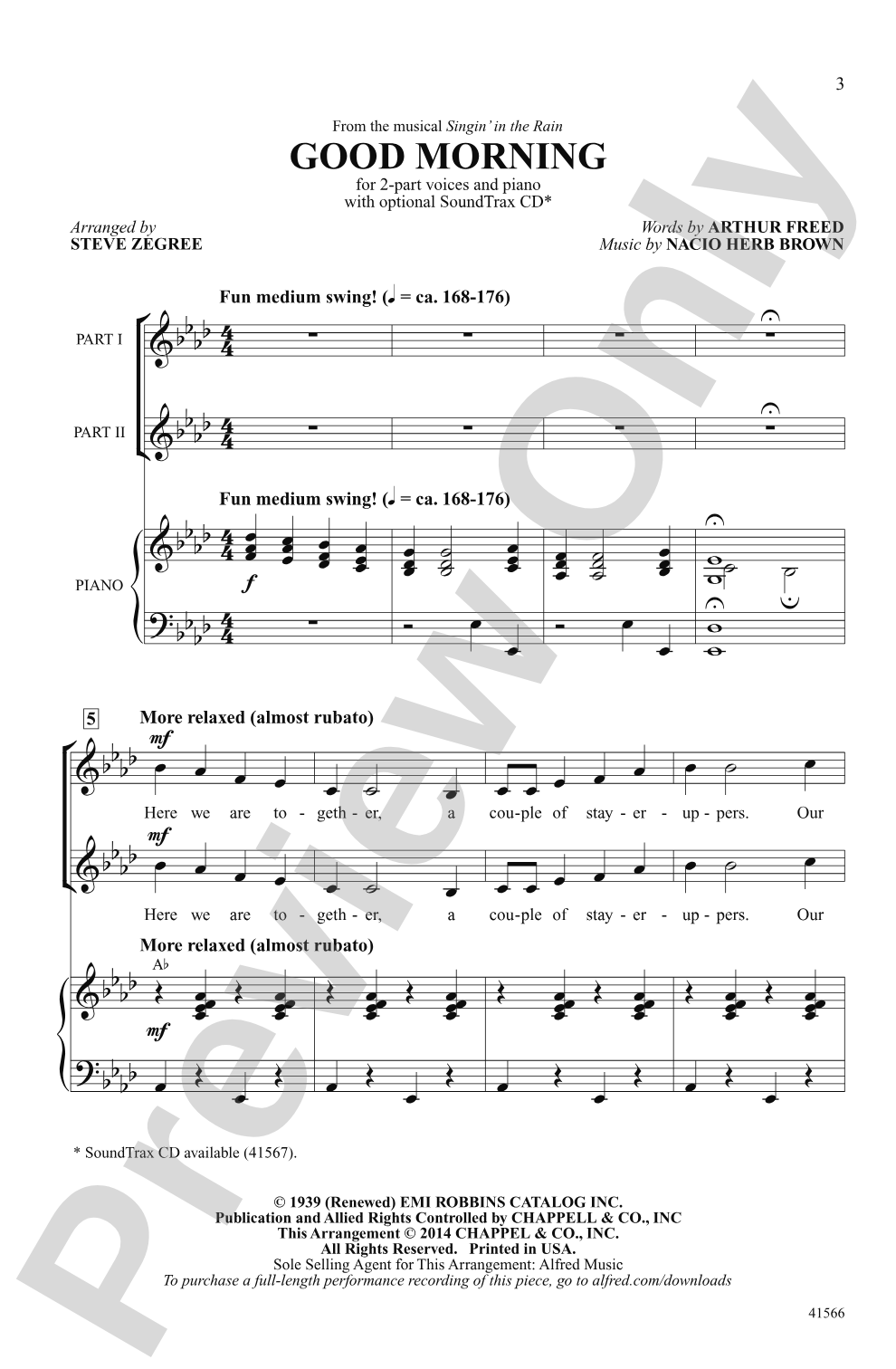
Here's a well-crafted arrangement featuring the song used as the building block for what many have called the best tap routine in movie musical history. The short, notated scat section is perfect for introducing younger choirs to vocal jazz. Fun to rehearse and perform!


Good Morning: 2-Part Choral Octavo isn't in MakeMusic Cloud just yet...but it could be. Let us know you'd like to see it, and you'll help shape what comes next. In the meantime, start a free trial and dive into thousands of interactive titles your students can play along with today.
Request This Title
Tell us you want it.
Start Your Free Trial
Explore everything that's ready to play right now.
Sample Audio
1
Audio File
--:--
0:00
0:00
Sample Video
No sample videos found.
Additional Details
Series:
Alfred Pop Choral Series
Publisher:
Alfred Music
Page Count:
12
SKU:
00-PO-0001921
More about this title
About the Composer: Nacio Herb Brown
Nacio Herb Brown (1896-1964) composed some of the most enduring melodies in American musical theater and film. His partnership with lyricist Arthur Freed produced standards that became synonymous with the golden age of Hollywood musicals, including "Singin' in the Rain," "You Were Meant for Me," and the title track of this arrangement. Brown's gift for memorable, singable melody made his songs accessible to performers and audiences alike, ensuring their survival across generations of musicians.
Beyond his film work, Brown's compositions have become essential repertoire in music education. His melodies reward young singers with immediately gratifying material that doesn't sacrifice musical substance, making him a valuable resource for building student confidence and musicianship.
Why we love this
Steve Zegree's arrangement introduces scat singing in a low-pressure, highly musical context. The notated scat section gives younger singers a scaffolded entry point into jazz vocabulary without the improvisation demands that often intimidate developing choirs. Add the Hollywood pedigree and built-in appeal of the melody itself, and you have an accessible piece that actually teaches something substantive.
What to expect
Sunny and energetic, with a tip-of-the-hat to classic Hollywood charm. The notated scat feels playful rather than demanding, inviting singers to explore rhythmic wordplay and swing feels they might not encounter in traditional choral settings. There's an infectious warmth here that makes rehearsals genuinely fun.
Who it's for
Middle school and early high school choirs ready to explore jazz idiom in a supported environment. The 2-part voicing keeps accessibility high while the scat introduces authentic jazz vocabulary. Young singers will connect immediately with the melody's film legacy and familiar style.
How to get the most out of it
- Spend rehearsal time on the scat section separately before integrating it into the full arrangement. Have singers speak the rhythms first, then add pitch to build confidence.
- Lean into the rhythmic swagger of the melody. This song thrives on a relaxed, almost conversational delivery rather than overly precise articulation.
- If using the recorded accompaniment, run through the piece without it first to establish your own tempo and phrasing, then adapt to fit the track rather than the reverse.
- Balance brightness in the upper voices with warmth in the lower part, especially during the scat section where clarity of both lines matters.
How to use it
This works beautifully as a bridge piece connecting your more traditional choral repertoire to jazz or contemporary styles. Program it mid-concert to shift mood and energy, or pair it with other standards from the same era to create a "Golden Age" mini-set. It's also excellent for spring concerts or end-of-year celebrations where lighter, feel-good material lands well.
Skills your students will build
- Scat singing and basic jazz vocabulary
- Rhythmic independence between two vocal lines
- Swing feel and jazz articulation
- Breath control in faster melodic passages
- Part independence with a memorable, singable melody