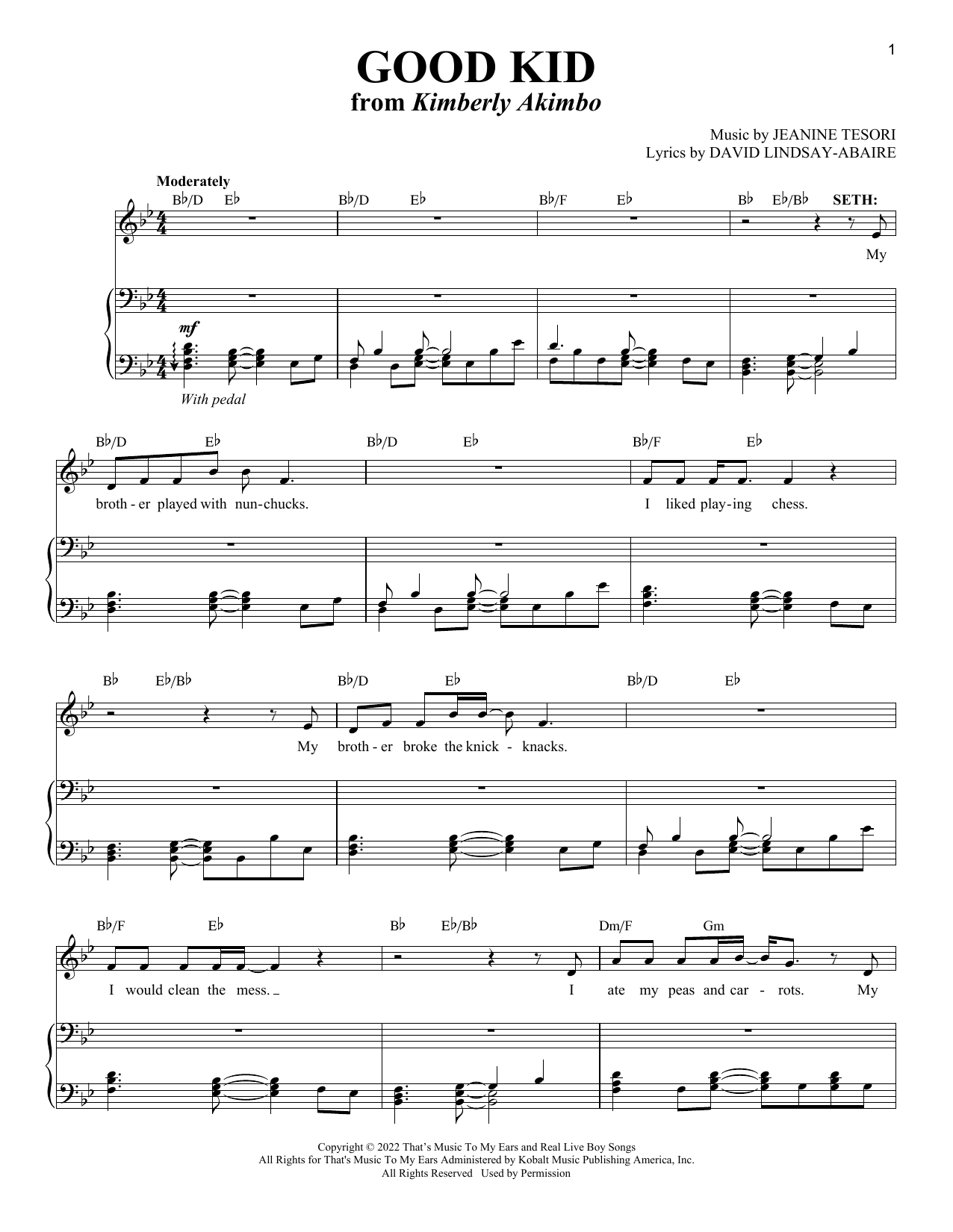
Good Kid (from Kimberly Akimbo) Sheet Music Preview

Good Kid (from Kimberly Akimbo): Piano Vocal

By David Lindsay-Abaire and Jeanine Tesori

Item: 35-DS01542756

Digital Download
$5.99
Description

Good Kid (from Kimberly Akimbo): Piano Vocal isn't in MakeMusic Cloud just yet...but it could be. Let us know you'd like to see it, and you'll help shape what comes next. In the meantime, start a free trial and dive into thousands of interactive titles your students can play along with today.

Sample Audio
No sample audio found.
Sample Video
Additional Details
Publisher: Hal Leonard
Page Count: 5
SKU: 35-DS01542756

More about this title

About the Composer: David Lindsay-Abaire and Jeanine Tesori

David Lindsay-Abaire is a Tony Award-winning playwright and lyricist whose theatrical voice combines emotional intelligence with sharp wit. His work across Broadway, off-Broadway, and film demonstrates a gift for creating characters whose inner lives feel urgent and true. Jeanine Tesori, equally accomplished as a composer, brings sophisticated harmonic language and melodic sensitivity to every project she touches. Together on Kimberly Akimbo, they crafted a score that serves the intimate, character-driven storytelling at the heart of the musical.

Why we love this

This song captures something essential about adolescent vulnerability without sentimentality. The piano writing supports the vocal line thoughtfully while maintaining enough independence to keep the accompaniment interesting for both performer and listener.

What to expect

Honest and unguarded. The music inhabits a tender emotional space where humor and sadness coexist, creating moments of recognition for anyone who remembers what it felt like to be young and caught between who you are and who you want to be.

Who it's for

Solo singers preparing audition material, music theater programs seeking age-appropriate contemporary repertoire, and pianists looking to deepen their accompaniment skills with modern Broadway writing. This works equally well in recital settings and theater contexts.

How to get the most out of it

  • Shape the lyrical phrases with natural breathing points rather than strict metric divisions; the conversational quality of the text should guide your phrasing.
  • Keep the piano accompaniment transparent enough that listeners focus on the character's emotional journey; resist the urge to inflate dynamics.
  • Find the emotional arc across the full five pages; treat this as a small scene that builds gradually rather than a collection of isolated moments.

How to use it

Pair this with other character songs from contemporary musicals to build a recital that showcases the range and sophistication of recent Broadway composition. It also works as a powerful solo moment in a music theater revue or as an audition piece for students exploring contemporary repertoire beyond the standard canon.

Skills your students will build

  • Sustaining legit vocal tone through a conversational text-driven melody
  • Balancing rhythmic freedom with underlying harmonic structure
  • Collaborative listening between soloist and accompanist
  • Interpreting contemporary vocal music with emotional specificity

You May Also Like