Claude Debussy (1862-1918) fundamentally reshaped how composers approached harmony, timbre, and form in the late 19th and early 20th centuries. His piano works, orchestral pieces, and songs prioritized sensory impression and color over rigid harmonic structure, influencing generations of composers across all genres. Debussy's output remains a cornerstone of music education because it demonstrates how constraint and restraint can communicate as powerfully as technical complexity.
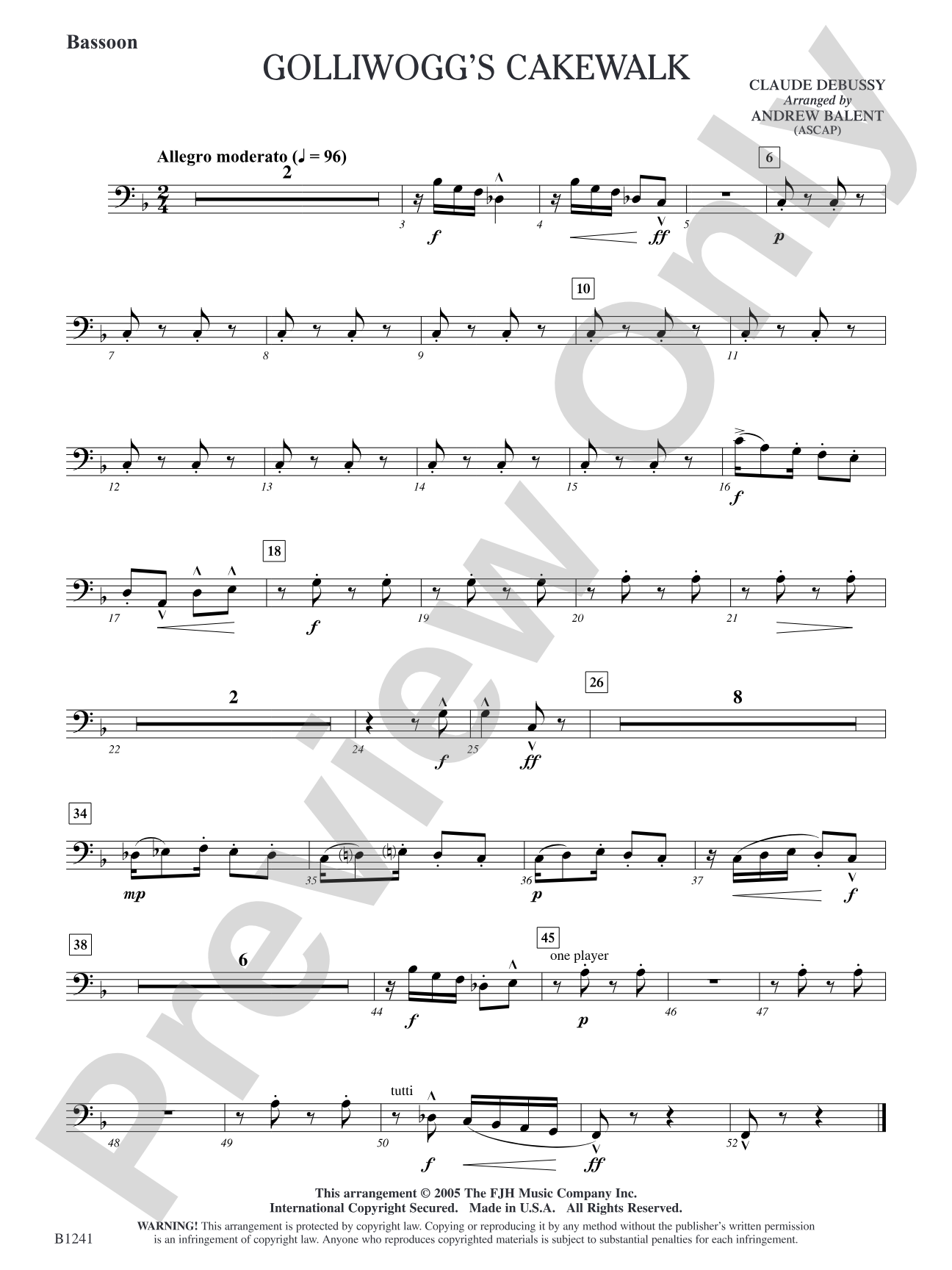
Golliwogg's Cakewalk comes from the 1908 solo piano collection Children's Corner, where Debussy combines ragtime rhythms with his signature impressionistic harmonic language. The piece is often programmed as a concert opener or standalone novelty number because its playful character and memorable melody make it immediately accessible to audiences of all ages.