
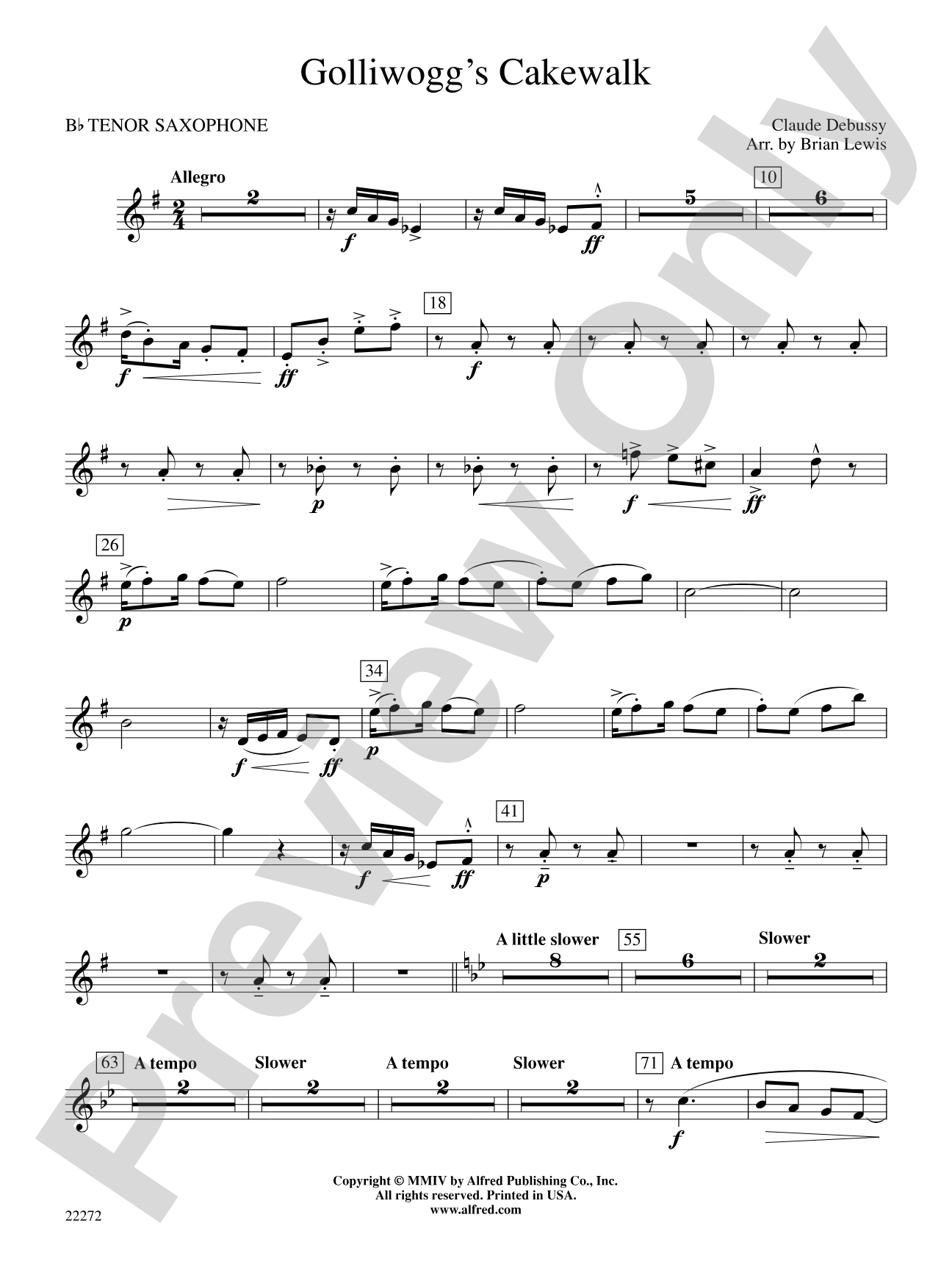

Golliwogg's Cakewalk: B-flat Tenor Saxophone
By Claude Debussy / arr. Brian Lewis
Grade: 2.5 (Medium Easy)
Item: 00-PC-0000526_TX1
$3.00
Pickup currently not available
Description
This delightful band transcription of a Debussy piano classic is an ideal teaching tool. The piece will help teach tempo, dynamics, and rhythms such as the sixteenth-eighth-sixteenth pattern. The perfect selection for your next concert or contest. (2:51)


Don't just read it, hear it, play along with it, and watch your students grow with it. In MakeMusic Cloud, Golliwogg's Cakewalk: B-flat Tenor Saxophone comes alive with professional accompaniment, adjustable tempo, and built-in practice tools that turn solo practice into real progress.
Open in the Player
Jump straight in and assign it today.
Start Your Free Trial
Open this title and explore the full library in minutes.
Sample Audio
1
Audio File
--:--
0:00
0:00
Sample Video
Additional Details
Series:
Young Symphonic
Publisher:
Alfred Music
Page Count:
264
SKU:
00-PC-0000526_TX1
More about this title
About the Composer: Claude Debussy
Claude Debussy (1862-1918) revolutionized musical language by moving away from strict harmonic rules toward color, texture, and suggestion. His piano works, which include some of the most performed solo pieces in the classical repertoire, showcase his gift for orchestral thinking and innovative harmony. Debussy's influence on twentieth-century composition is immeasurable, and his works remain essential repertoire for students learning to hear and create music beyond traditional functional harmony.
Golliwogg's Cakewalk, drawn from his suite Children's Corner, demonstrates Debussy's wit and his ability to capture character and movement in miniature. The piece became famous partly through its adaptability to various ensembles, and this band arrangement preserves the work's essential charm while making it accessible to developing musicians.
Why we love this
This arrangement brings one of the piano repertoire's most recognizable character pieces into the hands of a full ensemble without sacrificing its personality or pedagogical value. The Grade 2.5 instrumentation creates clear teaching moments around tempo flexibility, dynamic contrast, and that signature syncopated rhythm without overwhelming young players. Directors appreciate having a genuine masterwork that sits comfortably between entertainment and artistry on a concert program.
What to expect
Playful and syncopated, with a strutting energy that makes audiences smile. The piece sparkles with the humor of a ragtime-influenced dance, painted in Debussy's impressionistic colors rather than driving rhythmic force. It feels both familiar and slightly unexpected, a quality that keeps listeners engaged across its brief span.
Who it's for
Conductors of developing concert bands (high school, middle school, or advanced middle school) looking for a masterwork that teaches genuine musicianship without requiring advanced technique. This is equally suited to mixed-ability ensembles where some players are still building fundamentals but the group needs substantial, recognizable repertoire.
How to get the most out of it
- Establish a steady tempo early in rehearsals, then allow for slight rubato during the syncopated sections to capture Debussy's original pianistic character. Young musicians often rush the sixteenth-eighth-sixteenth figures when they feel unsecure, so locking the pulse with a metronome first helps them relax into the rhythmic flexibility later.
- Shape dynamics subtly rather than dramatically. The piece asks for terraced dynamics typical of the era, but each section needs breathing room. Avoid the trap of making the forte sections harsh; Debussy's concept of 'color' means brightness comes from clarity and articulation, not volume.
- Balance the melody across your instrumentation from phrase to phrase. This arrangement likely passes the cakewalk theme between sections, so rehearse transfers of the line so no hand-off sounds accidental or quiet. Young musicians often assume 'new player' means 'softer,' and catching that early prevents awkward balance issues.
How to use it
Schedule this early on a concert program when ensemble energy is fresh and the audience is still settling in. It works beautifully as a palette cleanser between heavier works or as a natural pairing with other arrangements from the Young Symphonic series. The piece is also contest-friendly and sufficiently known that audiences recognize and enjoy it immediately.
Skills your students will build
- Reading and executing sixteenth-eighth-sixteenth rhythmic patterns consistently
- Shaping phrases with dynamic subtlety rather than extreme contrasts
- Maintaining steady tempo while allowing musical flexibility and rubato
- Balancing a moving melody across multiple instruments in an arrangement
- Understanding syncopation and ragtime influence in classical music