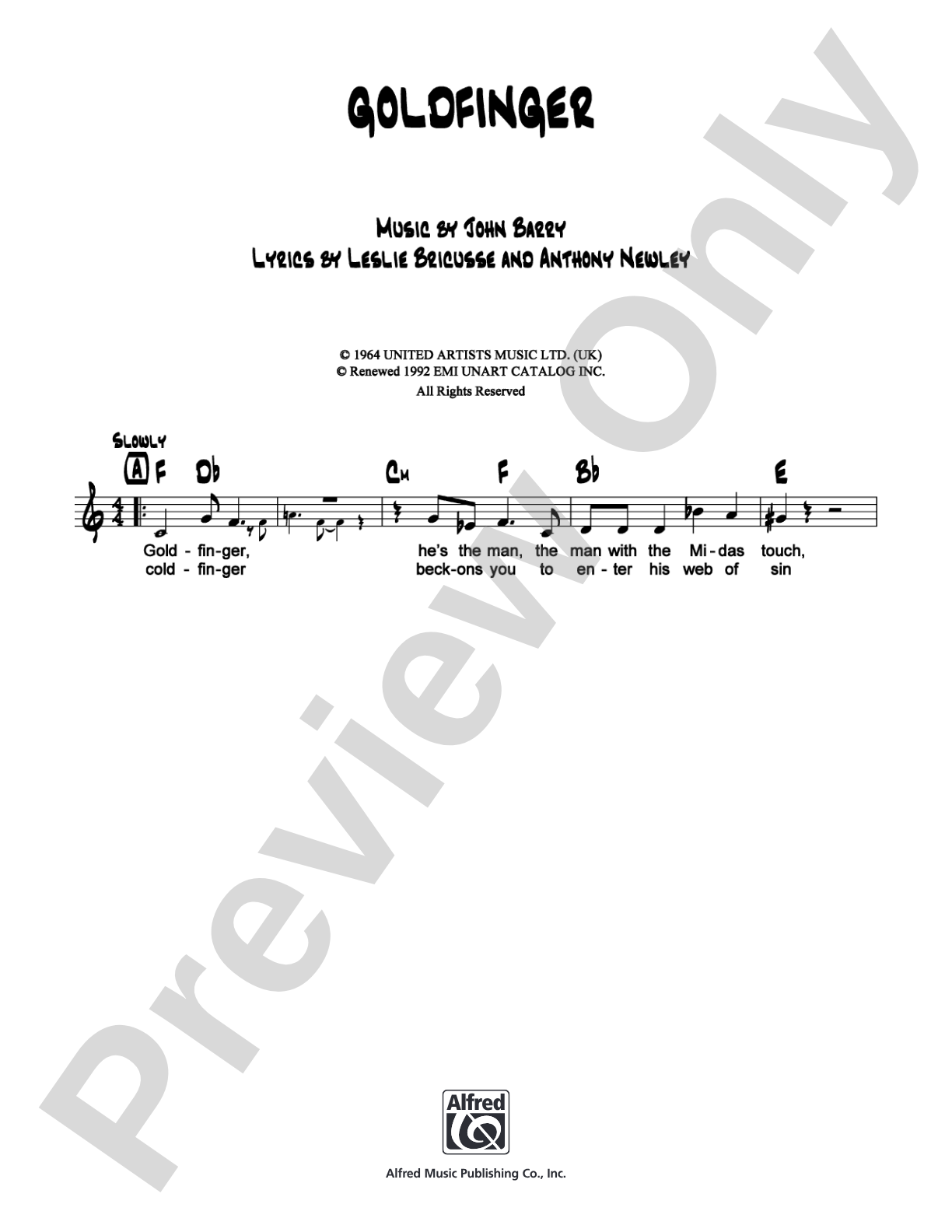
Goldfinger: Lead Sheet Digital Sheet Music

Goldfinger: Lead Sheet Digital Sheet Music

John Barry, Shirley Bassey

Item: 00-PS-0007251

Digital Download
$1.99
Description

Goldfinger: Lead Sheet Digital Sheet Music isn't in MakeMusic Cloud just yet...but it could be. Let us know you'd like to see it, and you'll help shape what comes next. In the meantime, start a free trial and dive into thousands of interactive titles your students can play along with today.

Sample Audio
No sample audio found.
Sample Video
Additional Details
SKU: 00-PS-0007251

More about this title

About the Artist: Shirley Bassey

Shirley Bassey (1937-present) is a Welsh mezzo-soprano whose vocal power and distinctive contralto range made her one of the most recognizable singers in popular music. She rose to international prominence in the 1950s and 1960s, becoming particularly famous for performing James Bond film themes, including three official Bond songs across her career.

Bassey's dramatic interpretations and commanding stage presence established a standard for jazz and pop vocal performance that influenced generations of singers. Her ability to convey emotional depth through both ballads and uptempo material demonstrates the breadth required of accomplished popular singers.

Why we love this

Goldfinger remains one of the most instantly recognizable pop standards, and this lead sheet captures the theatrical swagger of Bassey's original performance. Jazz ensembles, pop-rock combos, and solo singers benefit from having this iconic melody and harmonic framework in a format that invites interpretation and arrangement. It's a piece that sounds professional and polished no matter what instrumentation you bring to it.

What to expect

Goldfinger carries the glamour and menace of a spy thriller, mixing swagger with sophistication. The melody is bold and singable, yet the harmonic movement and Bassey's iconic delivery lend it a complexity that rewards careful listening and skilled interpretation.

Who it's for

This lead sheet serves jazz musicians, pop-rock bands, and vocal students who want to perform a standard with genuine cultural weight and musical substance. It also works well for instrumentalists developing their ability to interpret a famous vocal line through their own voice.

How to get the most out of it

  • Honor the rhythmic sophistication of Bassey's phrasing; the melody sits differently against the beat than a straightforward pop melody, so mark the score with her original rhythmic interpretation as a reference.
  • Treat the bridge section as a dramatic shift in intensity and register. Build the energy there rather than falling into a comfortable groove.
  • The melody demands vocal projection and confidence; whether performed by a vocalist or an instrumental soloist, play with command and presence rather than reserve.
  • Consider the harmonic language carefully when comping or improvising. The changes support sophisticated reharmonization, but they also work beautifully when kept clean and direct.

How to use it

Include this in a jazz or pop-standards set to anchor a program with a universally recognized showpiece. It works equally well as a full-ensemble feature, a small-group interpretation, or a solo vehicle, making it a versatile choice when you're building a concert that balances accessibility with musical substance.

Skills your students will build

  • Reading lead sheet notation and comping from chord symbols
  • Interpreting a famous vocal line through instrumental or solo vocal expression
  • Balancing rhythmic precision with interpretive phrasing
  • Working with jazz and pop harmonic language, including extended chord quality changes

You May Also Like