Goldberg Variations, Variation No. 18 Sheet Music Preview

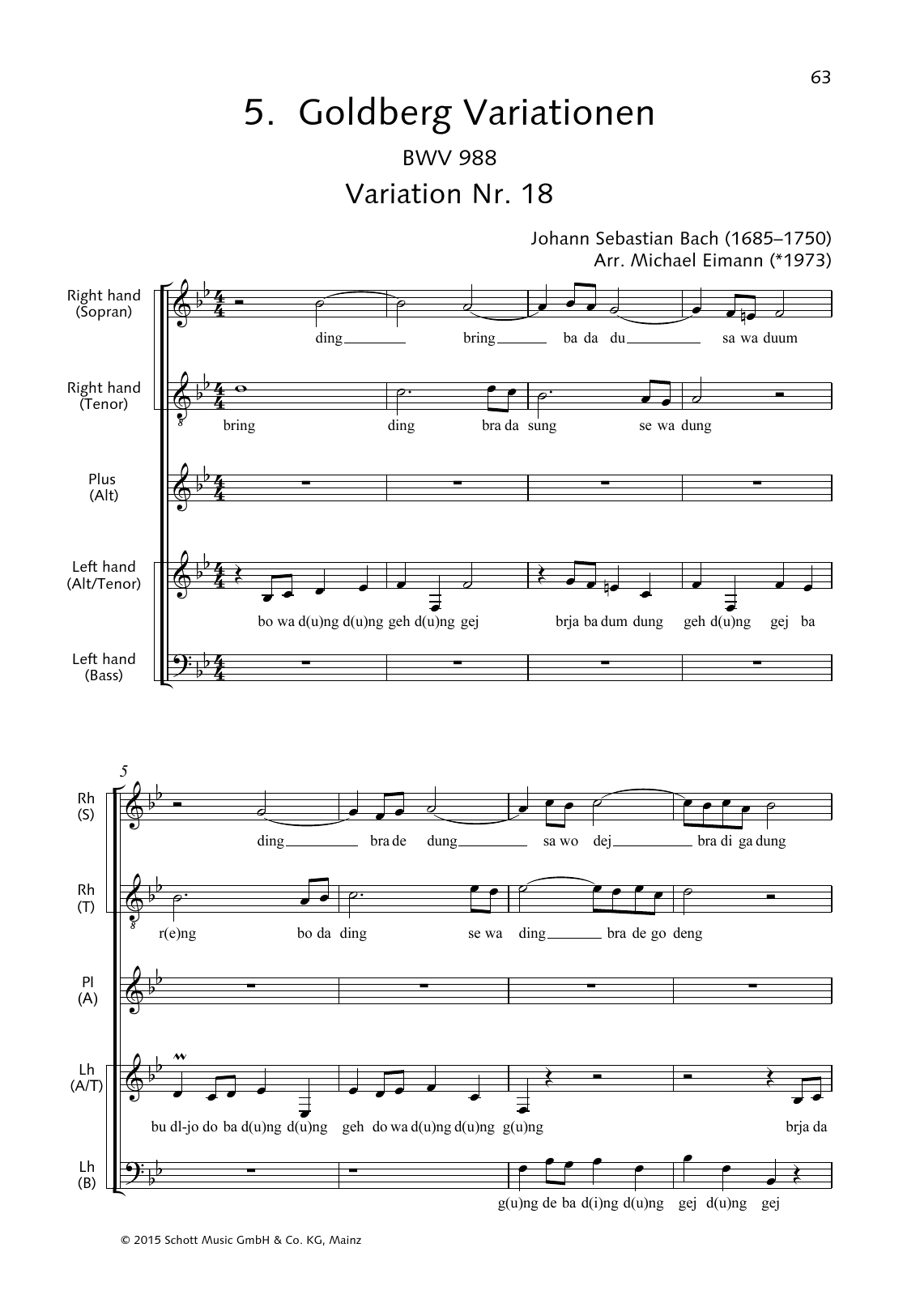
Goldberg Variations, Variation No. 18: Choral Octavo

By Johann Sebastian Bach / Edited by Michael Eimann

Item: 35-DS00370982

Digital Download
$2.99

One moment…

Description

Goldberg Variations, Variation No. 18: Choral Octavo isn't in MakeMusic Cloud just yet...but it could be. Let us know you'd like to see it, and you'll help shape what comes next. In the meantime, start a free trial and dive into thousands of interactive titles your students can play along with today.

Sample Audio
No sample audio found.
Sample Video
Additional Details
Publisher: Hal Leonard
Page Count: 3
SKU: 35-DS00370982

More about this title

About the Composer: Johann Sebastian Bach

Johann Sebastian Bach (1685–1750) shaped the foundation of Western music theory and practice through his systematic exploration of harmony, counterpoint, and form. His work as a composer, organist, and teacher in Leipzig established standards for musical architecture that remain central to music education today.

Why we love this

Variation 18 strips away the keyboard virtuosity of Bach's original and reveals the harmonic and melodic core that makes the Goldberg Variations endure. Presenting this as a choral work opens access to singers who might never encounter this masterpiece in its keyboard form, and the octavo scoring creates space for genuine ensemble blend.

What to expect

Serene but intellectually alive, this variation unfolds with the clarity of Bach's harpsichord writing translated into human voices. The counterpoint creates a sense of conversation among the parts, contemplative yet intricate.

Who it's for

This arrangement serves choirs with intermediate harmonic literacy and secure vocal technique. It works equally well for college chamber choirs and advanced high school ensembles seeking repertoire that connects to the keyboard canon.

How to get the most out of it

  • Shape the phrase through text inflection rather than obvious dynamic swells; let the grammar of the language guide the musical breath.
  • Balance the inner voices so the harmonic progression remains audible without the soprano line competing unnecessarily.
  • Treat rests as structural moments, not empty space; they clarify the counterpoint and give the listener time to absorb the harmonic motion.

How to use it

Pair this with other Baroque choral works to build a program around Bach's sacred and secular writing, or use it as a bridge piece between larger works where its brevity and focus provide textural contrast.

Skills your students will build

  • Following and balancing independent melodic lines in four-part texture
  • Recognizing and performing Baroque harmonic progressions
  • Sustaining long phrases over resting voices
  • Connecting text to musical architecture in instrumental-style writing

You May Also Like