
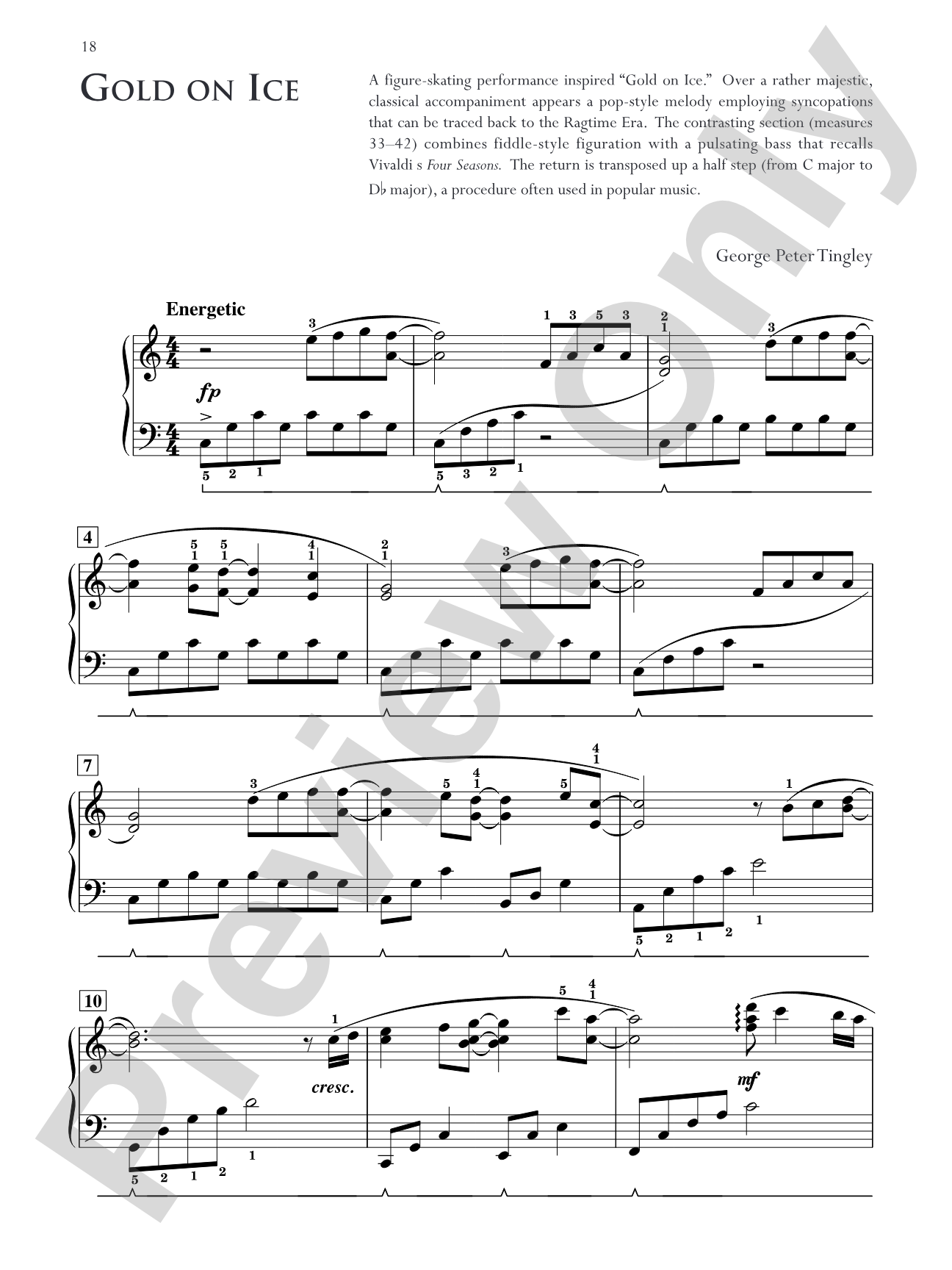

Gold on Ice: Piano
7 Intermediate to Late Intermediate Piano Solos That Reflect and Celebrate Styles of Past Masters
By George Peter Tingley
Level: Intermediate / Late Intermediate
Item: 00-PS-0016691
$4.99
Pickup currently not available
Description
Reflect and celebrate the styles of past masters with these pieces ranging from early to late intermediate in level. One might hear echoes of such composers as Beethoven, Tchaikovsky and sounds suggestive of European folk music. Program notes are included explaining the construction of the solos and specific influences.


Gold on Ice: Piano isn't in MakeMusic Cloud just yet...but it could be. Let us know you'd like to see it, and you'll help shape what comes next. In the meantime, start a free trial and dive into thousands of interactive titles your students can play along with today.
Request This Title
Tell us you want it.
Start Your Free Trial
Explore everything that's ready to play right now.
Sample Audio
No sample audio found.
Sample Video
No sample videos found.
Additional Details
Publisher:
Alfred Music
Page Count:
24
SKU:
00-PS-0016691
More about this title
About the Composer: George Peter Tingley
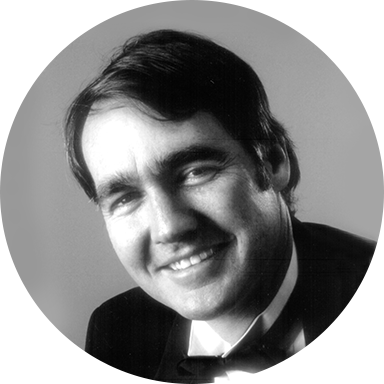
George Peter Tingley studied piano performance at California State University, Hayward, and earned both bachelor's and master's degrees in music theory from the University of Southern California. During the 1970s, he worked as a private composition student with Nadia Boulanger in Paris, deepening his understanding of musical structure and style.
After returning to the United States, Tingley began his career as a private teacher and composer. Since 1989, he has focused on writing for piano students, publishing over 75 pieces for educational use. His work has extended beyond the studio: in 1992, he composed "Kristi's Theme" for Olympic figure-skating champion Kristi Yamaguchi, which was orchestrated and recorded with Tingley as the piano soloist. He lives in Point Richmond, California, where he continues composing and teaching.
Why we love this
Tingley writes with genuine respect for the masters while creating something entirely his own. Each piece in this collection carries clear stylistic fingerprints—you'll recognize the architectural confidence of Beethoven or the melodic sweep of Tchaikovsky—yet the writing never feels derivative. The included program notes act as a built-in study guide, showing students how composers learn from tradition and build upon it.
What to expect
These solos feel like a conversation between centuries. There's the architectural clarity and forward momentum you'd find in classical writing, alongside the emotional warmth and lyrical breadth of the Romantic era. European folk traditions weave through the harmonic fabric, bringing a sense of place and lived tradition to every page.
Who it's for
Intermediate and late intermediate pianists ready to explore compositional craftsmanship. This collection works for students who have mastered basic technique and are ready to think more deeply about style, form, and musical influence.
How to get the most out of it
- Pay attention to the program notes before you begin learning each piece. Understanding the compositional influences and structural details will shape your interpretive choices and help you hear what Tingley is referencing.
- Shape long melodic lines with the same sustained legato you'd hear in a Beethoven or Tchaikovsky score. These pieces reward singing, not mechanical playing.
- Listen for the folk music elements in the harmonic progressions and rhythmic patterns. Let those dance-like qualities emerge without rushing; the European character lives in the phrasing.
- Balance the reflective moments with the celebratory ones. The collection moves through different moods, so let each piece establish its own emotional temperature.
How to use it
Program individual pieces throughout a recital as contrasting solos that demonstrate range and musical maturity. Alternatively, cluster several pieces together as a thematic program about musical inheritance and style. The intermediate level makes these suitable for student recitals, competitions, or simply as repertoire that shows how composers build from the past.
Skills your students will build
- Recognizing and interpreting stylistic markers from classical and romantic composers
- Sustaining long melodic lines with appropriate phrasing and legato
- Understanding harmonic language influenced by European folk traditions
- Reading and interpreting program notes to inform musical interpretation
- Building confidence with intermediate-level piece architecture and form