Going Down To Cairo Sheet Music Preview

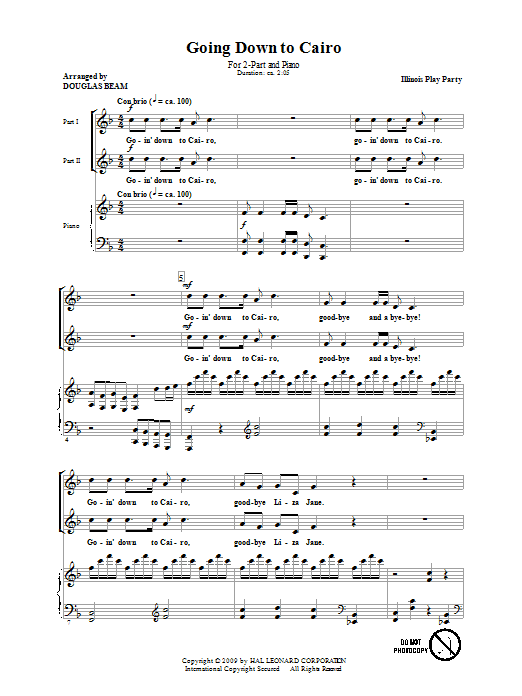
Going Down To Cairo: 2-Part Choral Octavo

Arranged by Douglas Beam

Item: 35-DS00126152

Digital Download
$2.99
Description

Going Down To Cairo: 2-Part Choral Octavo isn't in MakeMusic Cloud just yet...but it could be. Let us know you'd like to see it, and you'll help shape what comes next. In the meantime, start a free trial and dive into thousands of interactive titles your students can play along with today.

Sample Audio
No sample audio found.
Sample Video
Additional Details
Publisher: Hal Leonard
Page Count: 6
SKU: 35-DS00126152

More about this title

About the Arranger: Douglas Beam

Douglas Beam has built a reputation as an arranger who understands what works in the classroom and on the concert stage. His arrangements balance musical sophistication with accessibility, making them reliable choices for choirs seeking quality literature that students can genuinely enjoy performing.

Why we love this

Beam's treatment of this folk spiritual gives young singers a piece with real character and harmonic interest without overwhelming them. The two-part writing feels spacious and allows each voice to shine, which is exactly what elementary and middle school choirs need to build confidence and musicality.

What to expect

The piece carries the warmth of a traditional spiritual without demanding vocal maturity beyond a young ensemble's reach. There is dignity here, along with the kind of straightforward storytelling that makes folk material timeless in the classroom.

Who it's for

This arrangement serves upper elementary through middle school choirs, or any ensemble building foundational two-part singing skills. It works equally well for school performances, community choruses, and festival settings.

How to get the most out of it

  • Shape the phrases with breath awareness; mark your breathing spots early so both parts stay connected through the longer lines.
  • Lean into the folk character by keeping the tempo conversational rather than metronomic; let the melody breathe naturally.
  • Balance the parts equally; Part 2 carries important harmonic weight and deserves as much vocal presence as the melody line.

How to use it

Pair this with other spirituals or folk songs to build a thematic concert set, or slot it into a program where you want a moment of intimate, unaccompanied singing. It's also an excellent teaching piece for demonstrating how arrangers honor traditional melodies while creating new harmonic possibilities.

Skills your students will build

  • Two-part part independence and blend
  • Sustaining vocal line through longer phrases
  • Interpreting folk material with appropriate style and character
  • Reading and singing harmony in close intervals

You May Also Like