Goin' to Town: Piano Digital Sheet Music

Goin' to Town: Piano Digital Sheet Music

Duke Ellington, Bub Miley

Item: 00-PS-0008187

Digital Download
$3.99
Description

Goin' to Town: Piano Digital Sheet Music isn't in MakeMusic Cloud just yet...but it could be. Let us know you'd like to see it, and you'll help shape what comes next. In the meantime, start a free trial and dive into thousands of interactive titles your students can play along with today.

Sample Audio
No sample audio found.
Sample Video
Additional Details
SKU: 00-PS-0008187

More about this title

About the Artist: Duke Ellington

Duke Ellington (1899–1974) stands as one of the most significant composers and bandleaders in American music history. His output spanned five decades and encompassed everything from three-minute pop standards to extended concert works, all marked by sophisticated harmonic language, memorable melodies, and an instinctive understanding of instrumental color.

Ellington's influence on jazz and popular music remains immeasurable. His compositions have become standards in the repertoire, studied and performed across classical, jazz, and educational contexts. Beyond his role as a performer and orchestrator, Ellington shaped how jazz could be composed and arranged, proving the genre's capacity for formal complexity and emotional depth.

Why we love this

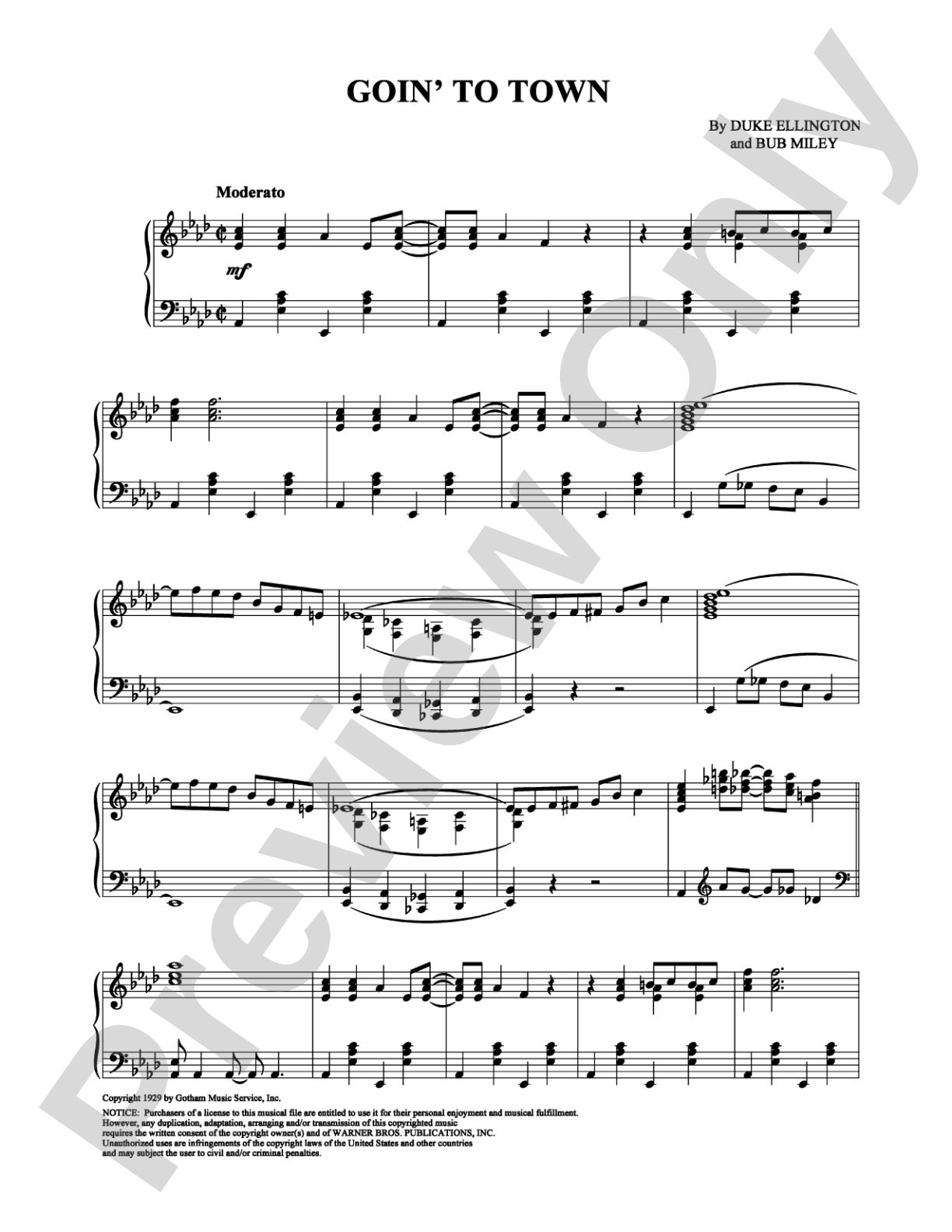
Ellington's stride piano technique and harmonic sophistication make this standard a rewarding piece for intermediate to advanced pianists who want to explore jazz language without needing a full ensemble. The composition offers genuine interpretive room—the melody sits naturally under the hands, but the harmonic movement invites players to develop their own comping and improvisation.

What to expect

The piece embodies the urbane sophistication Ellington brought to everything he wrote. There's a cosmopolitan ease to the melody, a sense of someone strolling through town with confidence and style. The harmonic shifts give the tune unexpected turns without ever losing its fundamental elegance.

Who it's for

Intermediate to advanced pianists with some jazz fluency who want to explore a genuine Ellington composition in a solo setting. This works equally well for students studying jazz standards, pianists preparing for recitals that blend classical and jazz repertoire, or anyone building a jazz piano library with essential American songs.

How to get the most out of it

  • Study the original recording to absorb Ellington's touch and phrasing; his approach to rhythm and space defines the piece's character far more than strict tempo adherence would.
  • Balance melodic clarity with the harmonic movement underneath; these lines are equally important and should both come through in your voicing.
  • Approach the stride sections with relaxation rather than tension; the bounce of the accompaniment comes from elasticity in the wrist and shoulder, not from rigid left-hand technique.
  • Leave room for swing. Straight eighths will flatten the style; lean into the jazz articulation and let the melody breathe between phrases.

How to use it

Pair this with other jazz standards or American songbook material for a recital that bridges classical and vernacular traditions. It also serves as an excellent solo vehicle within a broader jazz ensemble concert, offering a moment for a pianist-bandleader to step out front. For students, it's a natural bridge piece when transitioning from classical technique toward jazz improvisation and comping.

Skills your students will build

  • Jazz harmonic analysis and voice leading
  • Swing articulation and phrasing
  • Left-hand stride technique with rhythmic flexibility
  • Comping and improvisation over a standard form
  • Interpretation of jazz notation and style conventions

You May Also Like