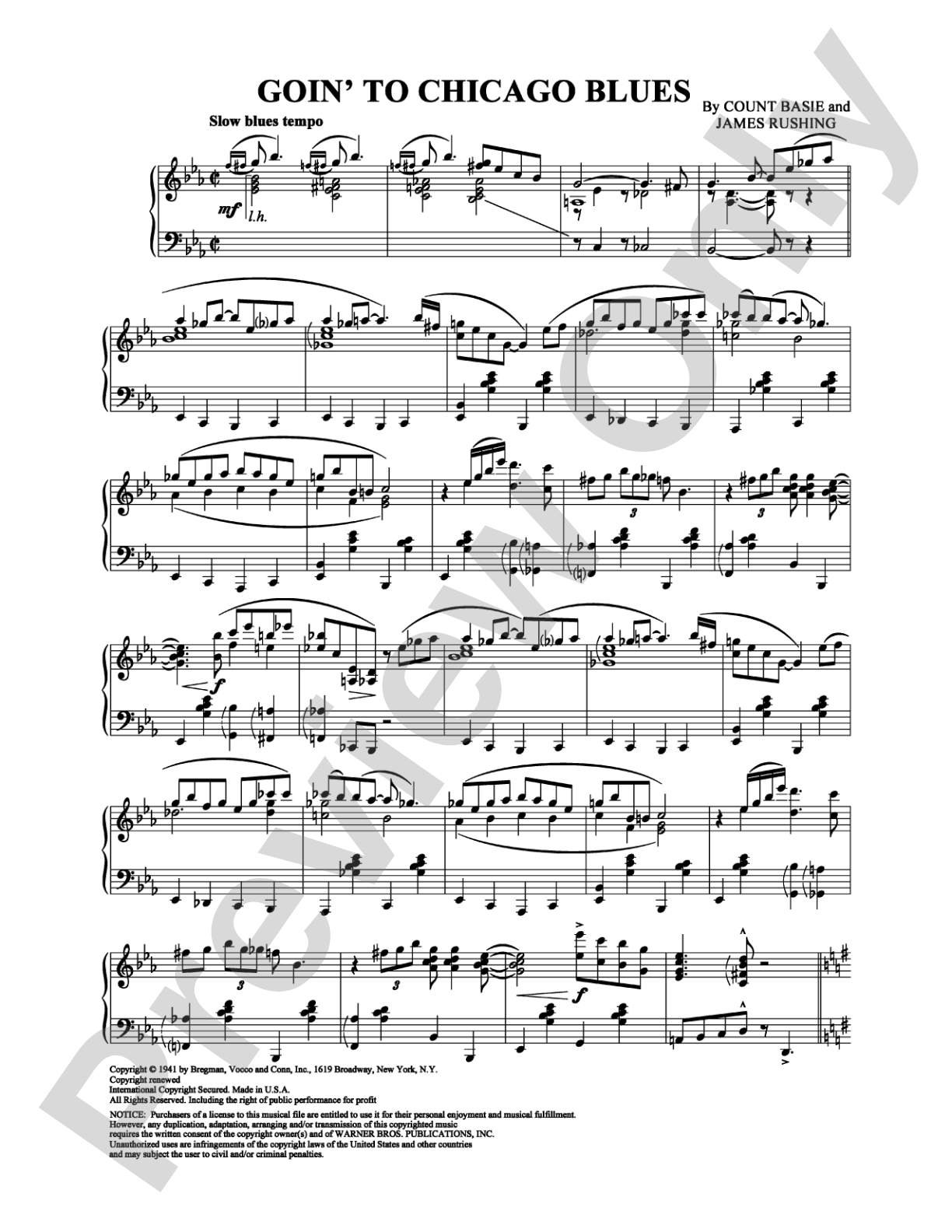
Goin' to Chicago Blues: Piano Digital Sheet Music

Goin' to Chicago Blues: Piano Digital Sheet Music

Count Basie, Jim Rushing

Item: 00-PS-0000439

Digital Download
$3.99
Description

Goin' to Chicago Blues: Piano Digital Sheet Music isn't in MakeMusic Cloud just yet...but it could be. Let us know you'd like to see it, and you'll help shape what comes next. In the meantime, start a free trial and dive into thousands of interactive titles your students can play along with today.

Sample Audio
No sample audio found.
Sample Video
Additional Details
SKU: 00-PS-0000439

More about this title

About the Artist: Count Basie

Count Basie (1904-1984) was a pianist and bandleader whose economical, swinging style defined the sound of big band jazz. His ability to lay back behind the beat and use silence as effectively as sound made him one of the most influential figures in jazz history. Basie's approach to the piano emphasized groove and ensemble cohesion over technical display, making his compositions and arrangements essential listening for any musician studying jazz phrasing and rhythm section leadership.

Why we love this

This blues showcases Basie's signature stride and swing feel in a form students can work with directly. The piece captures the spirit of his Kansas City style without requiring the full orchestra, giving pianists a chance to explore authentic jazz comping, call-and-response phrasing, and the art of playing behind the beat.

What to expect

Propulsive yet relaxed, with a walking bass line anchoring soulful right-hand phrases that sit just behind the beat. The blues changes are familiar, but Basie's touch makes them feel like a conversation between old friends who don't need to rush.

Who it's for

Jazz pianists developing their comping and blues vocabulary, as well as students exploring how to translate a big band sound to solo piano. It works equally well for intermediate pianists who want an authentic entry point into swing-era jazz.

How to get the most out of it

  • Study recordings of Basie's own interpretations to understand his approach to space and time; notice how he leaves room for the melody to breathe rather than filling every beat.
  • Work the left hand groove separately until the stride pattern feels automatic, then add the right-hand melody and comping so you can focus on swinging the overall feel.
  • Experiment with the relationship between the written rhythms and the shuffle feel; Basie's notation often suggests looser interpretations than a strict reading would produce.

How to use it

Include this in a jazz recital or concert exploring the evolution of blues piano styles, or use it as a stand-alone feature that demonstrates the difference between reading a jazz chart and truly swinging it. It pairs well with other blues standards or stride piano repertoire.

Skills your students will build

  • Blues comping patterns and chord substitutions
  • Stride bass technique and left-hand independence
  • Swing phrasing and playing behind the beat
  • Call-and-response melody writing and improvisation over 12-bar blues form

You May Also Like