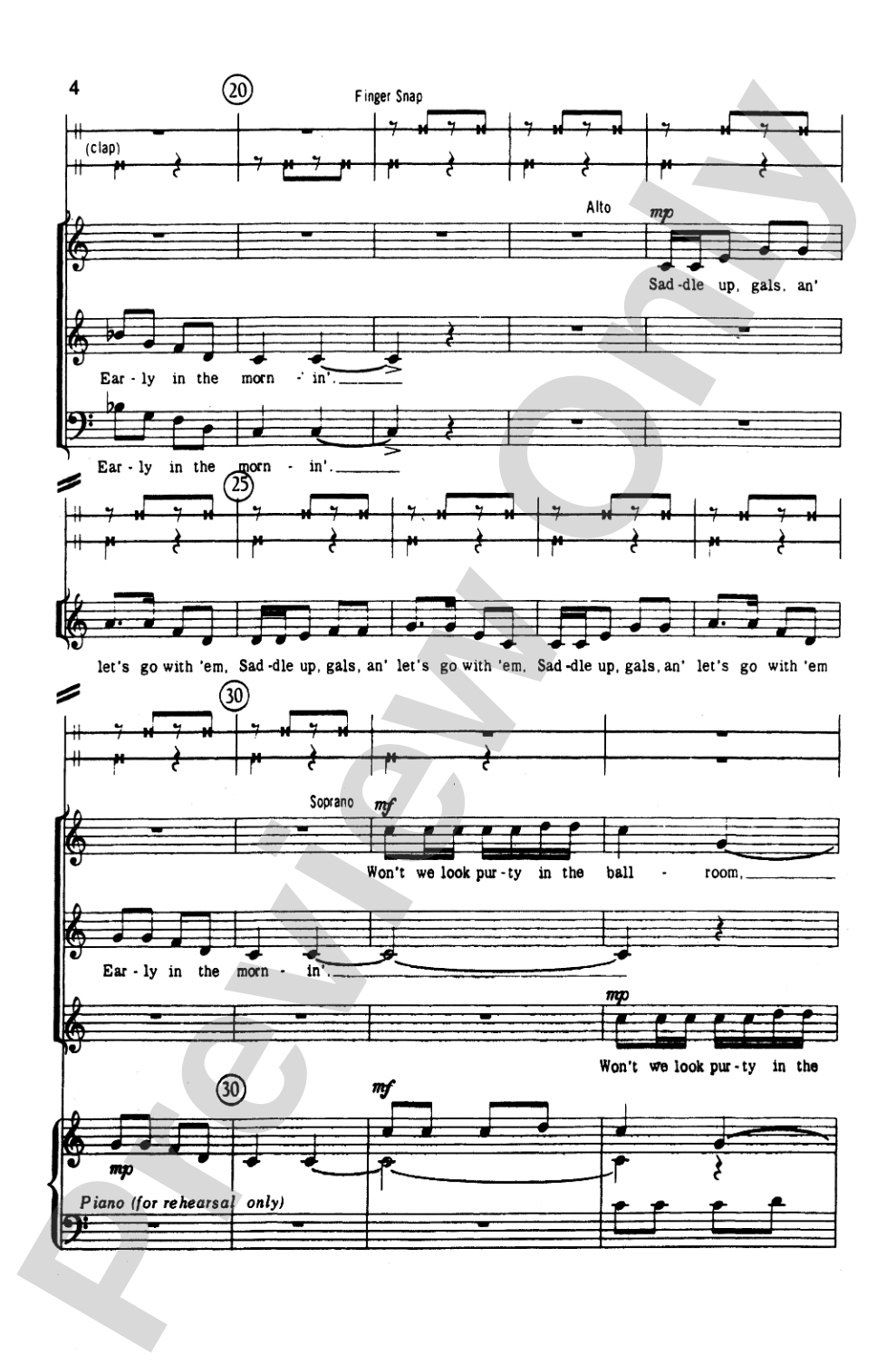
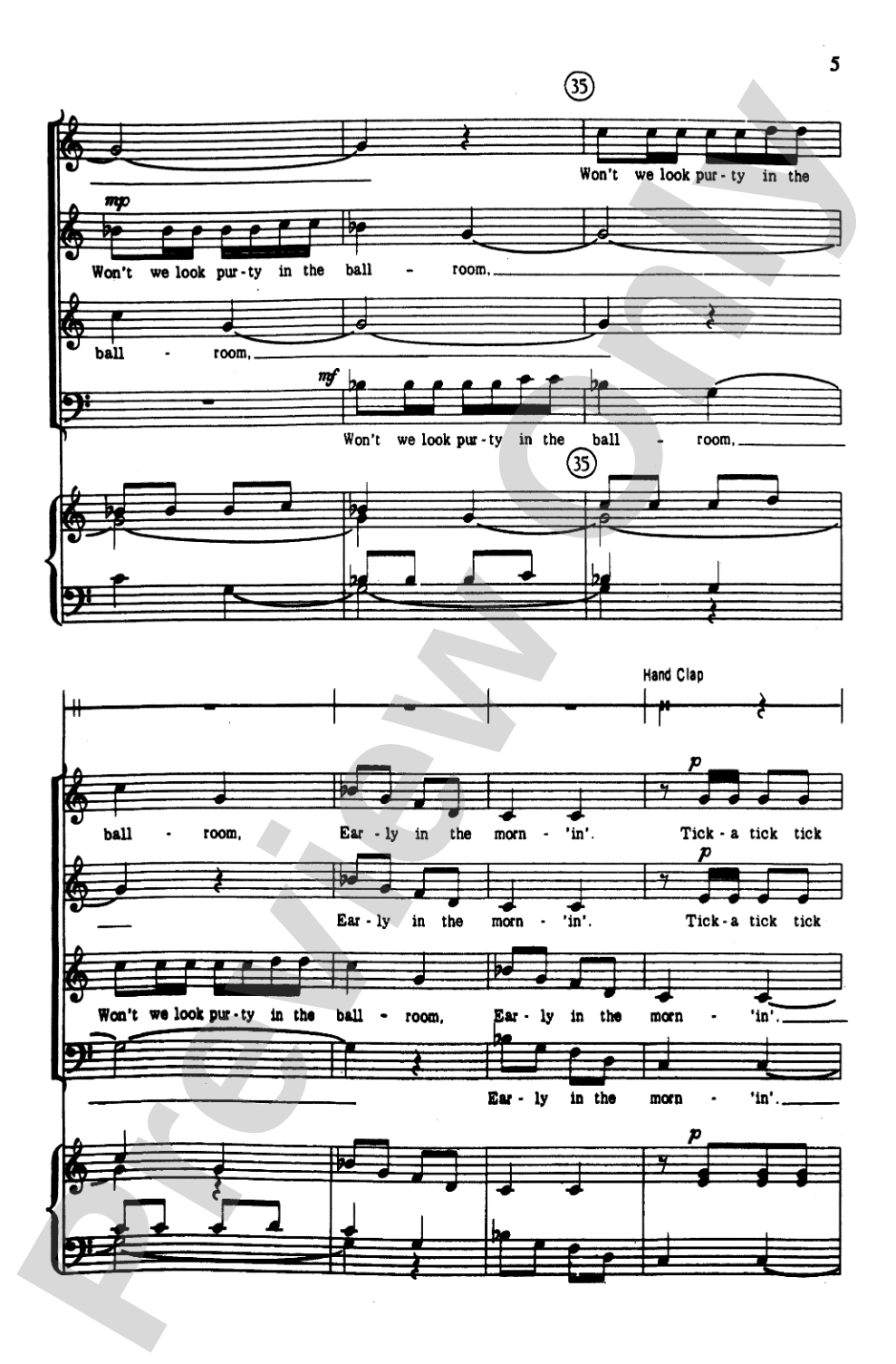
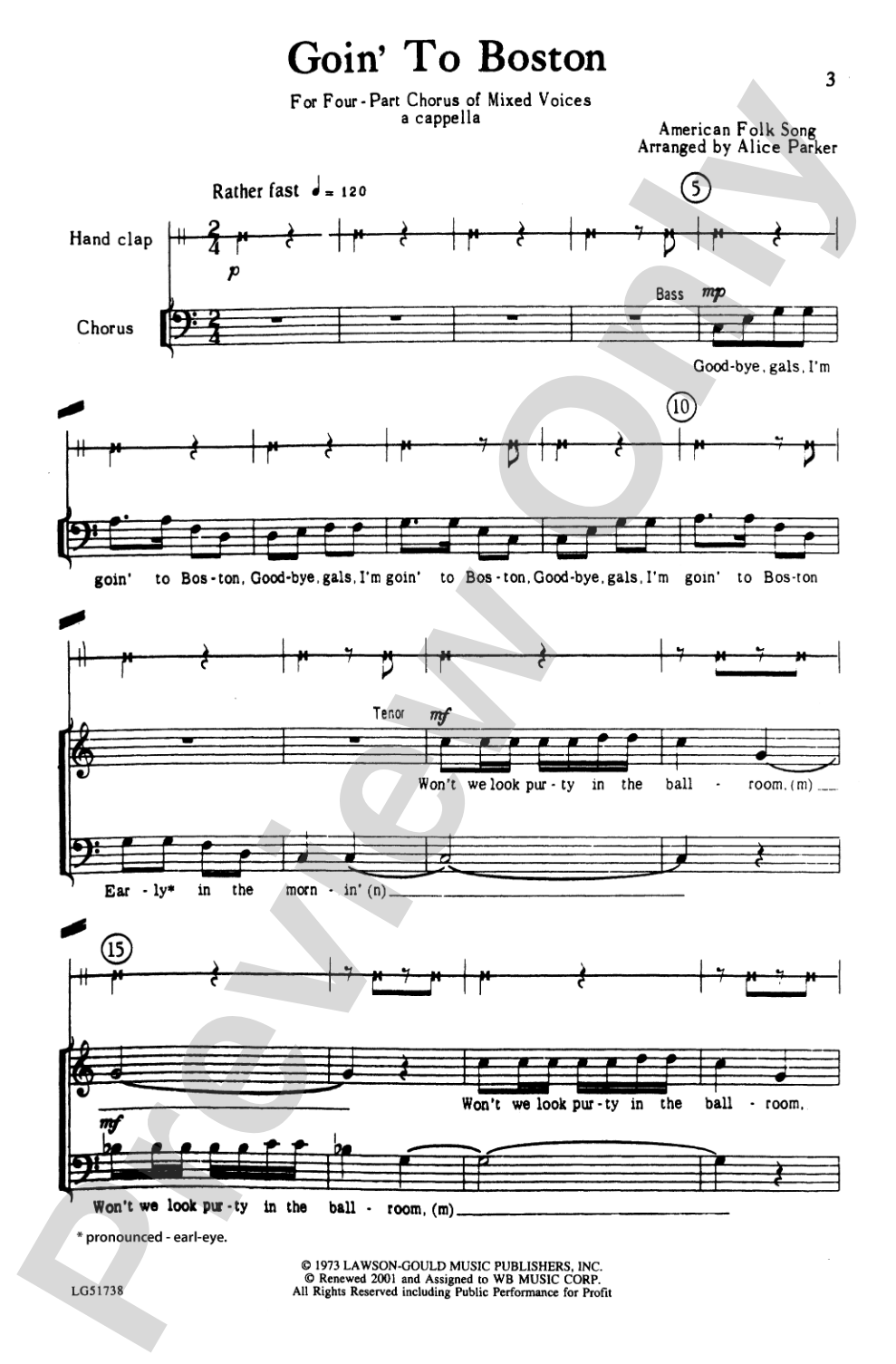
Goin' to Boston (American Folk Song) Sheet Music Preview

Goin' to Boston (American Folk Song): SATB Choral Octavo

American Folk Song / arr. Alice Parker

Item: 00-PO-0002666

Digital Download
$3.50

Minimum order quantity: 20 copies

Description

Goin' to Boston (American Folk Song): SATB Choral Octavo isn't in MakeMusic Cloud just yet...but it could be. Let us know you'd like to see it, and you'll help shape what comes next. In the meantime, start a free trial and dive into thousands of interactive titles your students can play along with today.

Sample Audio
No sample audio found.
Sample Video
Additional Details
Series: Alfred Archive Edition: Lawson-Gould Music Publishers
Publisher: Alfred Music
Page Count: 20
SKU: 00-PO-0002666

More about this title

About the Arranger: Alice Parker

Alice Parker

Alice Parker brought the American folk tradition into the choral canon through decades of meticulous arranging and conducting. She studied composition and conducting at Smith College and Juilliard, where she formed a creative partnership with Robert Shaw that produced hundreds of choral settings of folk material, hymns, and spirituals still performed by ensembles worldwide.

Parker's output spans five hundred published works across operas, cantatas, song cycles, and choral suites, but her deepest commitment remained the melody itself. In 1985, she established MELODIOUS ACCORD, INC., dedicating herself to vocal music education through books on melodic style, choral improvisation, and congregational singing. Her honors include the Robert Shaw Award from the American Choral Directors Association, the Harvard Glee Club Foundation Medal, and six honorary doctorates.

Why we love this

Parker's gift for honoring the integrity of a folk melody while crafting genuinely singable harmonies makes this arrangement work for mixed choirs at multiple skill levels. The octavo format suits concert programming, community performances, and educational settings where directors want to build ensemble cohesion around accessible, joyful material. Her decades of choral experience show in every voice part: nothing feels gratuitous, and the arrangement lets the song's character shine through.

What to expect

Warm, grounded, and unpretentious. The arrangement respects the directness of the original folk melody while surrounding it with harmonic support that feels natural rather than ornamental. There's an easiness to the piece that invites singers to relax into genuine ensemble singing.

Who it's for

Mixed choirs ranging from high school through adult community and church ensembles will find this accessible and satisfying. Directors preparing concerts, festival programs, or repertoire that celebrates American musical roots will value the straightforward musicianship and singability Parker brings to the folk song tradition.

How to get the most out of it

  • Bring out the narrative arc of the melody line. "Goin' to Boston" tells a story; shape the phrasing so the text lands clearly and the journey feels intentional rather than perfunctory.
  • Balance the harmonic voices carefully in the middle registers. Parker's arrangements often hide supporting material in the alto and tenor ranges; rehearse those lines independently to ensure they provide foundation without clouding the soprano melody.
  • Attend to the rhythmic precision in the lower voices, especially at cadential moments. Folk material can sound slack if the rhythm section doesn't lock in firmly.
  • Use the text as your guide to articulation and vowel consistency. American folk idiom asks for clear diction and forward vowels; this keeps the arrangement from sounding precious while maintaining blend.

How to use it

This works beautifully in a set of American folk or popular song arrangements, paired with other spirituals or folk settings to create thematic coherence. It also serves as an excellent warm-up piece for choirs developing blend and ensemble balance, or as a finale number where audiences can enjoy the straightforward joy of the tune.

Skills your students will build

  • Melodic awareness and phrase shaping in four-part harmony
  • Clear text projection and articulation in folk idiom
  • Harmonic listening and balance within the SATB texture
  • Rhythmic precision and ensemble interdependence in supporting voice parts

You May Also Like