
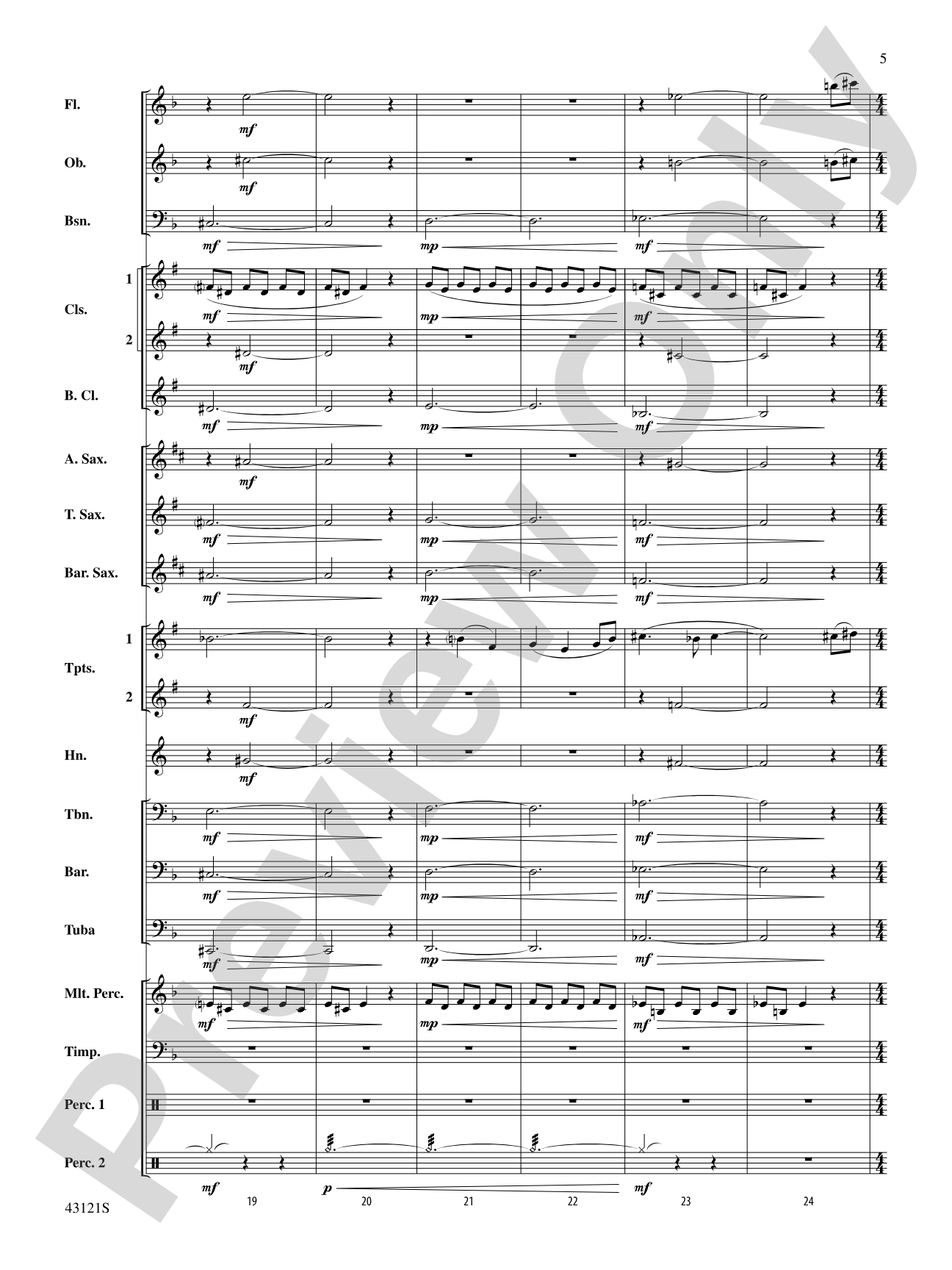
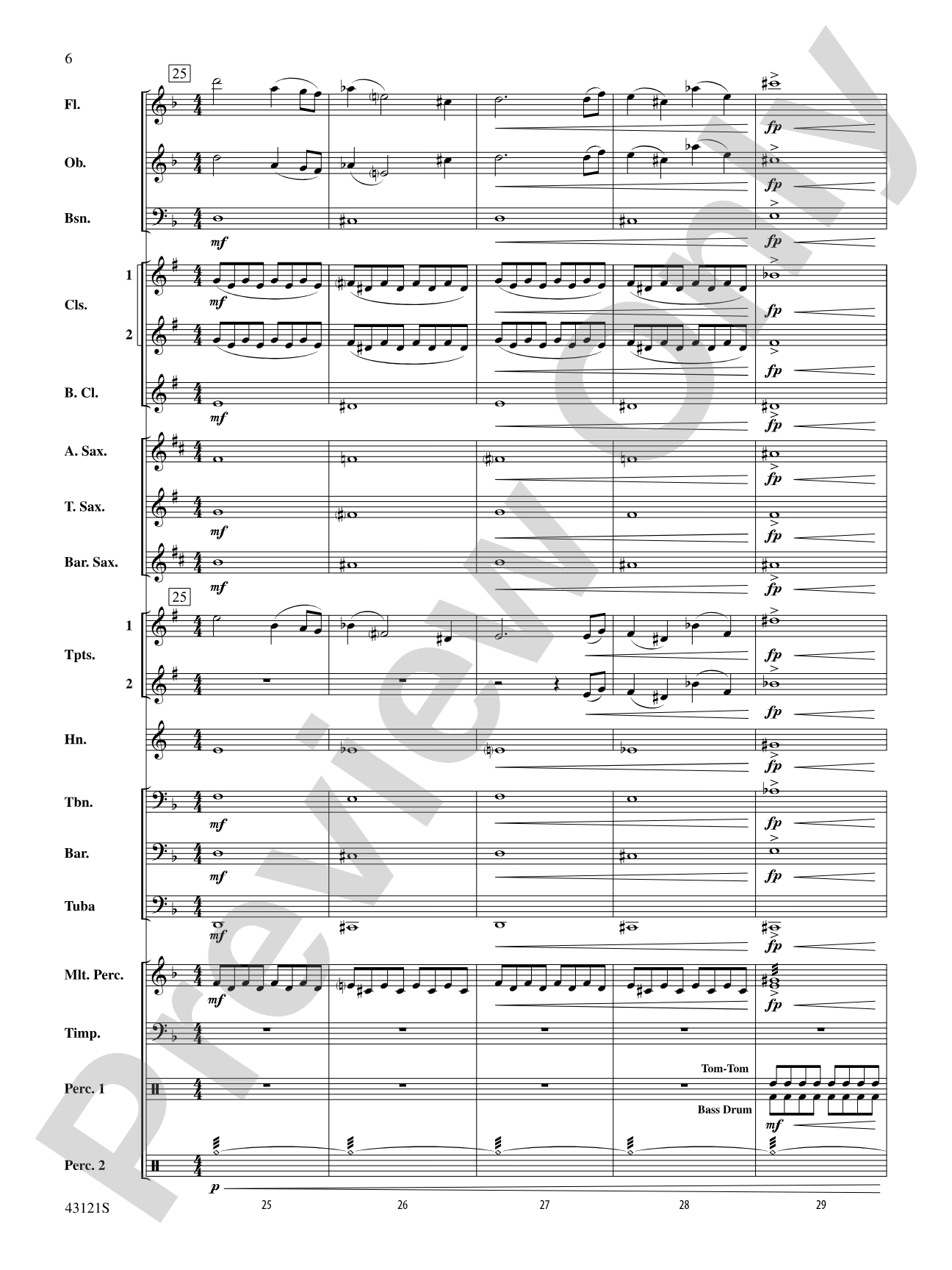
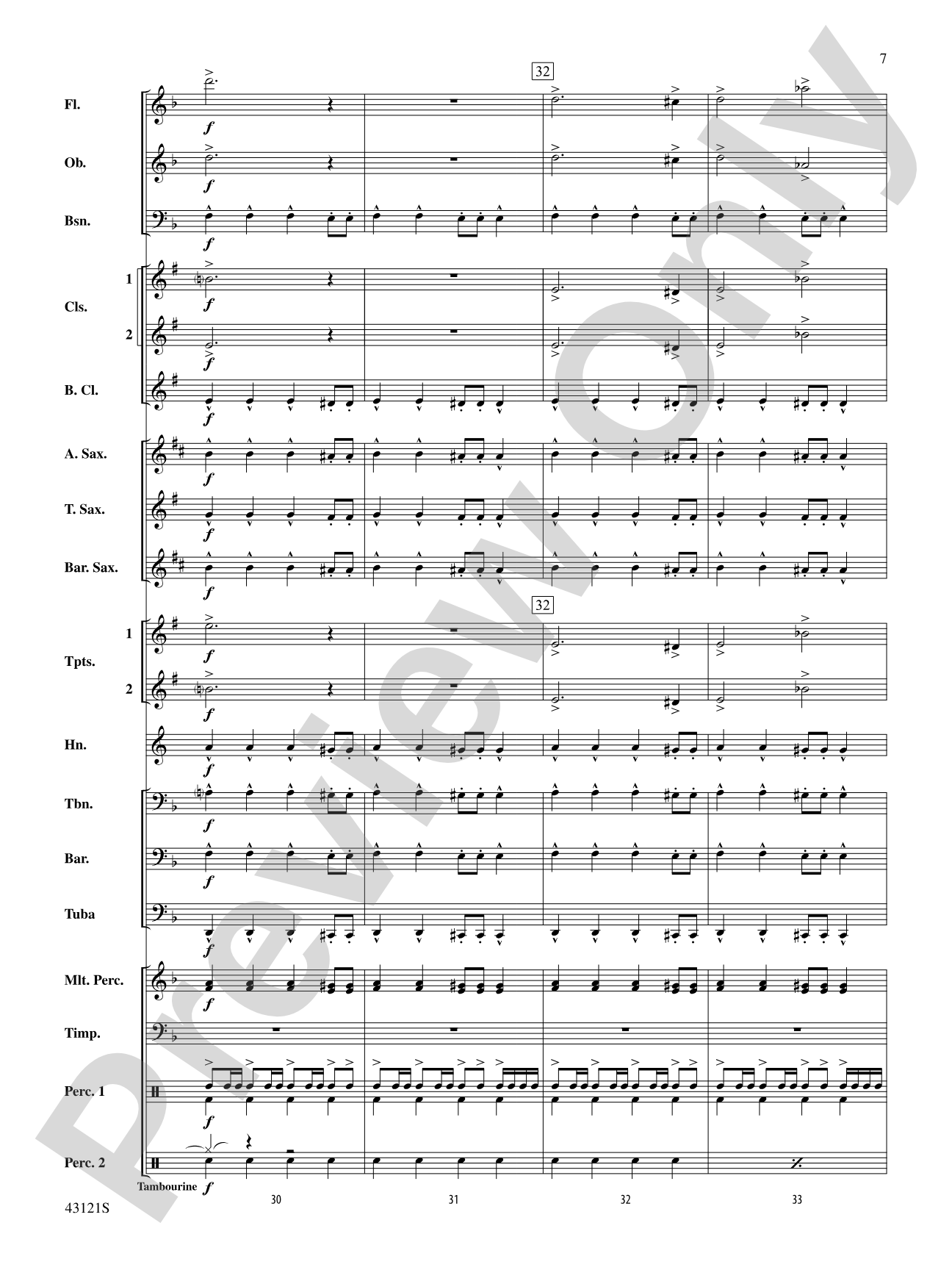
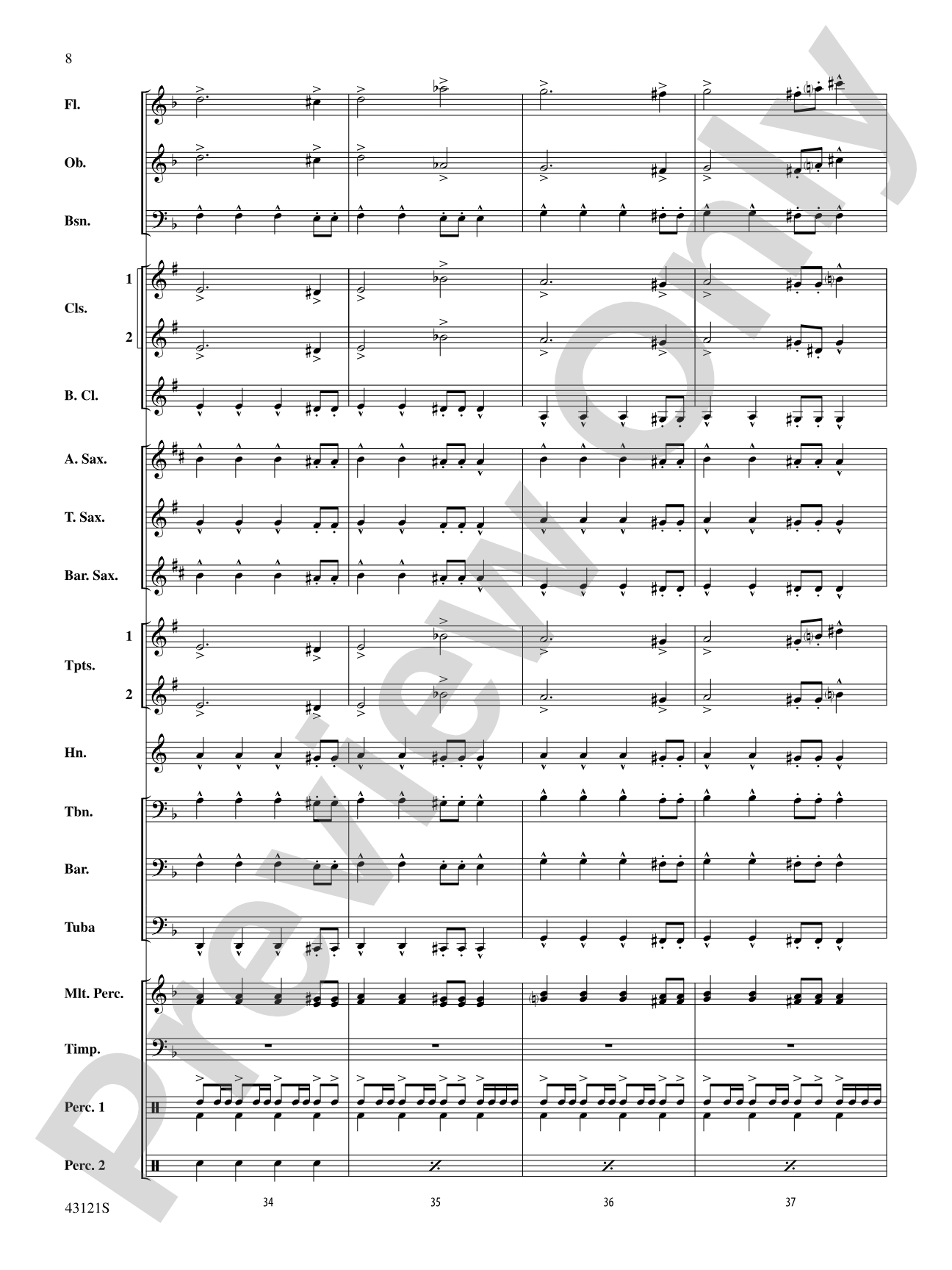
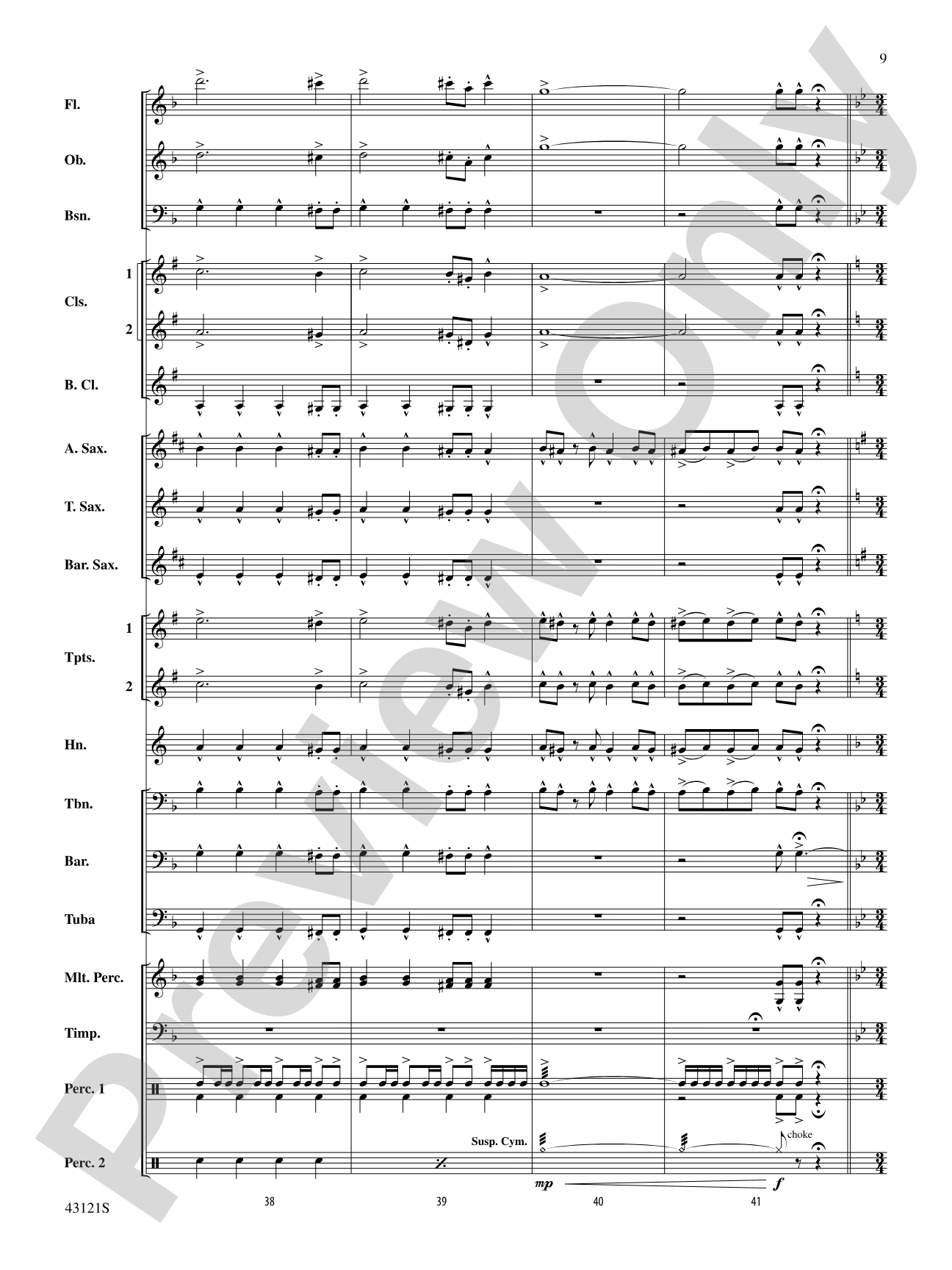
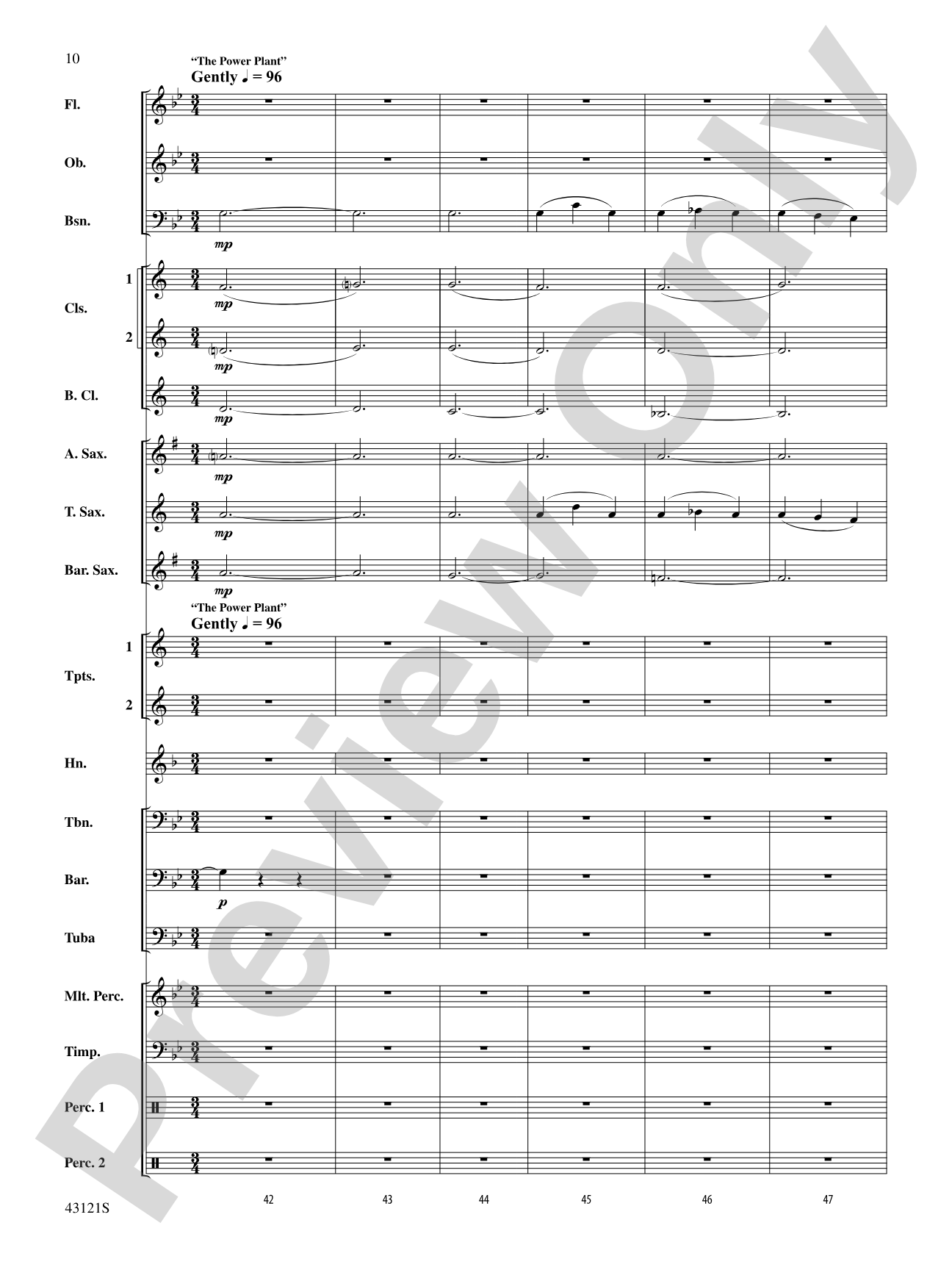
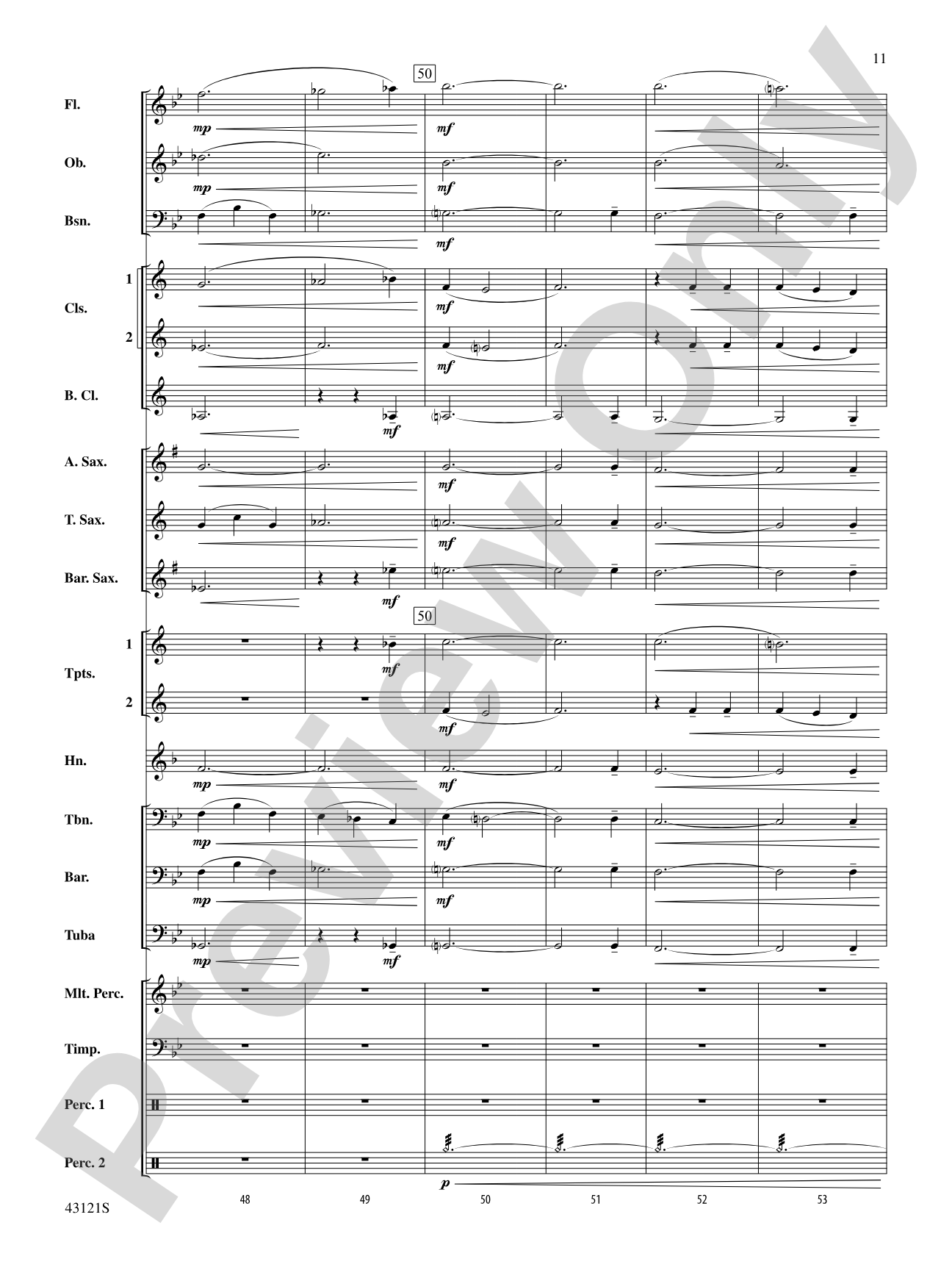
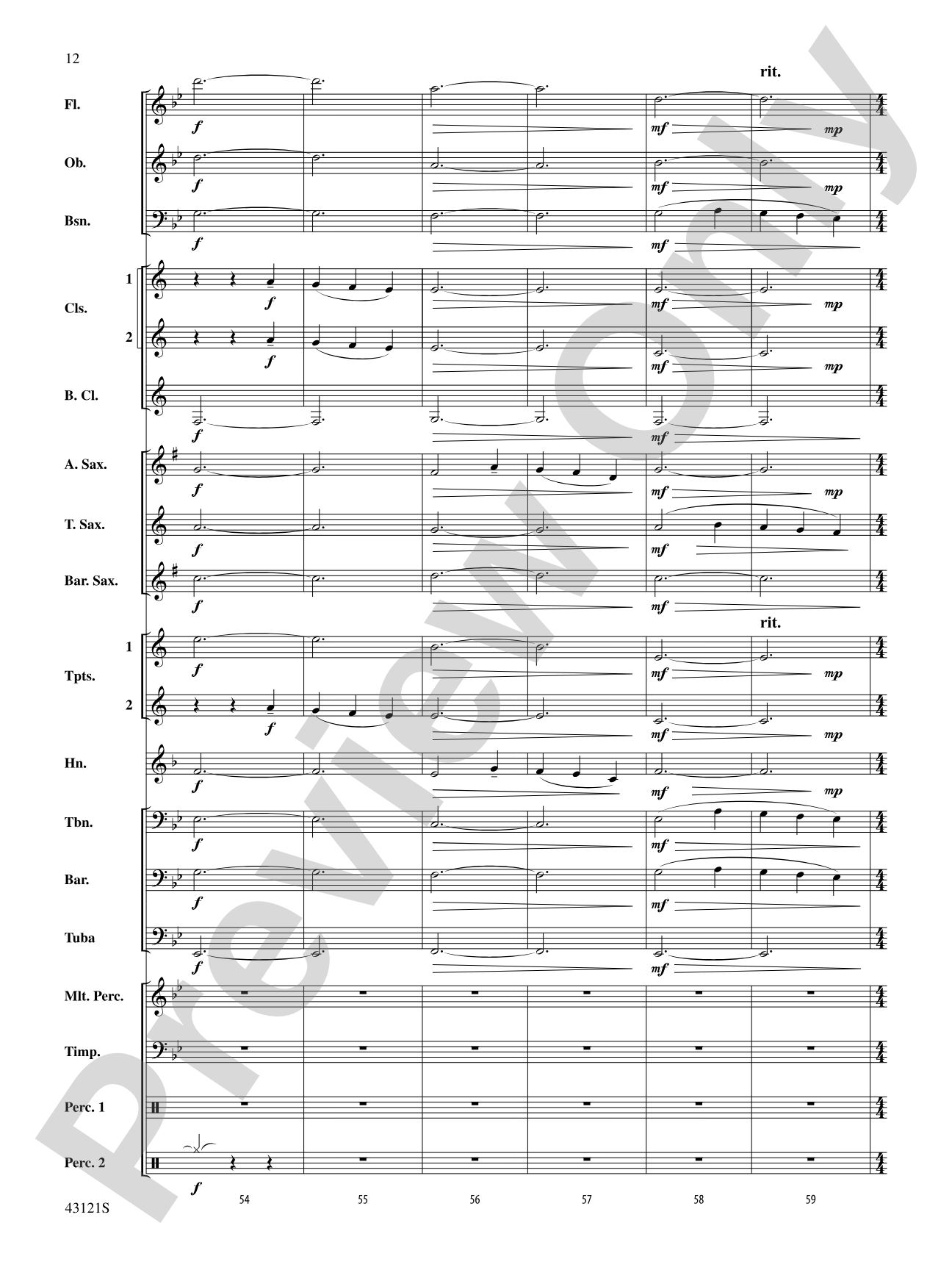
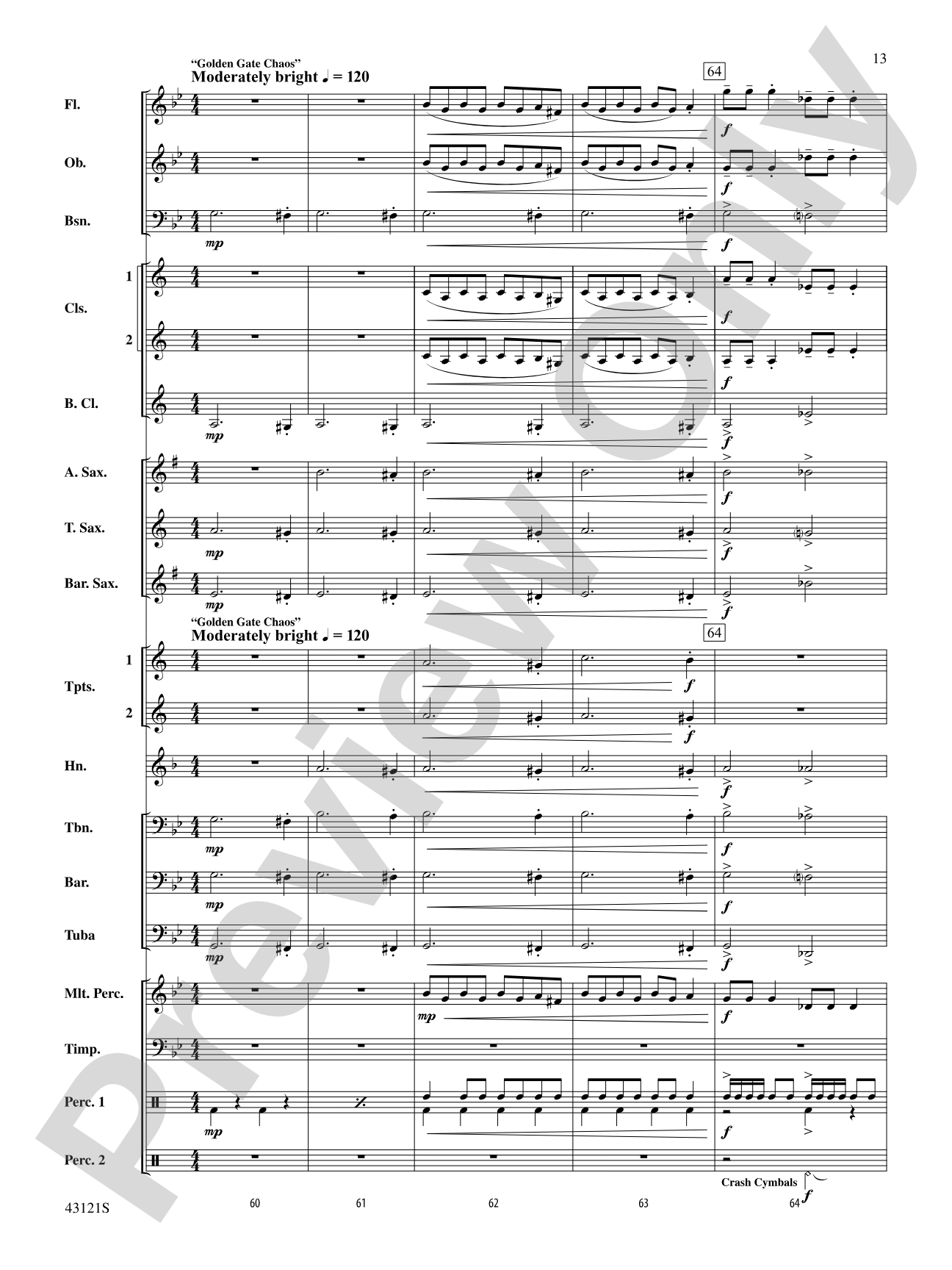
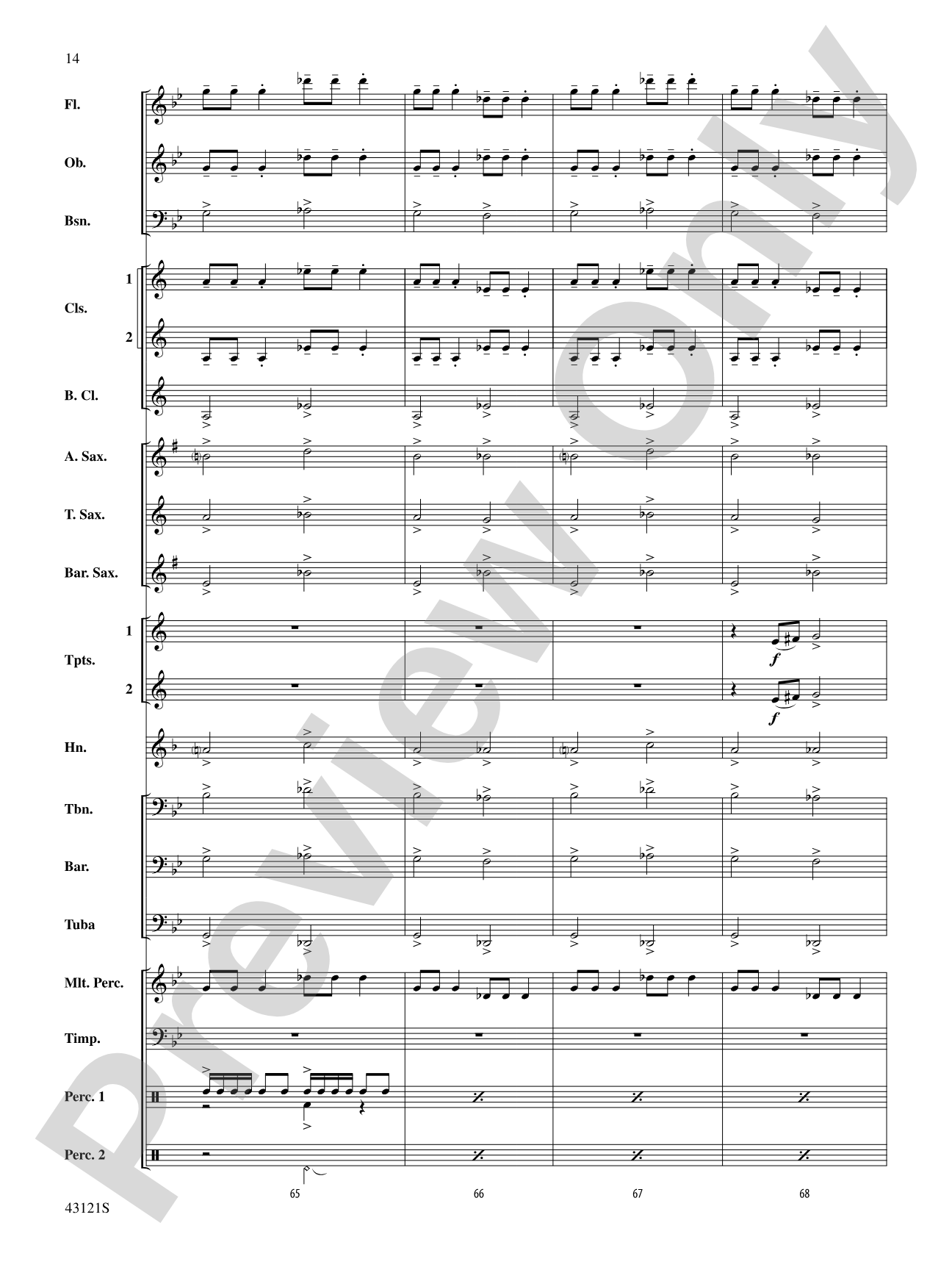
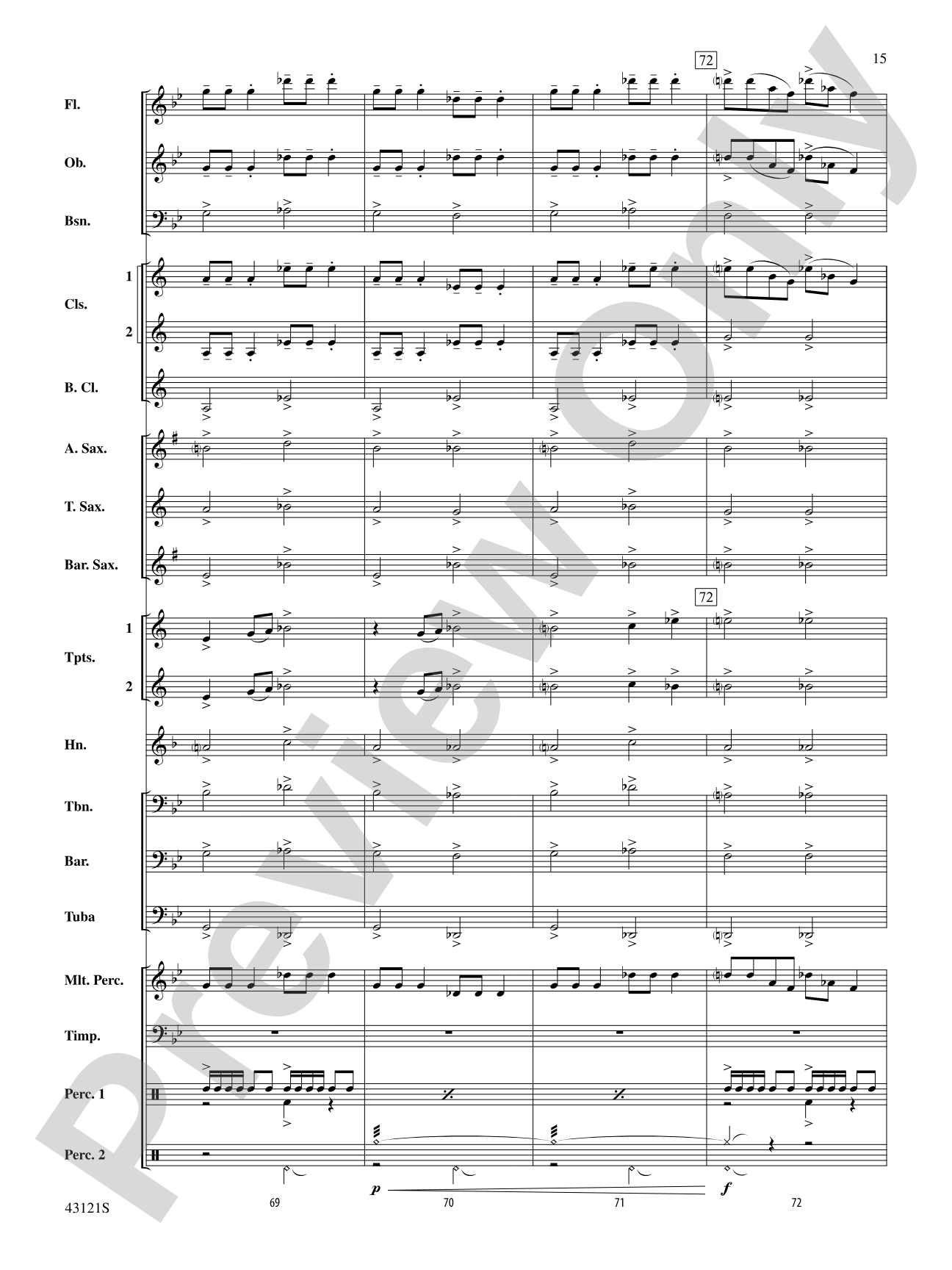
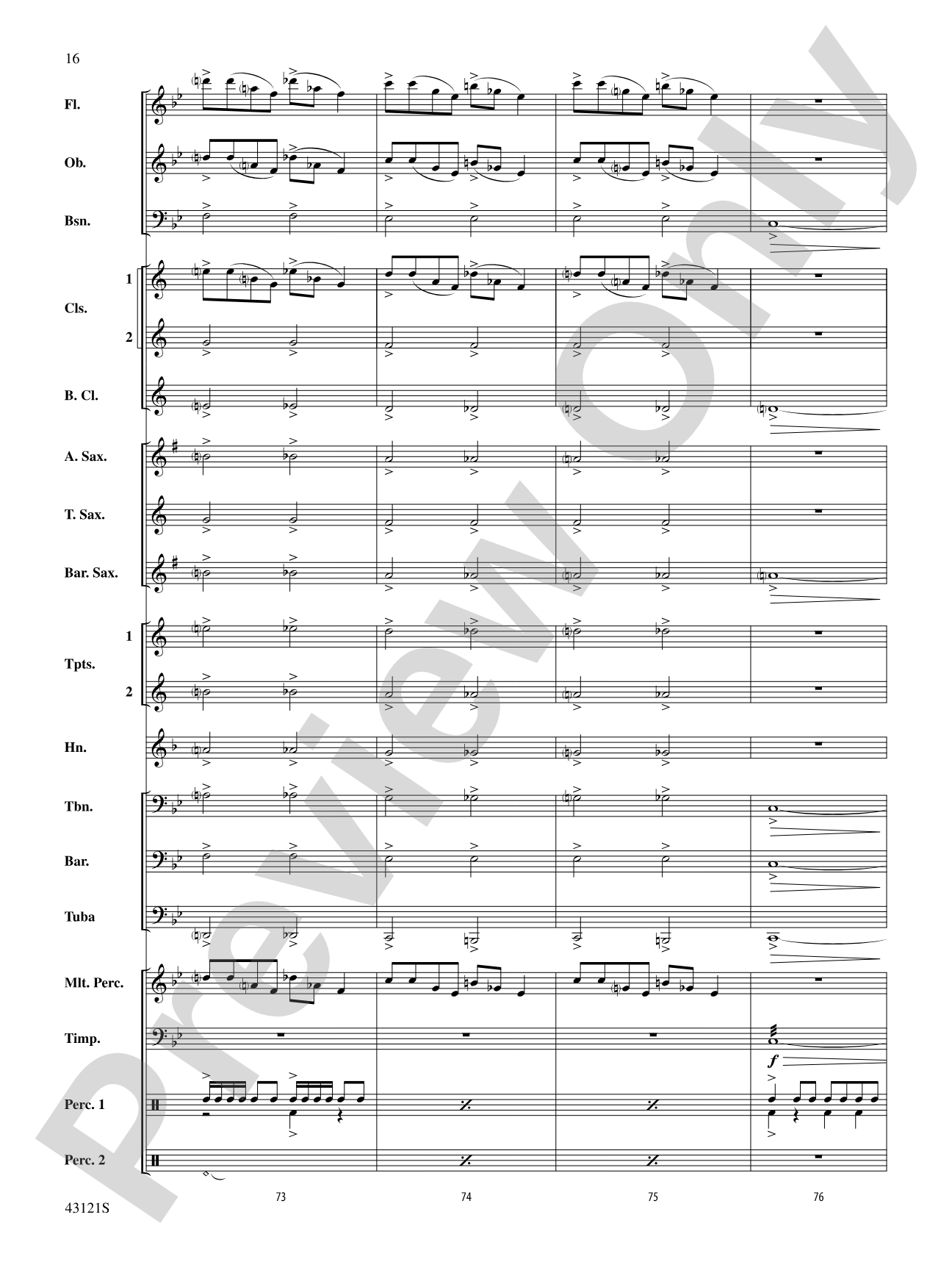
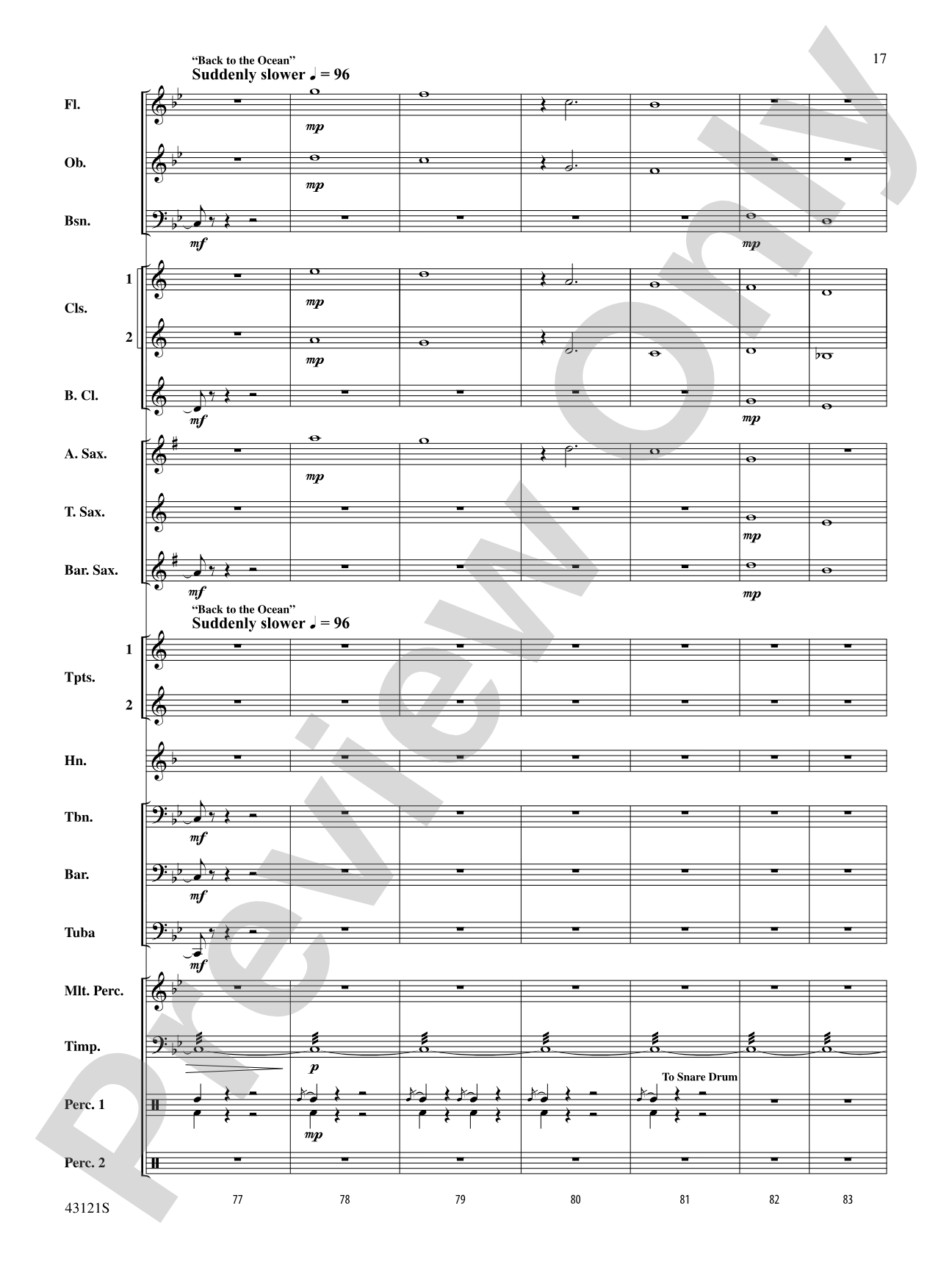
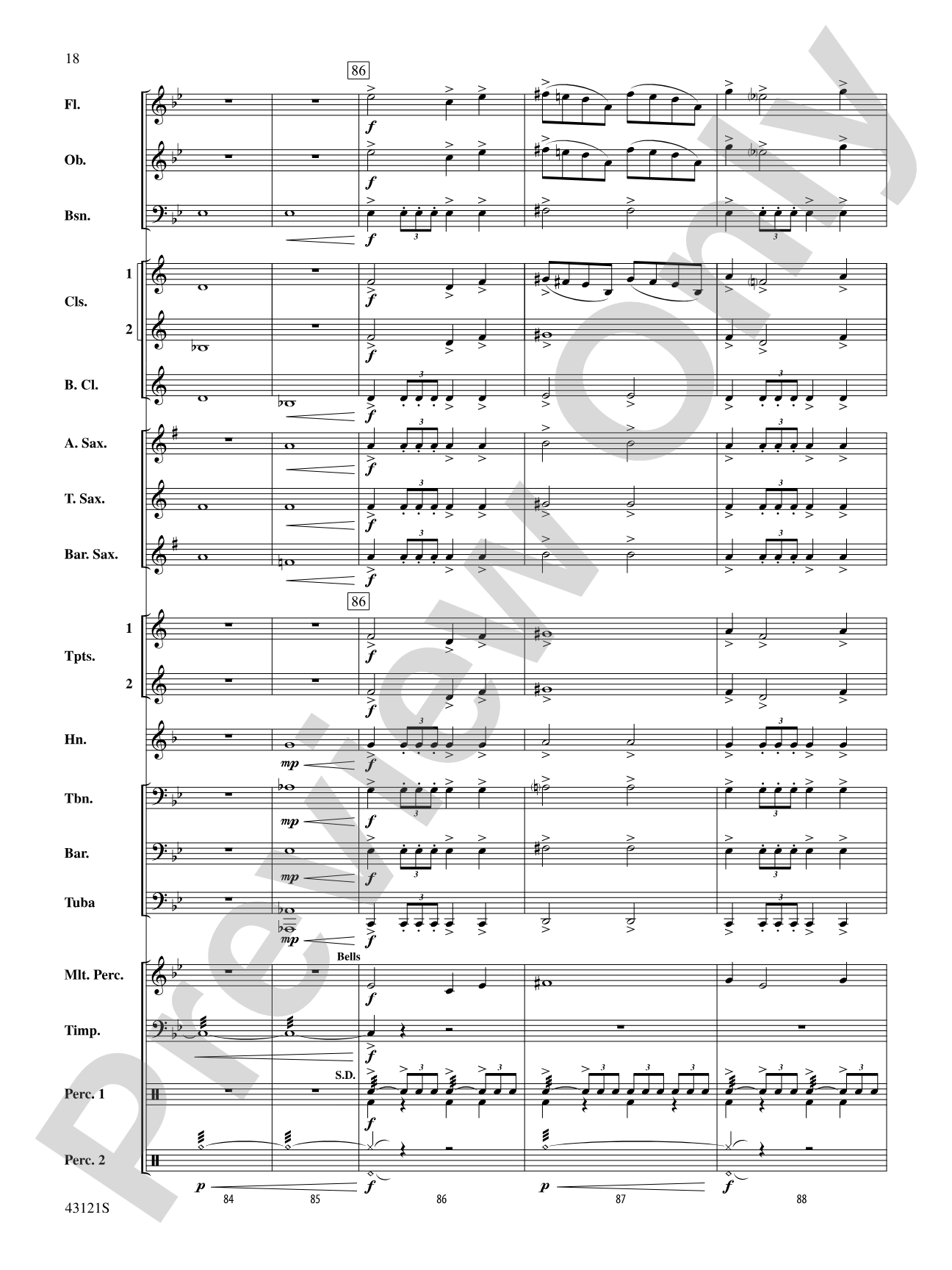
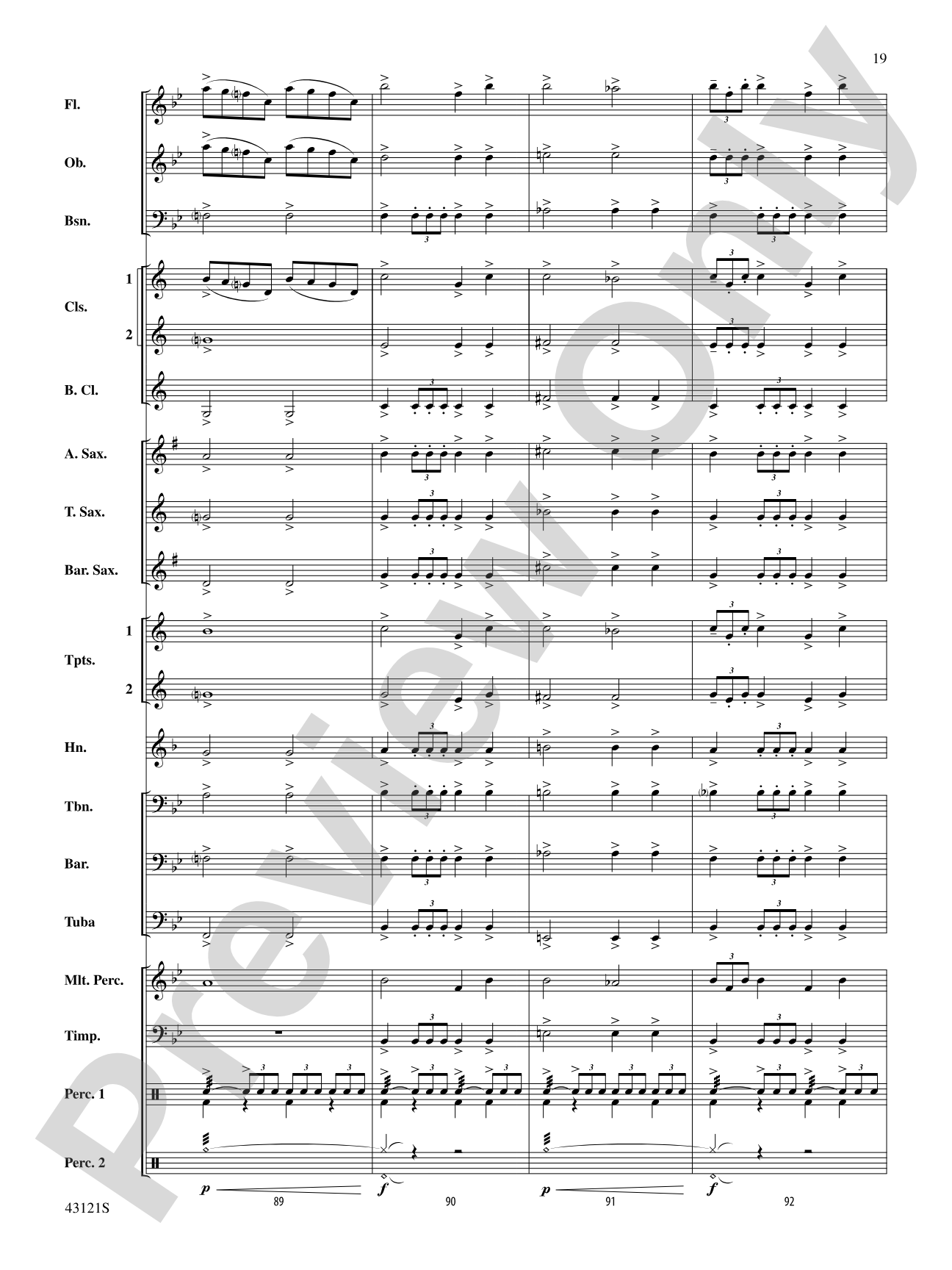
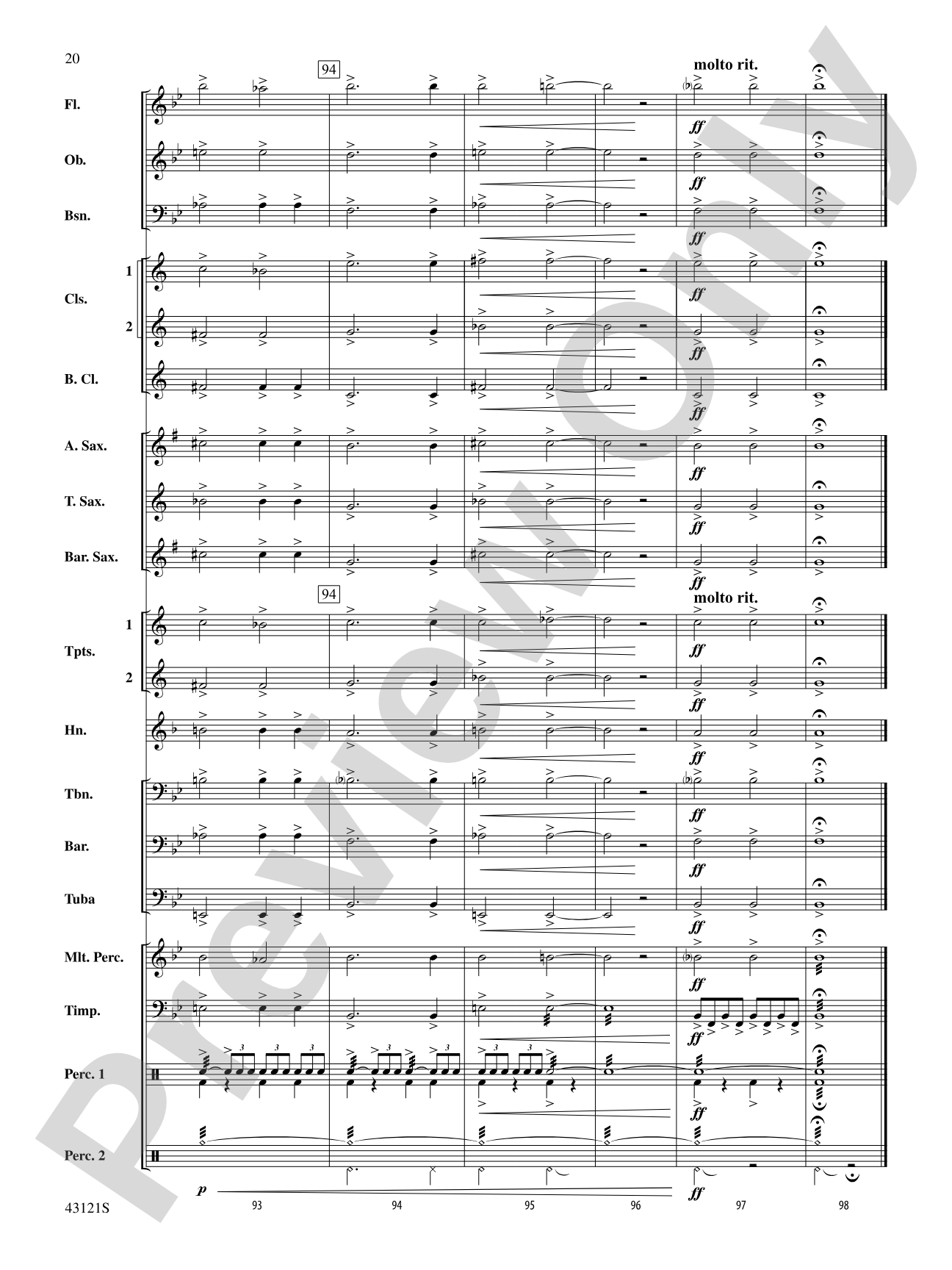

Godzilla, Selections from: Score
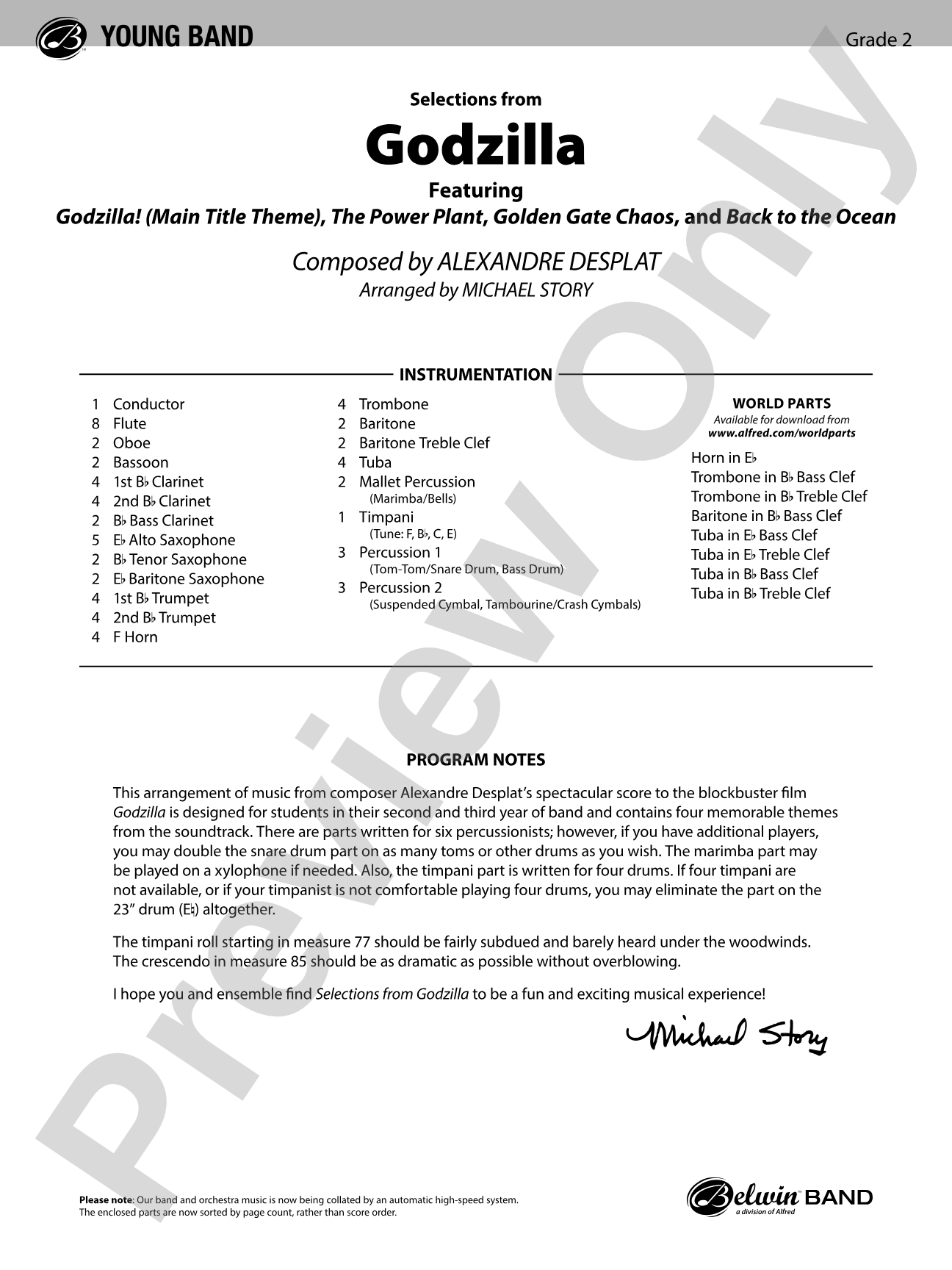
Featuring: Godzilla (Main Title Theme) / The Power Plant / Golden Gate Chaos / Back to the Ocean
Composed by Alexandre Desplat / arr. Michael Story
Grade: 2 (Easy)
Item: 00-PR-0005053
$10.00
Pickup currently not available
Description
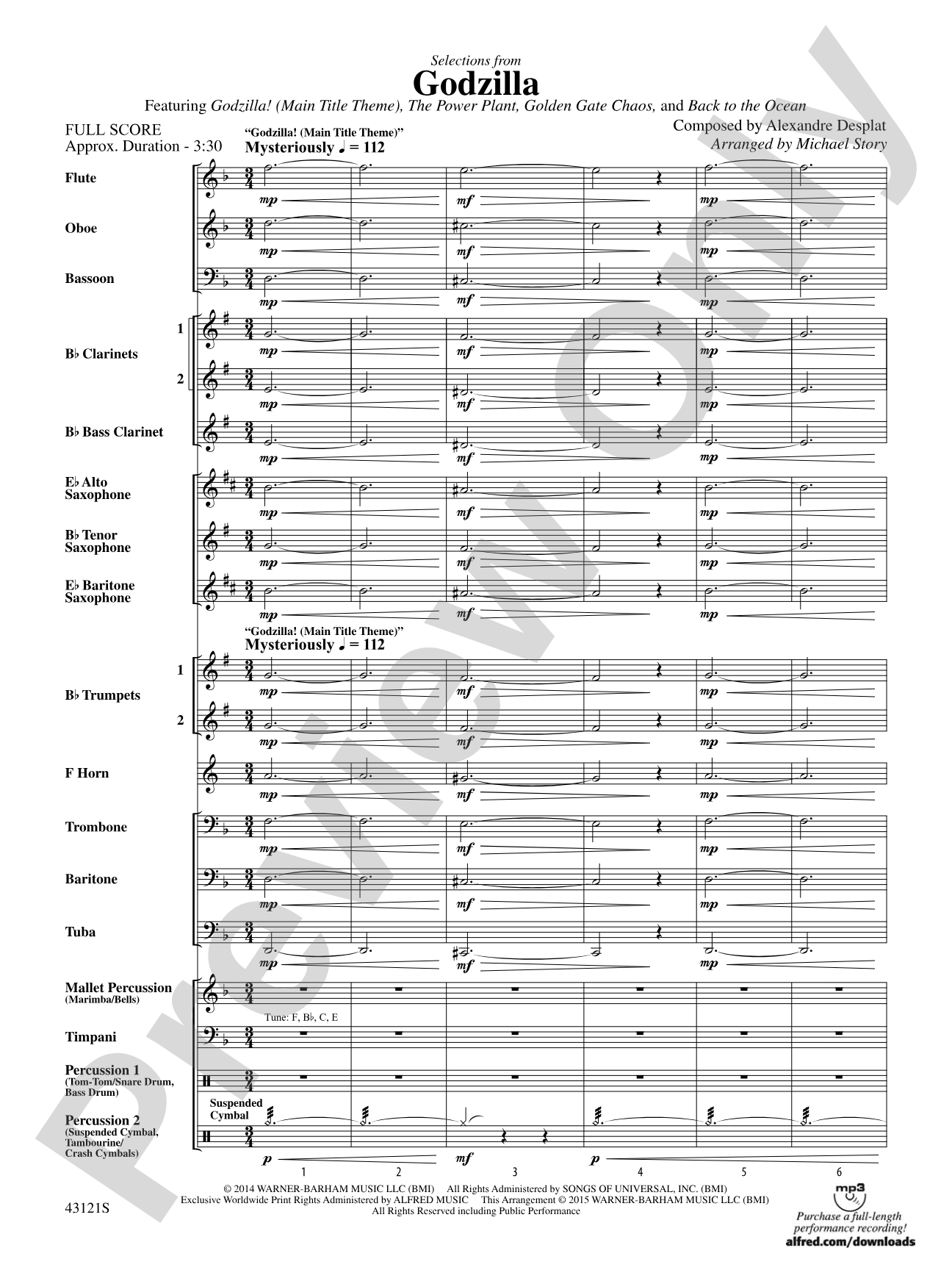
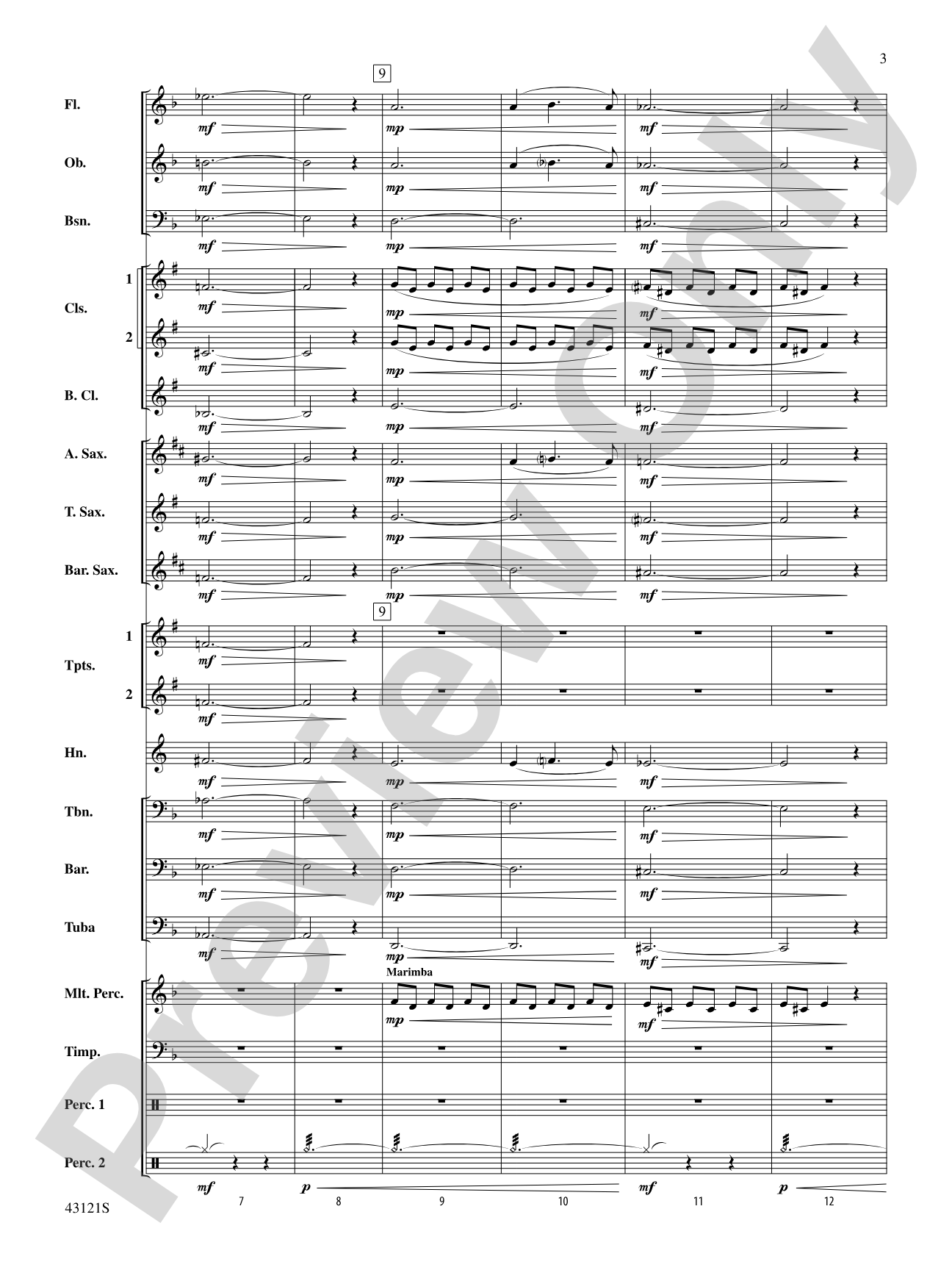
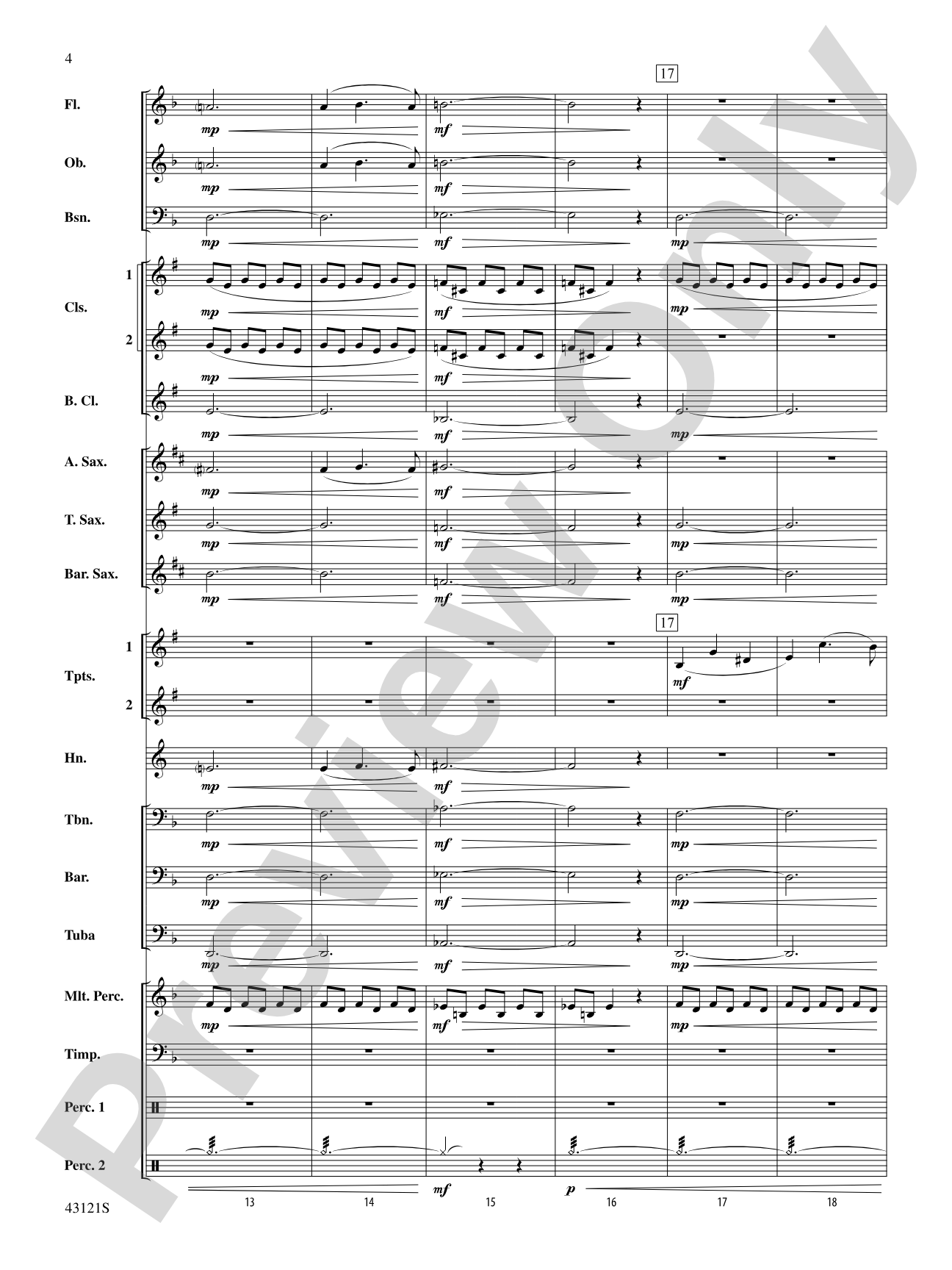
From composer Alexandre Desplat's spectacular score to the blockbuster film Godzilla, this arrangement is designed for students in their second or third year of band. Containing "Godzilla (Main Title Theme)," "The Power Plant." "Golden Gate Chaos" and "Back to the Ocean" it's infused with the drama of the epic film score. The arrangement opens with an eerie mysterious introduction and alternates between forceful and melodic themes to a dynamic conclusion. Stunning! (3:30)


Don't just read it, hear it, play along with it, and watch your students grow with it. In MakeMusic Cloud, Godzilla, Selections from: Score comes alive with professional accompaniment, adjustable tempo, and built-in practice tools that turn solo practice into real progress.
Open in the Player
Jump straight in and assign it today.
Start Your Free Trial
Open this title and explore the full library in minutes.
Sample Audio
1
Audio File
--:--
0:00
0:00
Sample Video
No sample videos found.
Additional Details
Series:
Pop Young Band
Publisher:
Alfred Music
Page Count:
254
SKU:
00-PR-0005053
More about this title
About the Composer: Alexandre Desplat
Alexandre Desplat has become one of the most sought-after film composers of his generation, crafting scores for major franchises including Harry Potter, the Fantastic Beasts series, The Grand Budapest Hotel, and Godzilla. His work spans orchestral drama, intricate action sequences, and intimate character moments, all hallmarks of his ability to serve the emotional arc of a story while creating memorable thematic material.
Desplat's compositional voice blends classical orchestration with modern sensibilities. His scores demonstrate sophisticated harmonic language and structural clarity, qualities that make his work exceptionally teachable at the student level when expertly arranged.
Why we love this
Michael Story's arrangement captures the visceral impact of Desplat's original score without sacrificing musicality or sophistication. Second and third-year players get to experience genuinely cinematic writing that demands ensemble cohesion, dynamic control, and sectional balance, all essential skills typically underdeveloped in standard band repertoire at this level. The alternation between eerie mystery and forceful action gives every section meaningful moments to shine.
What to expect
The opening unfolds like an ominous approach, sparse and unsettling. From there, the energy swells into heroic, muscular themes that pulse with momentum before pulling back into moments of lyrical beauty, all wrapped in the cinematic grandeur that defines modern action film scoring. The piece captures the primal tension between human scale and unstoppable force.
Who it's for
This score is built for second and third-year concert bands seeking repertoire with genuine dramatic stakes and professional-level writing. Students at this stage benefit from music that rewards careful listening and sectional independence while remaining achievable without advanced technique.
How to get the most out of it
- Balance the opening mystery carefully. The eerie introduction depends on restraint from the winds; resist pushing volume early and let the sparse textures create tension before the dramatic material enters.
- Mark all dynamic transitions explicitly in individual parts before rehearsal. Desplat's scoring moves swiftly between soft, menacing passages and powerful climaxes; without clarity, sections will lag or overshoot the conductor's intentions.
- Establish a solid harmonic foundation in the low brass and woodwinds during the melodic sections. These parts anchor the thematic material and prevent the upper voices from floating away from the intended color.
- Use the recorded accompaniment to lock articulations and rhythmic precision in the fast passages. Movie music demands tight ensemble work, and a reference recording makes the target much clearer for students.
How to use it
Program this as a centerpiece in a pops or film music concert where it can stand on its own without explanation. It also pairs well with other contemporary concert band arrangements that emphasize narrative or visual storytelling, creating a concert that highlights how orchestration serves character and drama rather than relying on romantic-era symphonic conventions.
Skills your students will build
- Dynamic contrast and sustained control across multiple phrase lengths
- Sectional balance and blend in scoring where different families carry thematic material
- Precision rhythmic ensemble work in faster, syncopated passages
- Interpretation of cinematic tension through tempo flexibility and articulation choices
- Reading and executing rapid dynamic shifts without losing pitch stability