
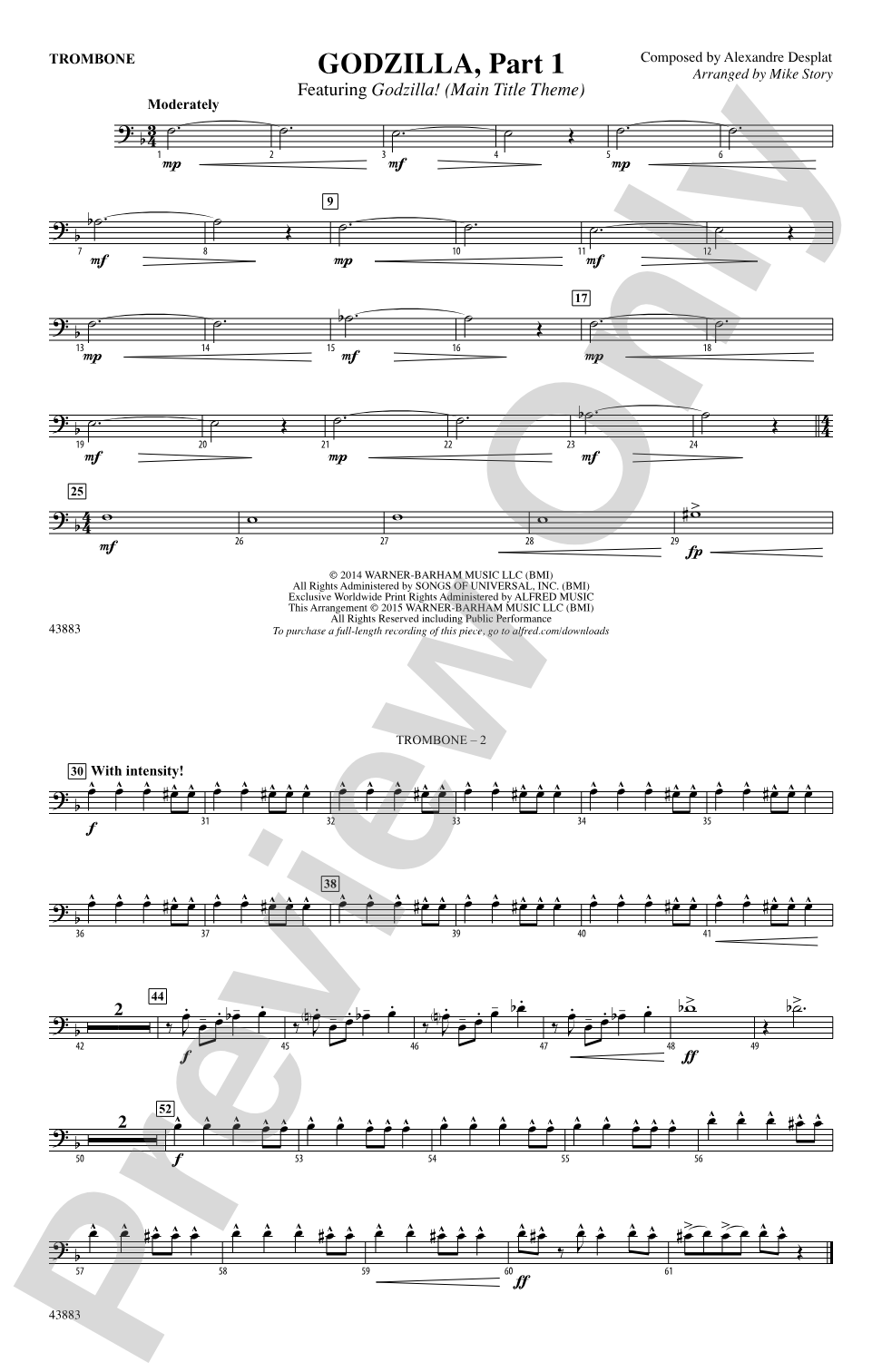

Godzilla, Part 1: 1st Trombone
Featuring: Godzilla! (Main Title Theme)
Composed by Alexandre Desplat / arr. Mike Story
Grade: 2 (Easy)
Item: 00-PC-0016967_TN1
$3.00
Pickup currently not available
Description
Alfred Music is pleased to present a three-piece halftime show based on the thrilling music from the hit motion picture Godzilla. Composer Alexandre Desplat has crafted a stunning score that translates perfectly to the marching band medium. Part 1 of our show begins quietly and mysteriously before gradually building to the rousing main theme. (2:00)


Don't just read it, hear it, play along with it, and watch your students grow with it. In MakeMusic Cloud, Godzilla, Part 1: 1st Trombone comes alive with professional accompaniment, adjustable tempo, and built-in practice tools that turn solo practice into real progress.
Open in the Player
Jump straight in and assign it today.
Start Your Free Trial
Open this title and explore the full library in minutes.
Sample Audio
1
Audio File
--:--
0:00
0:00
Sample Video
No sample videos found.
Additional Details
Series:
Big and Easy
Publisher:
Alfred Music
Page Count:
170
SKU:
00-PC-0016967_TN1
More about this title
About the Composer: Alexandre Desplat
Alexandre Desplat has become one of the most prolific film composers of the 21st century, earning multiple Oscar and Grammy nominations for his work across franchises including Harry Potter, The Grand Budapest Hotel, and the Fantastic Beasts series. His gift for crafting memorable melodic lines that work equally well in intimate scenes and grand orchestral moments has made his scores essential listening for musicians across genres.
Desplat's approach to composition emphasizes clarity and emotional directness, qualities that translate beautifully when his music is adapted for young ensembles. His work demonstrates how film music can challenge and inspire student musicians while remaining accessible to performers at intermediate levels.
Why we love this
Mike Story's arrangement captures the cinematic sweep of Desplat's original while building a satisfying arc for marching band that works perfectly within a halftime slot. The Grade 2 scoring gives your ensemble real musical substance without overwhelming sections that are still developing their fundamental skills, and the two-minute duration sits in that sweet spot where you can program it with confidence.
What to expect
The piece opens in quiet, ominous territory with restless harmonies that pull the listener forward. As the mysterious opening builds layer by layer, anticipation mounts until the majestic main theme breaks through, grounded and powerful.
Who it's for
This is designed for marching bands at the Grade 2 level, including programs building confidence through recognizable, engaging repertoire and those seeking contemporary halftime material with immediate appeal. Directors looking to program a substantial film-based selection that doesn't require virtuosic technique will find this part of the three-piece show particularly useful.
How to get the most out of it
- Build the dynamic arc deliberately during the mysterious opening section. Resist the urge to rush the gradual crescendo; let your band feel the tension as volume and intensity increase measure by measure before the main theme arrives.
- Balance the low brass and woodwind voices throughout Part 1 so the foundational harmony remains clear even as the arrangement thickens. A transparent texture makes the eventual swell to the main theme land with real impact.
- Mark articulation style in your rehearsals early and consistently. The contrast between legato passages and the sharper attacks in the theme will define how your band shapes the emotional journey of this piece.
- Work the drill and musical elements separately before combining them. Once your students own the music, the marching vocabulary will enhance rather than distract from the ensemble sound.
How to use it
Use this as the opening statement of your halftime show, letting the mysterious opening draw the crowd in before delivering the payoff of the main theme. Alternatively, program it standalone as a concert opener when you want a dramatic entrance that showcases both your ensemble's control and their ability to build musical tension.
Skills your students will build
- Dynamic control and shaping long crescendos across full ensemble
- Balancing multiple melodic and harmonic layers to maintain transparency
- Controlling articulation contrast between legato and staccato passages
- Sustaining ensemble intonation through gradual dynamic increases
- Executing clear, coordinated entries following silence or sparse texture