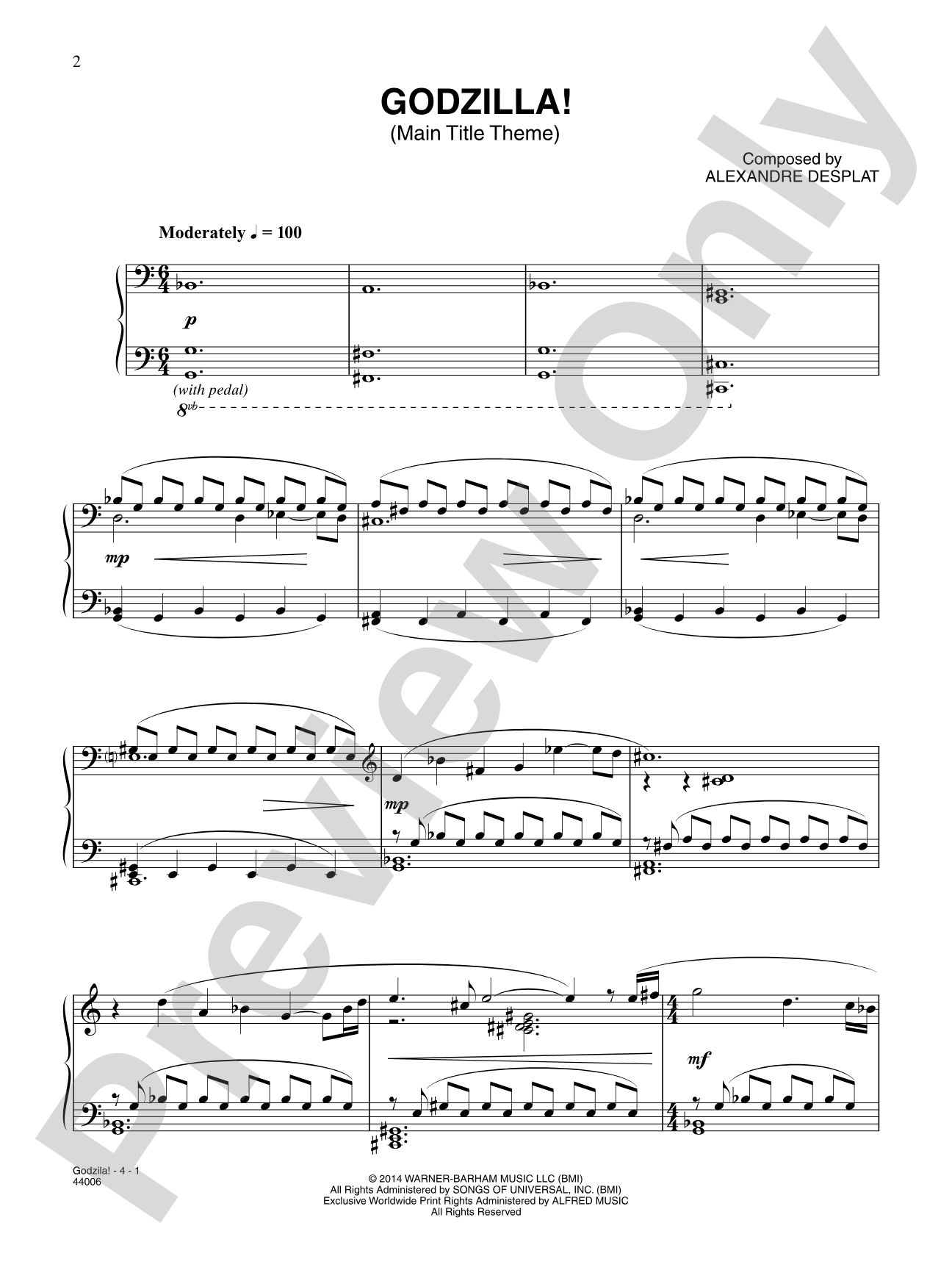
Godzilla! (Main Title Theme) Sheet Music Preview

Godzilla! (Main Title Theme): Piano

From the Motion Picture Godzilla

By Alexandre Desplat

Item: 00-PS-0015139

Digital Download
$3.99
Description
"Godzilla!" is the main title theme from the 2014 blockbuster remake of the monster movie classic. Composed by critically acclaimed composer Alexandre Desplat, this dark and brooding piece perfectly captures the mood of the movie. When you play this sheet music edition, be careful not to conjure up the creature!

Godzilla! (Main Title Theme): Piano isn't in MakeMusic Cloud just yet...but it could be. Let us know you'd like to see it, and you'll help shape what comes next. In the meantime, start a free trial and dive into thousands of interactive titles your students can play along with today.

Sample Audio
No sample audio found.
Sample Video
Additional Details
Publisher: Alfred Music
Page Count: 6
SKU: 00-PS-0015139

More about this title

About the Composer: Alexandre Desplat

Alexandre Desplat has composed for some of the most recognizable film franchises of the past two decades, from the Harry Potter series to the Fantastic Beasts universe. His gift for crafting memorable yet sophisticated orchestral themes has earned him critical acclaim and multiple award nominations, making him one of contemporary cinema's most sought-after composers.

Desplat's approach to film scoring emphasizes emotional storytelling through music. Whether writing grand orchestral statements or intimate character themes, he combines classical training with a keen sense of what serves the narrative on screen. His work has made him a staple of music education classrooms, where students study his techniques for building tension, layering instruments, and creating dramatic impact.

Why we love this

This arrangement brings a blockbuster theme within reach of intermediate pianists, letting them tackle music that feels cinematic and substantial without requiring virtuosic technique. The dark, measured progression of the piece rewards careful attention to dynamics and phrasing, teaching students how film composers build tension through restraint rather than constant activity.

What to expect

Ominous and controlled, with an underlying sense of dread that builds gradually rather than exploding immediately. The theme moves with deliberate steps through dark harmonic territory, creating an atmosphere of anticipation and barely contained power. Playing it feels like channeling something ancient and unstoppable through fingertips.

Who it's for

Intermediate pianists who love film music and want to explore how modern composers craft memorable themes. This is also ideal for students working on building confidence with pieces that sound more advanced than they play, and for recitalists looking to expand beyond traditional classical repertoire.

How to get the most out of it

  • Establish a steady, deliberate tempo from the opening. This theme thrives on forward momentum paired with weight, not rush. Let each note land with purpose.
  • Shape the low-register figures with subtle dynamic variation. The ominous quality comes from control and clarity in the bass, not from playing heavily.
  • Resist the urge to accelerate during building passages. Desplat's orchestral scoring maintains consistent pulse even as tension mounts; mirror this restraint at the keyboard.
  • Pay close attention to the dynamic markings. The contrast between quiet, threatening moments and fuller passages is what makes this theme effective.

How to use it

Program this as part of a film music or contemporary themes concert to give audiences music they recognize while showcasing the musicianship required to perform it well. It pairs effectively with other modern composer works, or you might use it to introduce students to how orchestral concepts translate to the solo piano idiom.

Skills your students will build

  • Controlling dynamics across a wide range to create atmosphere and tension
  • Maintaining even tempo while navigating shifting harmonic content
  • Balancing melodic interest with supporting figures in solo piano writing
  • Interpreting modern film music notation and performance directions

You May Also Like