
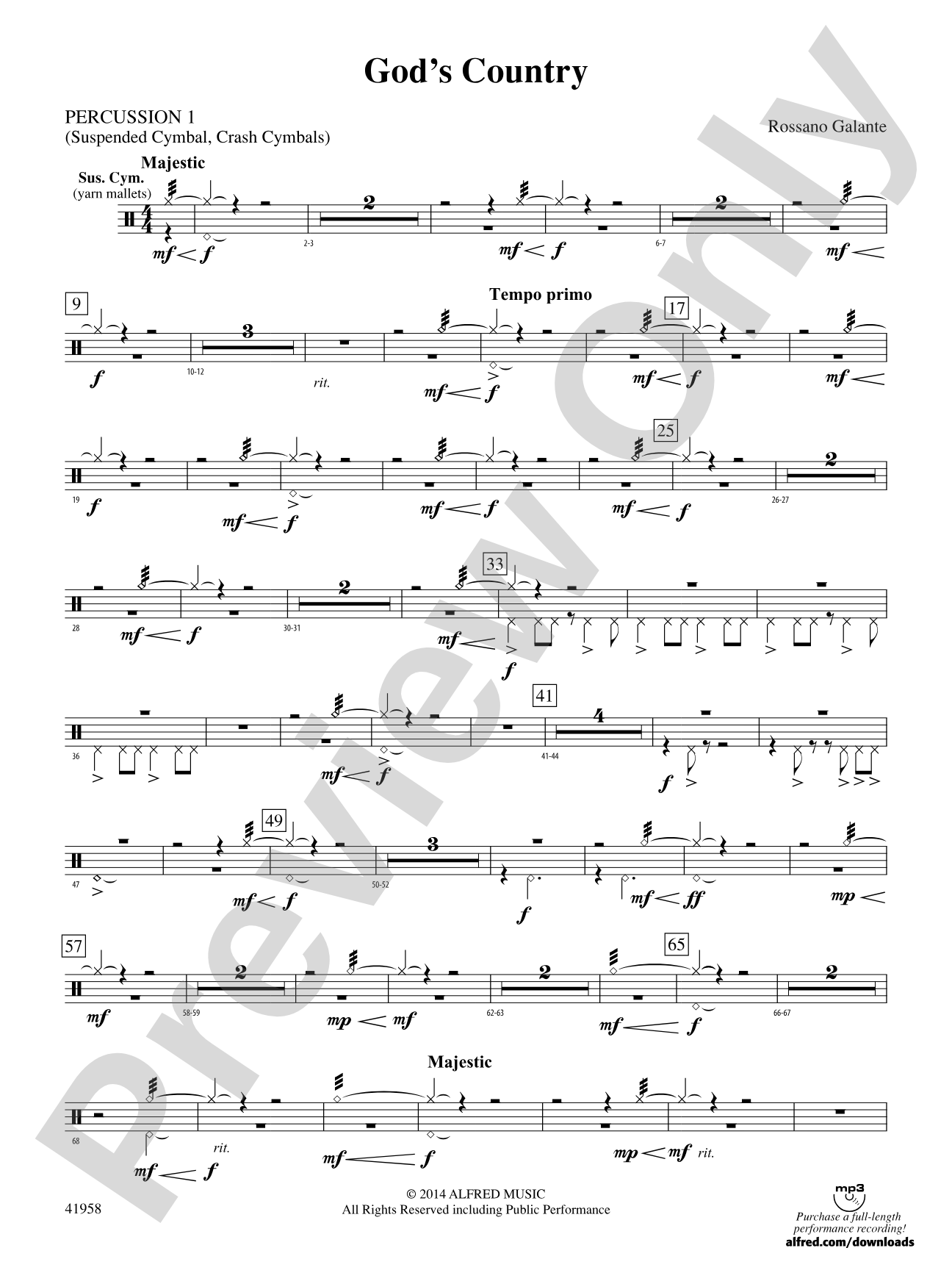

God's Country: 1st Percussion
By Rossano Galante
Grade: 4.5 (Medium Difficult)
Item: 00-PC-0016440_PC1
$3.00
Pickup currently not available
Description
From the most statuesque mountain ranges to our grandest waterfalls, this composition musically depicts the picturesque landscapes that have existed since the beginning of time. Soaring melodic lines, epic brass fanfares, and emotionally charged harmonies will take your performers on an unforgettable journey through "God's Country." (6:00) This title is available in MakeMusic Cloud.


Don't just read it, hear it, play along with it, and watch your students grow with it. In MakeMusic Cloud, God's Country: 1st Percussion comes alive with professional accompaniment, adjustable tempo, and built-in practice tools that turn solo practice into real progress.
Open in the Player
Jump straight in and assign it today.
Start Your Free Trial
Open this title and explore the full library in minutes.
Sample Audio
1
Audio File
--:--
0:00
0:00
Sample Video
Additional Details
Series:
Alfred Concert Band
Publisher:
Alfred Music
Page Count:
288
SKU:
00-PC-0016440_PC1
More about this title
About the Composer: Rossano Galante

Rossano Galante began his musical training as a trumpet performer, earning his Bachelor of Arts degree from SUNY Buffalo in 1992. That same year, he was selected as one of nineteen students worldwide to enter the University of Southern California's Film Scoring Program, where he studied under the legendary Jerry Goldsmith, Academy Award winner for The Omen.
Since relocating to California in 1999, Galante has established himself as a composer and orchestrator with an extensive portfolio in film and concert music. His orchestration credits span over eighty studio films, from major blockbusters like Avengers: Age of Ultron and Fast X to prestige dramas like Prisoners. Alongside his film work, Galante actively pursues concert band and orchestral commissions globally, with more than 68 published compositions released through Alfred, Schirmer, Hafabra, C.L. Barnhouse, Musikverlag Frank, and Dehaske/Curnow.
Why we love this
Galante brings cinematic sensibility to the concert band medium without sacrificing the essence of what makes band music rewarding to conduct and play. The orchestration balances accessibility at Grade 4.5 with genuine emotional weight and distinctive melodic character. At six minutes, it offers substantial performance satisfaction for a mid-level ensemble while remaining within realistic rehearsal timeframes.
What to expect
Sweeping and grand, like watching vast landscapes unfold from a high vantage point. The piece alternates between moments of quiet grandeur and triumphant brass declarations, building a sense of awe that feels earned rather than manufactured. Performers experience the satisfaction of playing music that feels substantial and cinematically expressive.
Who it's for
Band directors seeking Grade 4.5 repertoire that delivers concert hall impact without excessive technical burden. This work suits ensembles with solid fundamentals in intonation, balance, and phrase awareness who are ready to explore emotionally mature programming.
How to get the most out of it
- Shape the opening melodic lines with a long arc; resist the urge to break the phrases into smaller gestures even when breathing becomes necessary in the woodwinds.
- Balance the brass fanfares against the harmonic foundation so they soar without obscuring the ensemble's overall sonority.
- Use dynamic contrast strategically to define the landscape transitions Galante implies through the harmonic changes; a single crescendo through multiple sections will flatten the composition's dramatic arc.
- Invest rehearsal time in the relationships between melody and accompaniment in the middle section; intonation challenges emerge when players don't hear how their voice functions within the harmonic structure.
How to use it
Position this as the centerpiece of a concert celebrating American landscapes or natural beauty, or pair it with shorter works for variety in a mixed-genre festival performance. Its six-minute length makes it ideal as a closing selection that leaves audiences with a memorable, resonant finish.
Skills your students will build
- Sustaining long melodic lines across multiple phrases without breaking musical continuity
- Balance between melodic prominence and harmonic support across different instrumental families
- Reading and executing dynamic nuance across the full ensemble to shape emotional arcs
- Intonation adjustment in sustained harmonic passages
- Responding to subtle tempo and expression markings that define landscape transitions