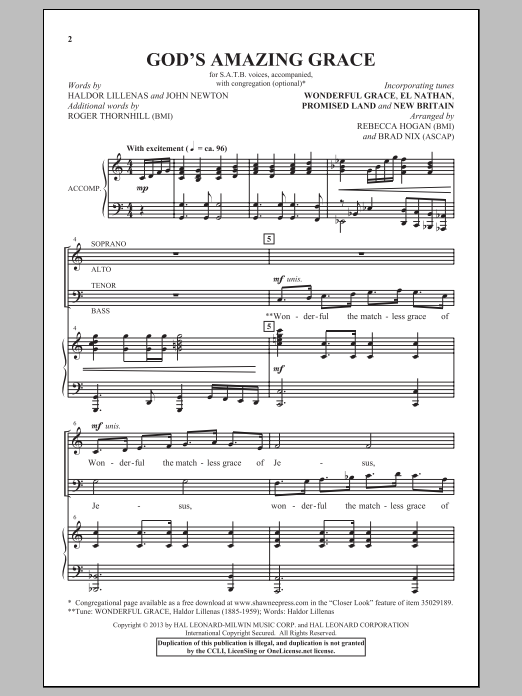
Brad Nix is a prolific arranger whose work spans sacred and secular choral music, bringing accessible yet musically sophisticated settings to ensembles of all levels. His arrangements are built on a foundation of solid voice leading and practical staging considerations that make them genuinely teachable.
Why we love this
This arrangement captures the timeless appeal of the hymn while offering the kind of harmonic interest and textural variety that keeps singers engaged and audiences moved. Nix has crafted something that feels both reverent and fresh, with enough musical substance to reward careful rehearsal without demanding impossible technical feats.
What to expect
There's a warmth to this setting that feels both contemplative and assured. The arrangement honors the hymn's spiritual foundation while moving through its phrases with musical intention.
Who it's for
Community choirs, church ensembles, and school groups seeking a sacred standard that bridges tradition and contemporary arrangement. This works equally well for singers new to ensemble singing and more experienced groups wanting a reliable repertoire piece.
How to get the most out of it
Approach the harmony shifts with transparency; resist the urge to thicken every chord. The beauty here lives in clarity between parts.
Shape individual phrases as if singing text rather than notes. This hymn thrives on genuine legit phrasing, not mechanical perfection.
Balance soprano lines gently; the melody is familiar enough that it doesn't need aggressive weight to land with your audience.
How to use it
Place this as an anchor piece in a sacred music program, or pair it with other spirituals and hymn arrangements to build a thematic concert set. It also serves beautifully as a closing number for services or concerts where you want to send audiences out with something substantive.
Skills your students will build
Balancing part independence while maintaining harmonic cohesion
Phrasing hymn texts with musical intention rather than mechanical emphasis
Blending across SATB ranges in close harmony
Interpreting underplaying as a form of musical maturity
You May Also Like
Scan to Complete Your Purchase
Use your phone's camera to scan the code below
You'll log in on your phone and the order will be added to your account