
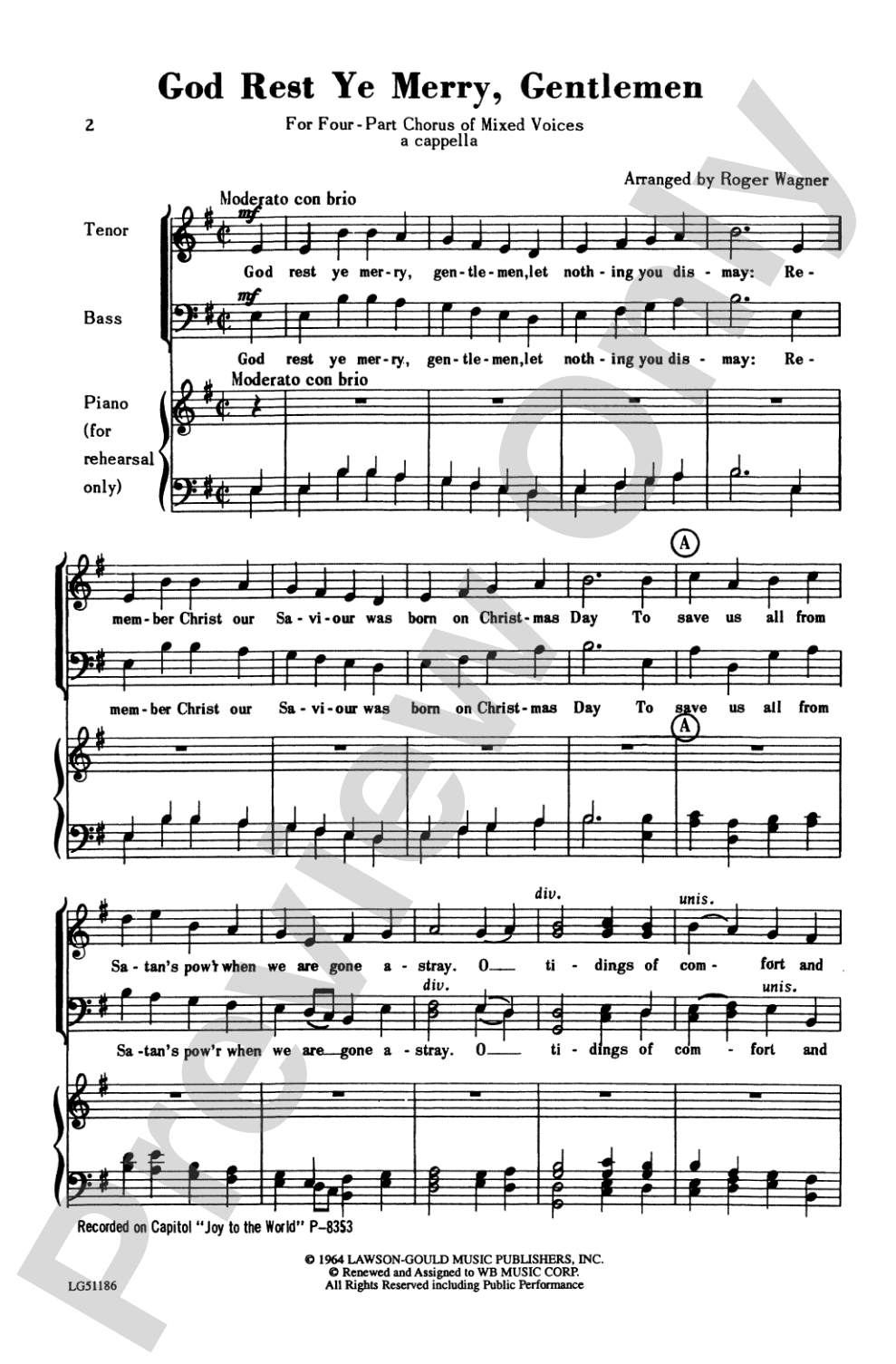
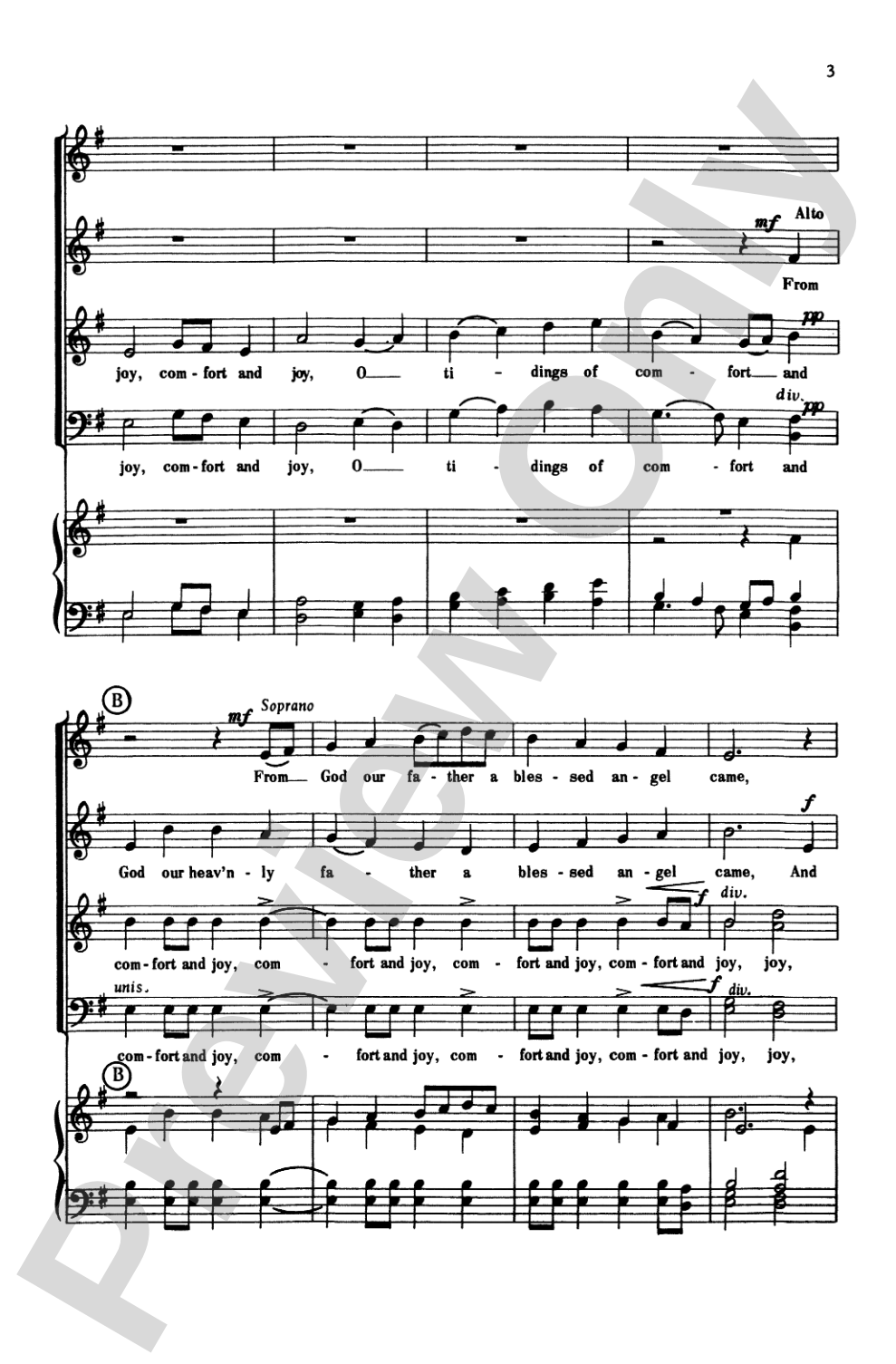

God Rest Ye Merry, Gentlemen: SATB, a cappella Choral Octavo
Traditional Carol / arr. Roger Wagner
Item: 00-PO-0004980
$2.25
Minimum order quantity: 20 copies
Pickup currently not available
Related Items
God Rest Ye Merry, Gentlemen: SATB, a cappella Choral Octavo |
$2.25
|
View |
Description


God Rest Ye Merry, Gentlemen: SATB, a cappella Choral Octavo isn't in MakeMusic Cloud just yet...but it could be. Let us know you'd like to see it, and you'll help shape what comes next. In the meantime, start a free trial and dive into thousands of interactive titles your students can play along with today.
Request This Title
Tell us you want it.
Start Your Free Trial
Explore everything that's ready to play right now.
Sample Audio
1
Audio File
--:--
0:00
0:00
Sample Video
No sample videos found.
Additional Details
Series:
Alfred Archive Edition: Lawson-Gould Music Publishers
Publisher:
Alfred Music
Page Count:
8
SKU:
00-PO-0004980
More about this title
About the Arranger: Roger Wagner
Roger Wagner (1914-1992) was an influential choral conductor and arranger whose work shaped American choral music throughout the mid-twentieth century. He founded the Roger Wagner Chorale in 1946, an ensemble that became known for both classical repertoire and innovative arrangements of folk and traditional music. Wagner's gift for voice leading and his ability to enhance familiar melodies while preserving their character made his arrangements enduringly popular in educational and professional choral settings.
Why we love this
Wagner's arrangement honors the carol's sturdy melody while crafting genuine four-part writing that sounds sophisticated without demanding virtuosity. The a cappella setting strips away accompaniment distractions, letting your singers focus on blend, intonation, and the emotional weight of this beloved text. It's the kind of arrangement that works equally well at a holiday concert or a community service, and singers find it genuinely rewarding to perform.
What to expect
The arrangement carries the carol's traditional warmth while adding harmonic depth that feels thoughtful and reverent. Wagner's voice leading creates flowing lines that interweave naturally, making the text feel both timeless and immediate. There's elegance here without coldness; the piece invites singers into genuine musicianship rather than rote performance.
Who it's for
This octavo suits intermediate to advanced mixed choirs with reliable intonation and a willingness to listen to each other. It works for holiday concerts, festive services, and community performances where the singers have had time to prepare carefully. Directors seeking a carol that sounds polished and musical rather than simplified will find this arrangement a strong choice.
How to get the most out of it
- Balance the melody across verse and chorus; Wagner distributes the tune across different voice parts, so mark where the primary line lives and ensure those singers bring it forward without oversinging.
- Shape each phrase with attention to text underlay; the dotted rhythms and longer note values need breath control and intentional phrasing rather than mechanical rhythm.
- Tune the inner voices carefully in the a cappella setting; without instrumental support, exposed harmony requires precise intonation work in rehearsal, particularly in the full four-part sections.
- Let silence work for you; Wagner's arrangement includes moments of sparse texture that create intimacy. Don't rush these sections or fill them with unnecessary sound.
How to use it
Open a holiday concert with this arrangement to establish both festive spirit and musical substance from the first number. It pairs naturally with instrumental carols or other a cappella sacred works, and it's a fine choice for services where the congregation might join in a final verse or chorus. The eight-page length and moderate difficulty make it a cornerstone piece rather than filler, so program it where it anchors a program section.
Skills your students will build
- Reading and performing four-part SATB voicing with accurate part independence
- Matching vowels and blending tone quality across voice sections in a cappella context
- Maintaining steady intonation without instrumental reference
- Shaping long melodic phrases with intentional breath placement and phrasing
- Balancing harmonic color and textural clarity in exposed choral writing