
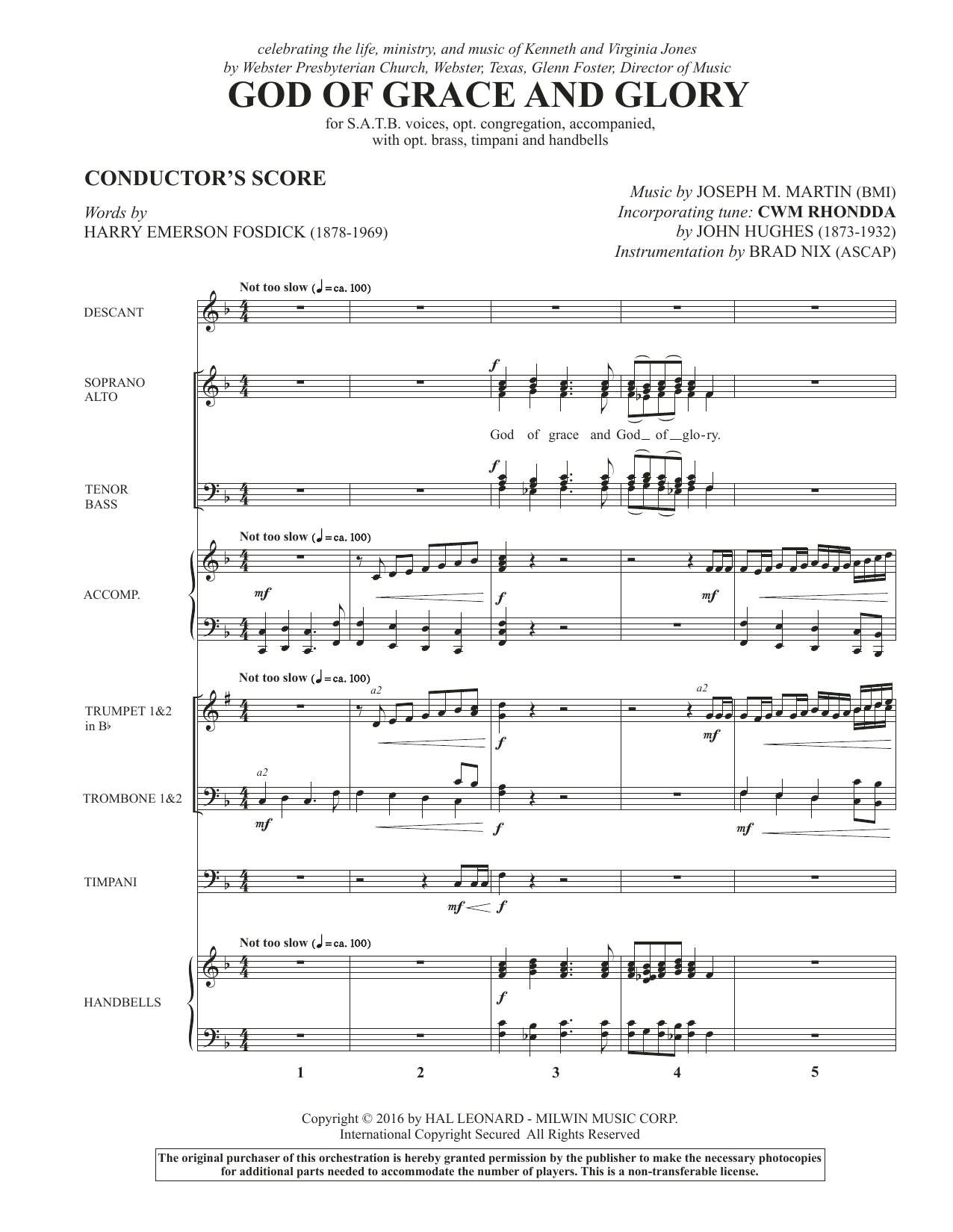

God of Grace and Glory: Choral Instrumental Pak
By Joseph M. Martin
Item: 35-PK00369063
$20.00
Pickup currently not available
Buy Extra Parts (Digital PDF Download)
Parts Added to Cart!
Description
Uses: General, Pentecost
Scripture: Joshua 1:9; Ephesians 4:14
Walls of sound announce with confidence and power the glorious character of the Almighty as this festive anthem unfolds. An original tune rich with vitality and punctuated with exciting mixed meter moments forms the main theme. The anthem is crowned with a moment incorporating congregation as all join in singing the traditional hymn with a soaring descant. Awesome!


God of Grace and Glory: Choral Instrumental Pak isn't in MakeMusic Cloud just yet...but it could be. Let us know you'd like to see it, and you'll help shape what comes next. In the meantime, start a free trial and dive into thousands of interactive titles your students can play along with today.
Request This Title
Tell us you want it.
Start Your Free Trial
Explore everything that's ready to play right now.
Sample Audio
No sample audio found.
Sample Video
No sample videos found.
Additional Details
Publisher:
Hal Leonard
SKU:
35-PK00369063
More about this title
About the Composer: Joseph M. Martin

Joseph M. Martin's training in piano performance at Furman University and the University of Texas established a foundation for both performance and pedagogy. After teaching in the Piano Pedagogy Department at UT Austin, he shifted his focus toward church music and composition, building a catalog that now appears in concert halls from Carnegie to worship spaces across North America.
Martin's work reflects a composer equally at home with liturgical settings and concert stages. He has performed as a featured soloist with orchestras in the United States and Mexico, and his compositions span from intimate hymn settings to large ensemble works. His life in Austin with his family continues to inform a compositional voice that reaches diverse audiences through both concert performances and church services.
Why we love this
Martin writes festive sacred music that engages both singers and congregants without sacrificing musical substance. The mixed meter sections provide genuine rhythmic interest while the descant hymn moment creates a natural, participatory climax that congregations genuinely want to sing. This is the kind of anthem that builds excitement through the rehearsal process and lands powerfully in worship.
What to expect
Bright, confident, and alive. The piece opens with instrumental authority before the choir joins, establishing a sense of majesty and power that feels earned rather than inflated. When the familiar hymn arrives with its soaring descant, the mood shifts to something more intimate and inclusive, as if the whole room is celebrating together.
Who it's for
This works for any worship context looking to mark Pentecost or a general celebration of God's character with energy and congregational involvement. Choirs of moderate skill can handle the anthem while still delivering impact, and the hymn finale invites the broader assembly into the music.
How to get the most out of it
- Shape the opening walls of sound with clear articulation in the instrumental parts; the confidence comes from rhythmic precision, not volume alone.
- Treat the mixed meter passages as compositional features, not obstacles. These moments create textural variety and keep the anthem from feeling predictable.
- Prepare the congregation for their hymn entrance well in advance. Print the descant melody or teach it beforehand so the moment feels collaborative rather than surprising.
- Balance the descant singers carefully against the full ensemble during the final section; they should float above, not fight through, the instrumental texture.
How to use it
Position this as a strong first or second anthem in a Pentecost service, or use it to open a summer concert celebrating faith and festivity. The congregational element makes it especially effective in contexts where the worship space itself becomes part of the performance, turning passive listeners into active participants.
Skills your students will build
- Singing in mixed meters (3/4 and 4/4 shifts)
- Sustaining pitch and tone against rhythmically active instrumental parts
- Balancing individual voice part work with harmonic blend
- Ensemble coordination with instrumental accompaniment
- Leading congregational singing with confidence and clarity