God Is Gone Up Sheet Music Preview

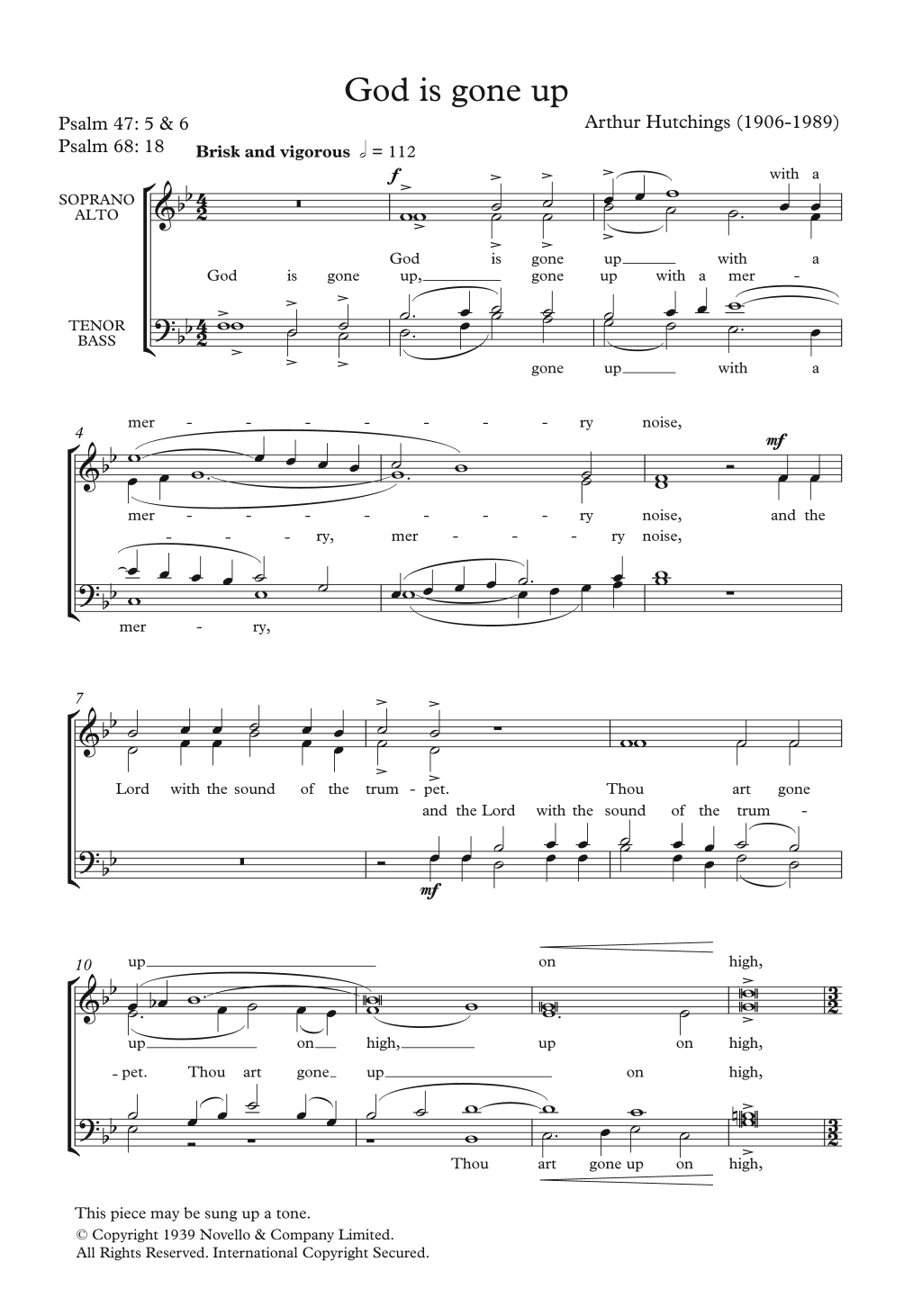
God Is Gone Up: Choral Octavo

As performed by Arthur Hutchings

Item: 35-DS00333775

Digital Download
$2.99
Description

God Is Gone Up: Choral Octavo isn't in MakeMusic Cloud just yet...but it could be. Let us know you'd like to see it, and you'll help shape what comes next. In the meantime, start a free trial and dive into thousands of interactive titles your students can play along with today.

Sample Audio
No sample audio found.
Sample Video
Additional Details
Publisher: Hal Leonard
Page Count: 2
SKU: 35-DS00333775

More about this title

About the Artist: Arthur Hutchings

Arthur Hutchings (1906-1989) was a British composer and musicologist whose choral works demonstrate a masterful understanding of voice leading and text setting. His output ranged from intimate chamber works to larger sacred and secular choral pieces, all marked by technical sophistication and lyrical clarity that made them accessible to serious amateur ensembles.

Why we love this

Hutchings brings a distinctly English sensibility to this secular choral work, crafting music that feels composed rather than constructed. The piece sits comfortably within the octavo format while avoiding the trap of oversimplification, rewarding singers who commit to clean intonation and careful phrasing.

What to expect

The piece carries a contemplative, assured character befitting its text, with harmonic writing that feels modern yet rooted in English choral tradition. Sung well, it creates a moment of genuine musical substance rather than mere filler.

Who it's for

This octavo suits ensembles with solid musicianship and blend, particularly those comfortable with twentieth-century harmonic language. It works well for concert programs that need a substantial secular choral work without the scale of a full cantata.

How to get the most out of it

  • Balance the text intelligibility against the harmonic density by bringing out phrase shapes rather than individual syllables; let the music breathe between phrases.
  • Test ensemble blend in passages where the upper voices carry the main material; this will reveal any forcing in the soprano or alto line that clouds the overall sonority.
  • Approach pitch changes deliberately, especially where voice parts move in close intervals; mark potential trouble spots in rehearsal and isolate them sectionally.

How to use it

Consider programming this alongside other mid-century secular choral works to showcase your ensemble's range and musicianship. It functions equally well as a concert anchor or as part of a thematic program exploring spiritual or philosophical texts in choral repertoire.

Skills your students will build

  • Sustaining long phrases with consistent breath support
  • Blending in close harmonic spacing
  • Interpreting twentieth-century harmonic language
  • Balancing independence within ensemble textures

You May Also Like