
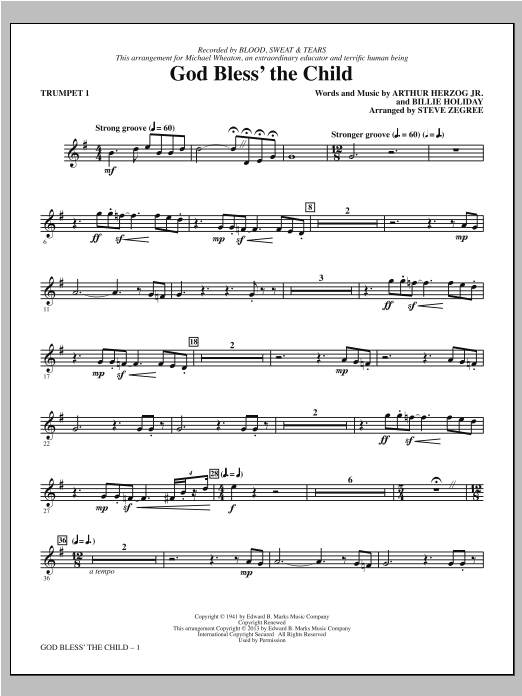

God Bless' The Child (arr. Steve Zegree): Choral Instrumental Pak
As performed by Blood, Sweat Tears / Arranged by Steve Zegree
Item: 35-PK00259826
$30.00
Pickup currently not available
Buy Extra Parts (Digital PDF Download)
Parts Added to Cart!
Description
One of the most soulful ballads ever written, this standard has been recorded by artists ranging from Billie Holiday to Blood, Sweat Tears. This arrangement features full vocals and sultry harmonies for an incredible tribute to an incredible song and artist! Duration: ca. 5:10.


God Bless' The Child (arr. Steve Zegree): Choral Instrumental Pak isn't in MakeMusic Cloud just yet...but it could be. Let us know you'd like to see it, and you'll help shape what comes next. In the meantime, start a free trial and dive into thousands of interactive titles your students can play along with today.
Request This Title
Tell us you want it.
Start Your Free Trial
Explore everything that's ready to play right now.
Sample Audio
No sample audio found.
Sample Video
No sample videos found.
Additional Details
Publisher:
Hal Leonard
SKU:
35-PK00259826
More about this title
About the Artist: Blood, Sweat Tears
Blood, Sweat & Tears emerged in the late 1960s as pioneers of the jazz-rock fusion sound, blending horn section sophistication with rock energy and soul sensibility. Their approach to arrangements and ensemble interplay made them essential listening for music educators seeking models of how to bridge jazz tradition with contemporary popular music.
The band's legacy in music education extends beyond their commercial success. Their recorded interpretations showcase thoughtful vocal phrasing, disciplined section work, and the kind of musical maturity that comes from deep engagement with jazz harmony and blues tradition. These qualities make their music particularly valuable for choral and instrumental programs aiming to develop student musicianship across multiple idioms.
Why we love this
Steve Zegree's arrangement captures the emotional weight of this Billie Holiday standard while giving it contemporary energy through Blood, Sweat & Tears' sophisticated harmonic language. The combination of full vocal parts with sultry ensemble writing creates multiple entry points for singers at different levels. This is the kind of arrangement that teaches singers how to support a melody with intelligence rather than simply doubling it.
What to expect
The piece inhabits the space between torch song and gospel, with minor key shadows and bluesy harmonic movement that feels introspective without being maudlin. Singers feel the weight of every syllable and learn what it means to sustain a mood across five minutes without dramatics.
Who it's for
Programs looking to expand beyond traditional sacred or concert repertoire into jazz-influenced standards will find a sophisticated model here. This works for advanced high school choirs, college groups, and community ensembles with singers who can handle a slow ballad's emotional demands.
How to get the most out of it
- Shape the dynamic arc across all five minutes with restraint in the opening sections. Let the arrangement build gradually so the peak moments land with genuine impact.
- Balance the vocal parts with precision in the harmony sections. Every voice contributes color, not volume, particularly in the slower passages.
- Coordinate rhythmic flexibility between the singers and rhythm section. The soulful quality depends on subtle rubato and breath placement that the ensemble must lock together on.
- Allow space for the instrumental voices to breathe between phrases. This arrangement thrives when there's air and intentionality in the texture.
How to use it
This arrangement fits beautifully in a concert devoted to standards or popular songs from the Great American Songbook era. Program it after something brighter to demonstrate your group's emotional range, or place it as a finale to a mixed program where you want to leave audiences with something they'll remember.
Skills your students will build
- Phrasing a slow ballad with dynamic shape and emotional intention
- Singing jazz-influenced harmony with accurate chord tones
- Balancing individual voice parts within an ensemble texture
- Interpreting blues-influenced inflections and slight rhythmic flexibility
- Sustaining pitch and breath control across extended phrases