Go Your Own Way (arr. Frank de Vreeze) Sheet Music Preview

Go Your Own Way (arr. Frank de Vreeze): SATB Choral Octavo

As performed by Fleetwood Mac / Arranged by Frank de Vreeze

Item: 35-DS00491865

Digital Download
$2.99
Description

Go Your Own Way (arr. Frank de Vreeze): SATB Choral Octavo isn't in MakeMusic Cloud just yet...but it could be. Let us know you'd like to see it, and you'll help shape what comes next. In the meantime, start a free trial and dive into thousands of interactive titles your students can play along with today.

Sample Audio
No sample audio found.
Sample Video
Additional Details
Publisher: Hal Leonard
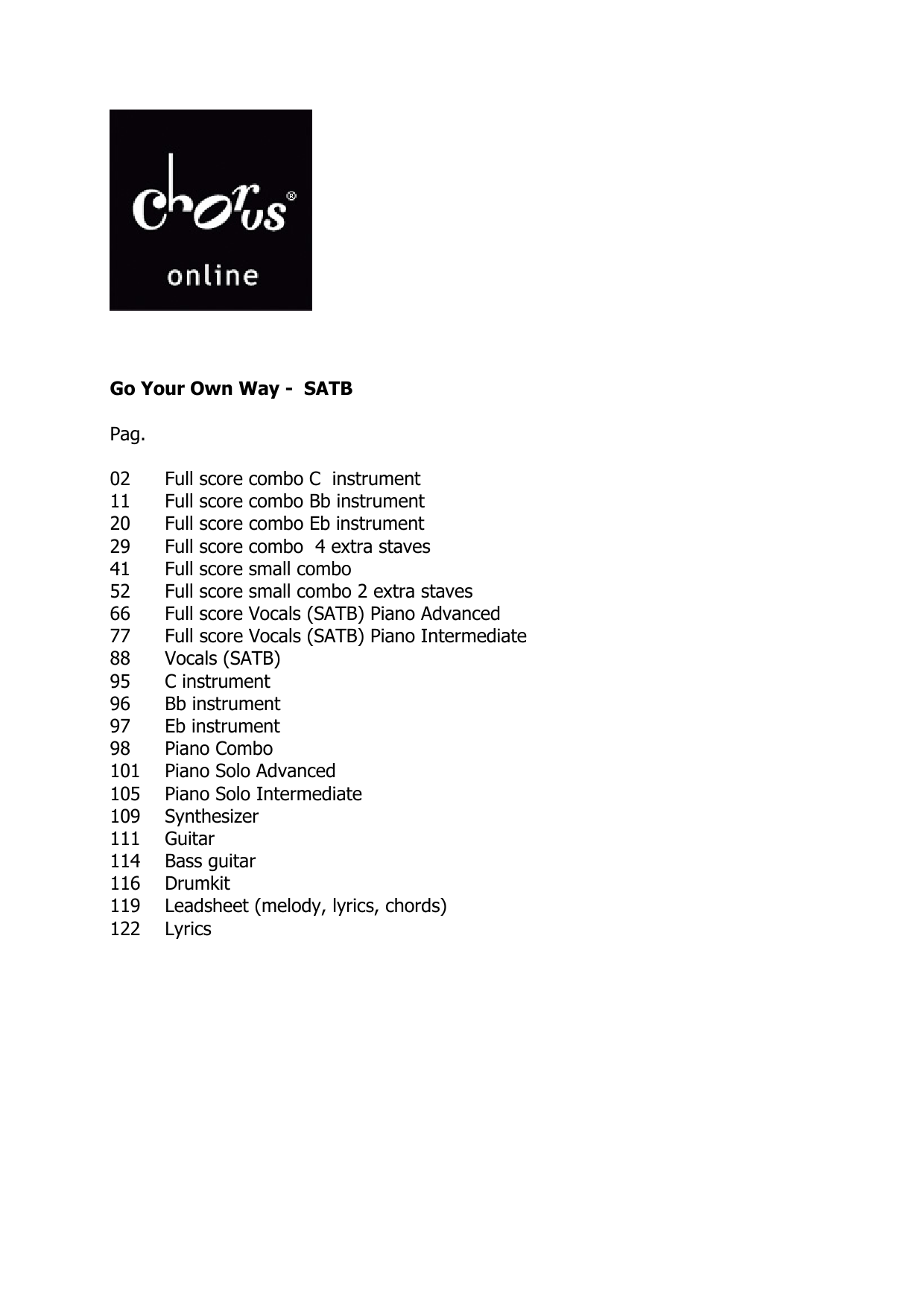
Page Count: 122
SKU: 35-DS00491865

More about this title

About the Artist: Fleetwood Mac

Fleetwood Mac emerged from the British blues scene in 1967 and evolved into one of the most commercially successful rock bands of the 1970s and 1980s. The band's lineup shifted through multiple iterations, but the classic configuration of Mick Fleetwood, John McVie, Lindsey Buckingham, Stevie Nicks, and Christine McVie produced some of rock's most enduring songs. Their 1977 album Rumours, which features "Go Your Own Way," stands as a landmark recording that balanced sophisticated pop sensibilities with rock authenticity.

For music educators, Fleetwood Mac's catalog represents accessible entry points into rock arranging and contemporary music study. The band's emphasis on vocal harmony, layered instrumentation, and memorable melodic lines translates effectively to choral settings, offering students repertoire that feels current while containing genuine musical substance.

Why we love this

Frank de Vreeze's arrangement captures the infectious groove and harmonic sophistication of the original while making it genuinely singable for mixed ensembles. The 122 pages indicate a full treatment that doesn't shy away from complexity, giving your singers substantial material to sink their teeth into without sacrificing the song's instantly recognizable character.

What to expect

Confident and declarative. "Go Your Own Way" carries an assertive melodic profile paired with sophisticated harmonic movement that feels sophisticated without sounding dated. Singing this arrangement sits somewhere between the accessibility of pop music and the musical rigor of art song.

Who it's for

Choirs at the intermediate to advanced level who want to program contemporary music with real substance. Directors seeking music that engages student singers in current popular repertoire while developing their harmonic awareness and ensemble precision.

How to get the most out of it

  • Lock in the rhythmic foundation early. The driving pulse that makes this song irresistible lives in how precisely your rhythm section interprets the backbeat, so invest rehearsal time in getting that pocket tight before layering vocals.
  • Balance the solos and soli sections carefully. With this much page count, there are likely several moments where individual voice parts step forward; mark these clearly in your scores and have singers practice restraint in the surrounding sections.
  • Let the recorded accompaniment breathe. Rather than fighting against it, use it as a conversation partner. Your singers should feel supported by it, not struggling to stay ahead or lag behind.
  • Shape the dynamics across the full arc. Pop arrangements can flatten into one dynamic level if you're not intentional; map where the energy builds and recedes so each section feels earned.

How to use it

This works beautifully as a standalone set piece for a concert built around 1970s to 1980s repertoire, or as a contemporary anchor in a diverse program that spans multiple eras and styles. It's substantial enough to anchor a section of your concert and instantly recognizable enough that audiences lean in immediately.

Skills your students will build

  • Singing sustained rock grooves without losing harmonic precision
  • Navigating complex arranging textures that layer multiple melodic and rhythmic ideas
  • Balancing blend and projection in contemporary harmony
  • Interpreting style and vocal color appropriate to pop/rock idiom
  • Reading extended choral scores (122 pages) with multiple key sections and structural variety

You May Also Like