Go Your Own Way (arr. Frank de Vreeze) Sheet Music Preview

Go Your Own Way (arr. Frank de Vreeze): SSAA Choral Octavo

As performed by Fleetwood Mac / Arranged by Frank de Vreeze

Item: 35-DS00491858

Digital Download
$2.99
Description

Go Your Own Way (arr. Frank de Vreeze): SSAA Choral Octavo isn't in MakeMusic Cloud just yet...but it could be. Let us know you'd like to see it, and you'll help shape what comes next. In the meantime, start a free trial and dive into thousands of interactive titles your students can play along with today.

Sample Audio
No sample audio found.
Sample Video
Additional Details
Publisher: Hal Leonard
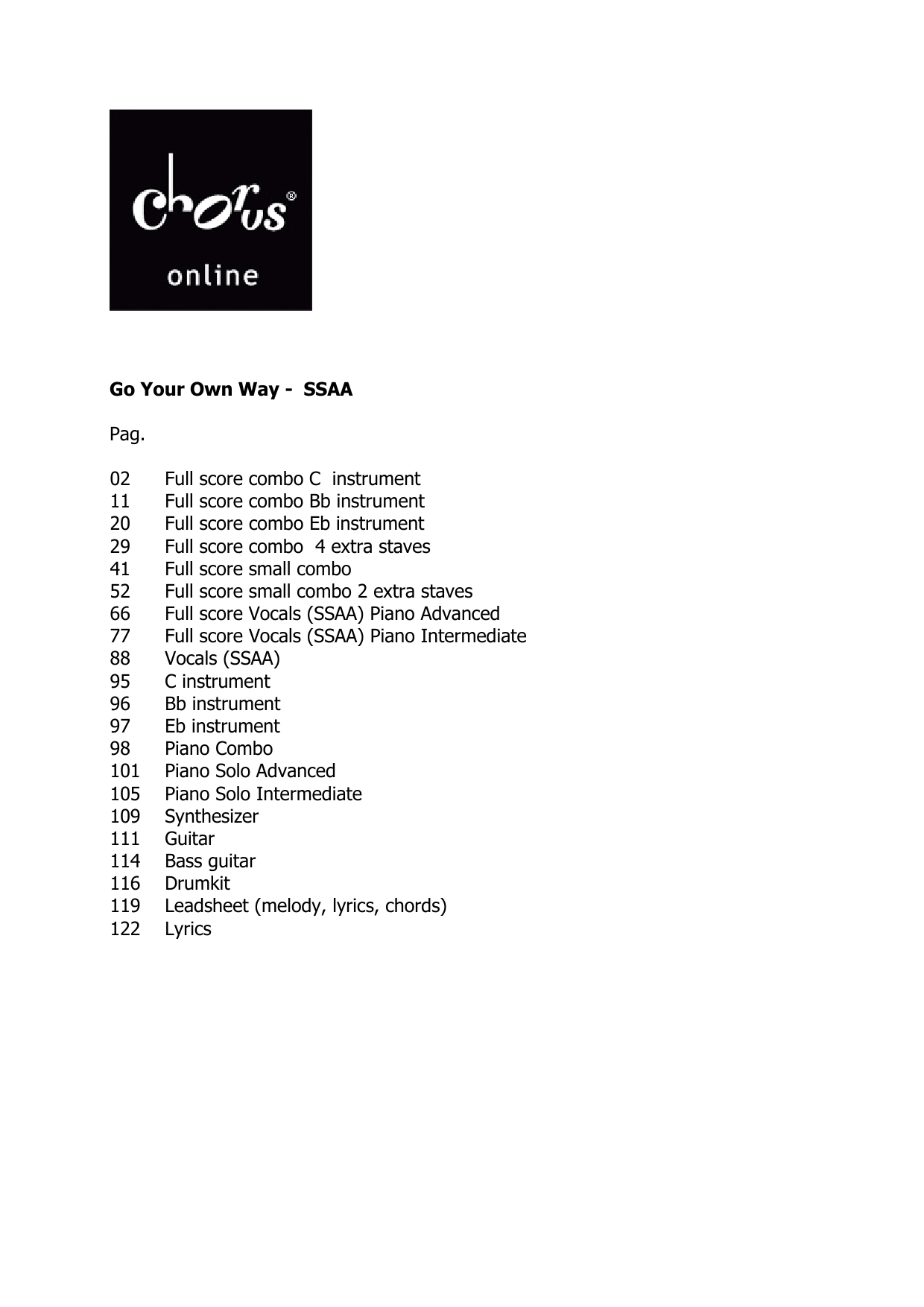
Page Count: 122
SKU: 35-DS00491858

More about this title

About the Artist: Fleetwood Mac

Fleetwood Mac emerged from the British blues scene in the late 1960s before pivoting to the sophisticated pop-rock sound that defined the 1970s and beyond. The band's 1977 album "Rumours" became one of the best-selling records of all time, showcasing Lindsey Buckingham and Christine McVie's songwriting prowess alongside the band's signature vocal harmonies. Their influence on contemporary music education extends far beyond nostalgia; their arrangements of vocal lines and layered production techniques offer genuine pedagogical value for choirs studying pop music integration.

The band's legacy centers on craftsmanship and emotional authenticity expressed through accessible melodies. For music educators, Fleetwood Mac represents a bridge between commercial success and serious musicianship, demonstrating that pop arrangements can demand technical rigor and interpretive sophistication from singers.

Why we love this

Frank de Vreeze's arrangement captures the song's infectious melodic hooks while creating genuine four-part writing that challenges singers beyond simple doubling. The pop idiom sits comfortably within modern choral curricula, and this particular voicing allows mixed choirs to program rock repertoire with artistic integrity rather than novelty positioning.

What to expect

The arrangement channels the song's confident, slightly defiant energy while maintaining the intimate vocal quality that made the original compelling. Singers experience a blend of rhythmic drive and harmonic richness, with moments of tender vulnerability balanced against sections built on unison strength.

Who it's for

Choirs seeking contemporary pop repertoire that respects both the source material and choral writing standards. This works equally well for high school show choirs, college recreational ensembles, and community groups looking to expand beyond traditional classical programming without sacrificing musicianship.

How to get the most out of it

  • Anchor the bass line (second A part) early in rehearsals. The foundation determines how securely the upper voices sit, especially during the rhythmic unison passages that define the song's character.
  • Treat the recorded accompaniment as a rehearsal tool rather than a performance crutch. Once your choir internalizes the harmonic movement, pulling back the track reveals how much musical work your singers are actually doing.
  • Shape phrasing around the lyrical intent of "go your own way" rather than purely melodic contours. The emotional weight shifts depending on how your sopranos balance independence with ensemble responsibility.
  • Experiment with dividing the SSAA voicing across your choir. A smaller ensemble handling the lead voice with full sections underneath creates textural variety that a straight four-part reading may miss.

How to use it

Consider pairing this with other 1970s pop standards to create a concert segment that explores how rock-era songwriters approached melody and harmony. The arrangement's accessibility makes it ideal for winter or spring pops concerts, and its modest page count (122 pages for SSAA parts across the score) fits comfortably into programs combining classical and contemporary works.

Skills your students will build

  • Singing rhythmic pop idioms with precision and swing
  • Balancing individual melodic lines against ensemble sonority
  • Interpreting repeated harmonic progressions with fresh phrasing
  • Tracking multiple voice parts without relying on a lead melody
  • Connecting contemporary song interpretation to classical choral technique

You May Also Like