
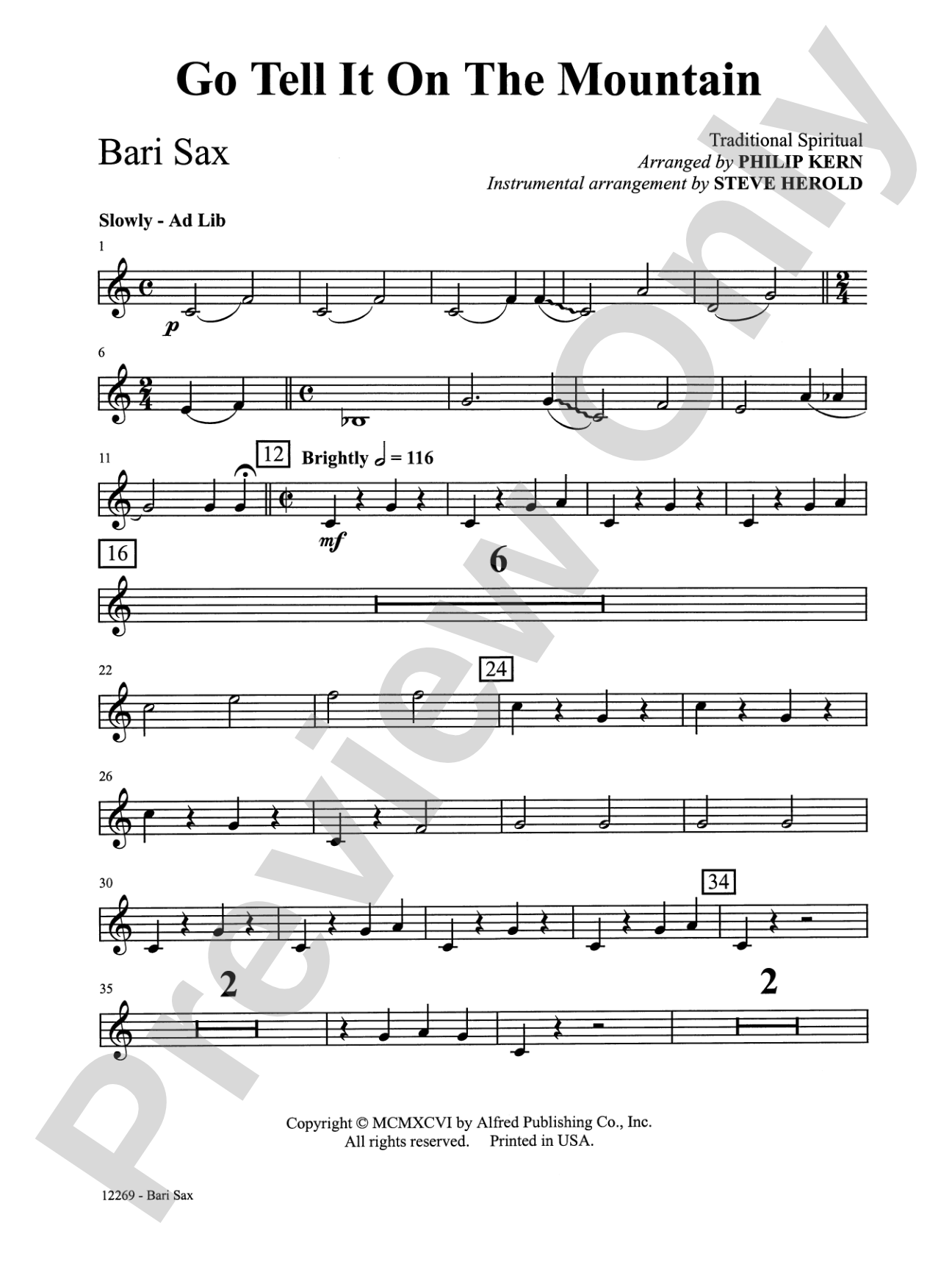

Go Tell It on the Mountain: E-flat Baritone Saxophone: Choral SoundPax
Arr. Philip Kern
Item: 00-PC-0000072_BTX
$3.00
Pickup currently not available
Description
This sensational arrangement of the ever-popular spiritual begins in E-flat and ends in G with a bright, showy finish. It includes a rhythmic a cappella section reminiscent of an old-fashioned gospel quartet. Its slow, ad lib opening solo will showcase your most soulful singer. InstruPax Includes: director's score, 3 trumpets, 2 trombones, 2 alto saxes, tenor sax, baritone sax, percussion, rhythm.


Don't just read it, hear it, play along with it, and watch your students grow with it. In MakeMusic Cloud, Go Tell It on the Mountain: E-flat Baritone Saxophone: Choral SoundPax comes alive with professional accompaniment, adjustable tempo, and built-in practice tools that turn solo practice into real progress.
Open in the Player
Jump straight in and assign it today.
Start Your Free Trial
Open this title and explore the full library in minutes.
Sample Audio
1
Audio File
--:--
0:00
0:00
Sample Video
No sample videos found.
Additional Details
Series:
Alfred Choral Designs
Publisher:
Alfred Music
Page Count:
52
SKU:
00-PC-0000072_BTX
Instrumentation:
3 trumpets, 2 trombones, 2 alto saxes, tenor sax, baritone sax, percussion, rhythm, score
More about this title
About the Arranger: Philip Kern
Philip Kern has established himself as a versatile arranger and composer working across gospel, jazz, and choral idioms. His arrangements are known for honoring the roots of spiritual and sacred music while creating fresh, performance-ready scores that engage both singers and audiences.
Why we love this
Kern's treatment transforms a beloved spiritual into a full ensemble vehicle without losing its soul. The architecture is smart: the opening solo pulls listeners in intimately, the a cappella gospel quartet section grounds the ensemble in tradition, and the final key lift to G with bright brass creates a climactic moment that feels earned rather than tacked on. This is the kind of arrangement that respects the source material while giving your program genuine impact.
What to expect
Warmth and joy threaded through with genuine reverence. The opening floats like a prayer, grounded in the particular rhythmic language of gospel music. When the full ensemble arrives, there's an exuberant lift, and by the time the brass shines in that final key, the piece feels like a celebration earned through sincerity rather than bombast.
Who it's for
Choirs with access to a brass and saxophone section looking for a showcase piece that serves both sacred and holiday programming. This works equally well in church contexts and concert settings, and it gives ensemble singers a chance to experience the interplay between choral and instrumental textures.
How to get the most out of it
- Cast your soloist carefully for the opening ad lib section. This isn't a moment to show off range; it's about phrasing, vulnerability, and lyrical control. The right singer will set the entire emotional tone for what follows.
- The a cappella gospel quartet passage demands rhythmic precision and independence. Have that small group rehearse separately until the snap and pocket feel authentic, then integrate them into full rehearsals.
- Balance the brass section during the full ensemble sections. With three trumpets and two trombones, these voices can easily overwhelm the choir. Work for clarity of harmonic support rather than volume.
- Use the key modulation from E-flat to G as a staging opportunity. Movement, lighting shift, or a slight tempo push here will signal the climactic turn and justify the brightness of the final section.
How to use it
Program this as the centerpiece of a holiday or sacred music concert, or use it as a bridge between a quieter first half and a more energetic second half. It pairs naturally with other spirituals and contemporary gospel arrangements, and the extended instrumental parts make it an excellent collaboration piece if your band and choir departments are looking for a joint concert vehicle.
Skills your students will build
- Singing with stylistic sensitivity to gospel phrasing and articulation
- Balancing vocal lines with instrumental accompaniment
- Ensemble independence in a cappella sections
- Following a conductor through key modulation and tempo nuance
- Understanding the harmonic and rhythmic conventions of the spiritual tradition