Go Tell It on the Mountain: Baritone T.C. Sheet Music Preview

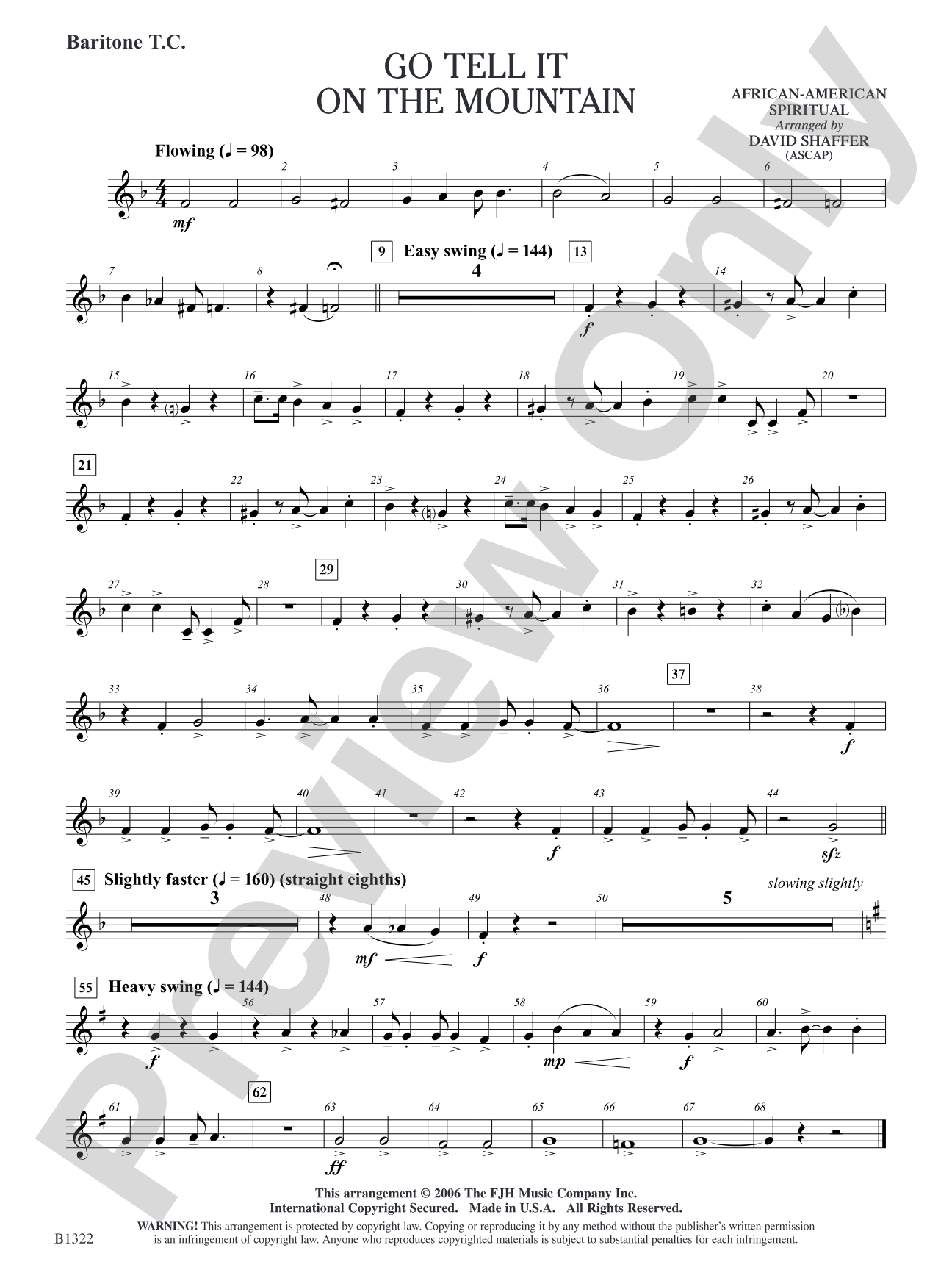
Go Tell It on the Mountain: Baritone T.C.

Arranged by David Shaffer

Grade: 2

Item: 98-PC-DB1322_BTC1

Digital Download
$7.00
Description
Beginning with a soft, subdued statement of the melody, this high-energy adaptation of the African American spiritual Go Tell It on the Mountain is excellent for teaching phrasing, swing style, and rhythmic syncopation. Your audience can even clap along! Several style changes culminate in a showstopper ending. Very practical for young bands!

Go Tell It on the Mountain: Baritone T.C. isn't in MakeMusic Cloud just yet...but it could be. Let us know you'd like to see it, and you'll help shape what comes next. In the meantime, start a free trial and dive into thousands of interactive titles your students can play along with today.

Sample Audio
0:00
0:00
Sample Video
Additional Details
Series: FJH Young Band
Publisher: The FJH Music Company, Inc.
SKU: 98-PC-DB1322_BTC1

More about this title

About the Composer: David Shaffer

David Shaffer is a prolific composer and arranger whose work consistently appears in concert band curricula across middle and high schools. He has a gift for taking familiar melodies and reimagining them with contemporary energy while keeping the writing accessible to developing musicians.

Why we love this

Shaffer captures the spiritual's original power while building genuine musicianship through the arrangement itself. The progression from intimate to exuberant gives young players a complete arc to shape, and the embedded opportunities for audience participation create that rare moment where the concert hall becomes a shared experience rather than a performance.

What to expect

The arrangement breathes with restraint before igniting into celebratory swing, catching the joy at the heart of the spiritual without oversimplifying its history. You'll hear your band discover how much personality they can inject into a familiar tune.

Who it's for

Grade 2 bands ready to work on stylistic nuance and dynamic range without being overwhelmed by technical demands. It's ideal for groups developing their swing vocabulary and performers who benefit from the confidence that comes with playing something the audience recognizes.

How to get the most out of it

  • Shape the opening softly by asking the lead voice to sit slightly back in the mix; this makes the dynamic journey to the final section feel earned rather than abrupt.
  • Establish the swing feel early in sectionals. Young musicians often rush swing rhythms, so tap the straight subdivision under the syncopated line until they internalize the pocket.
  • Mark dynamic transitions clearly in parts so the ensemble doesn't wait for a conductor cue. Phrase-to-phrase control shows maturity and keeps momentum alive through style changes.
  • Invite the audience to clap on cue, but rehearse the exact moment beforehand. A fumbled audience moment undermines the energy you've built.

How to use it

This works beautifully in a December concert alongside other holiday traditions, but it's equally powerful as a spring closer when you want to celebrate the ground your ensemble has covered in stylistic growth. Consider pairing it with a more contemplative work to underscore the contrast between its quiet opening and explosive finish.

Skills your students will build

  • Phrasing across dynamic changes
  • Swing style interpretation and rhythmic feel
  • Syncopated rhythm reading and execution
  • Balancing solo and ensemble textures
  • Responding to conductor cues for section dynamics

You May Also Like