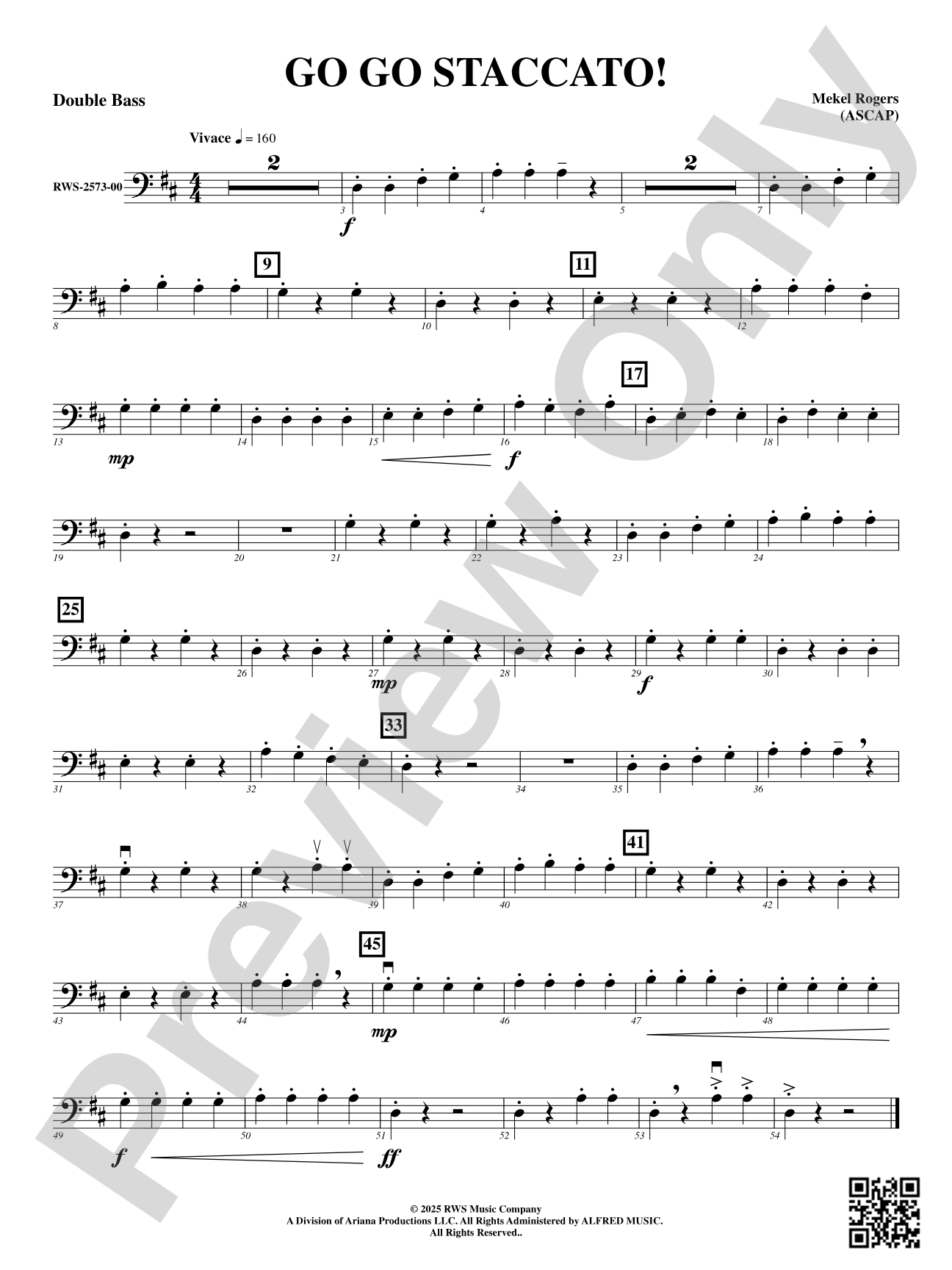
Go Go Staccato! is the perfect composition for beginners to learn staccato style in a fun and engaging way. Written in D major with no notes harder than quarter notes, students will enjoy preparing this piece quickly and easily for their first concert.
Discover MakeMusic Cloud: thousands of interactive titles your students can play along with today.
Staccato technique demands precision and control, yet most beginning string pieces treat it as an afterthought. Rogers centers the entire composition around clean, articulated playing, making it the star of the show rather than a secondary concern. Your students will leave this piece with genuine confidence in their bow control.
What to expect
Energetic and purposeful, with the rhythm-driven bounce that comes from crisp articulation. The D major key sits comfortably under young players' fingers, letting them focus entirely on how the bow moves rather than where it lands on the fingerboard.
Who it's for
Beginning string orchestras in their first year or two of ensemble experience. This works equally well for a full orchestra introduction or as a bridge piece between technique exercises and longer concert repertoire. Any group eager to master a fundamental bow technique while building confidence will benefit.
How to get the most out of it
Establish the rhythmic pulse before addressing bow articulation. Have students tap the rhythm on their instruments with a relaxed bow arm to build muscle memory without the pressure of sound production.
Work the staccato stroke separately from the piece itself. Use long tones followed by a sequence of quick, separated notes so players experience the contrast and understand exactly how much bow they need.
Keep the tempo steady and moderate during rehearsal. Resist the urge to rush; clean staccato at a comfortable speed will impress far more than hurried playing.
Balance the ensemble by listening for the melody line first, then ensure lower strings support without overwhelming. This clarifies which voices carry the primary material and helps younger players hear their role within the texture.
How to use it
Place this early in a concert to set a clear, accomplished tone. It's ideal as the opener of a young ensemble's first public performance or as a teaching piece in a mixed-level concert where you want to highlight foundational skills. The brevity and accessibility make it an excellent choice for end-of-unit demonstrations.
Skills your students will build
Controlled staccato articulation with the bow
Consistent bow rhythm and spacing in detached strokes
Reading rhythm patterns in quarter notes and common rest values
Listening to ensemble pulse while focusing on individual technique
Building left-hand stability in first position in D major
You May Also Like
Scan to Complete Your Purchase
Use your phone's camera to scan the code below
You'll log in on your phone and the order will be added to your account