
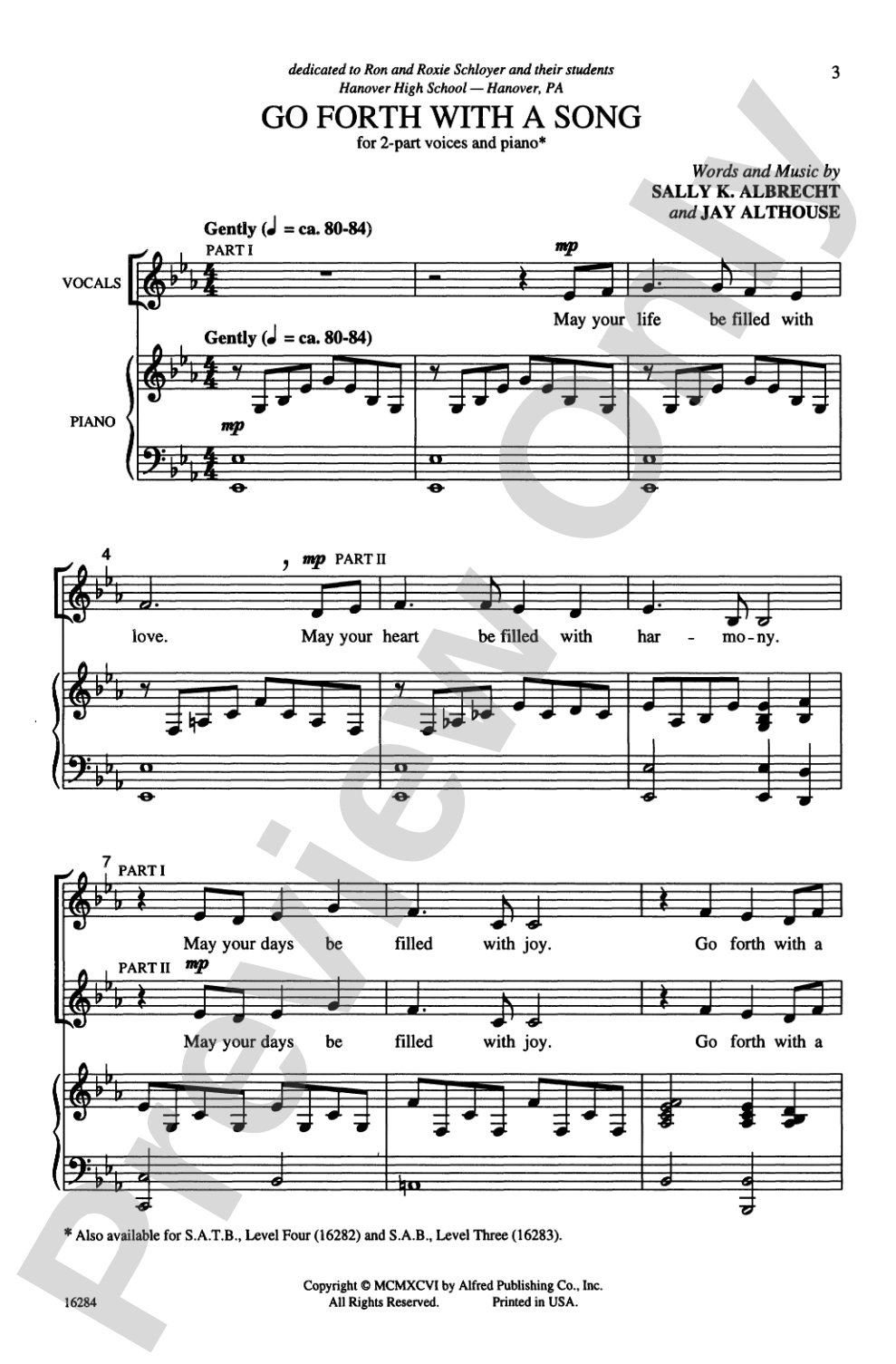

Go Forth with a Song: 2-Part Choral Octavo
Music by Sally K. Albrecht and Jay Althouse
Item: 00-PO-0003954
$2.25
Minimum order quantity: 20 copies
Pickup currently not available
Related Items
Go Forth with a Song: 2-Part Choral Octavo |
$2.25
|
View |
Description
This gentle song of parting is in the style of a benediction or Irish blessing, with each verse ending, "Go forth with a song." Optional soprano descant. Ideal as a concert closer, especially at spring or year-end concerts.


Go Forth with a Song: 2-Part Choral Octavo isn't in MakeMusic Cloud just yet...but it could be. Let us know you'd like to see it, and you'll help shape what comes next. In the meantime, start a free trial and dive into thousands of interactive titles your students can play along with today.
Request This Title
Tell us you want it.
Start Your Free Trial
Explore everything that's ready to play right now.
Sample Audio
1
Audio File
--:--
0:00
0:00
Sample Video
No sample videos found.
Additional Details
Series:
Alfred Archive Edition: Alfred Choral Designs
Publisher:
Alfred Music
Page Count:
8
SKU:
00-PO-0003954
More about this title
About the Composer: Sally K. Albrecht
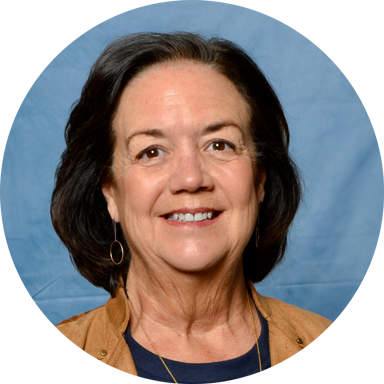
Sally K. Albrecht has shaped American choral music for decades as a composer, conductor, and clinician with particular expertise in integrating movement into choral performance. Since 1987, she has been a consistent recipient of the ASCAP Special Music Award, and her catalog includes over 600 published choral works alongside 75 songbooks and musicals. Her conducting experience spans prestigious venues including Lincoln Center, Carnegie Hall, and The Kennedy Center, where she has led honor choirs and festival ensembles nationwide.
For more than thirty years, Albrecht directed school choral and vocal publications for major educational music publishers, culminating in her role at Alfred Music. She has held faculty positions in music at Oakland University, Jersey City State College, and Meredith College. A graduate of Rollins College (B.A. in Music and Theater, 1976) and the University of Miami Frost School of Music (M.A. in Drama, 1977; M.M. in Accompanying, 1979), she has received the Distinguished Alumna Award from both institutions. She serves as Chair of the Board of Trustees for the Omicron Delta Kappa National Leadership Honor Society and was honored with their "Pillar of Leadership" award. Albrecht lives in Wake Forest, North Carolina, with her husband, composer and arranger Jay Althouse.
Why we love this
Albrecht and Althouse crafted this piece with the emotional precision that defines their best work: it feels genuinely reverent without becoming heavy, and the optional soprano descant gives you flexibility depending on your singers' range and confidence. The repeating refrain "Go forth with a song" becomes a memorable blessing that audiences hear clearly, making this far more than background music for a final bow.
What to expect
Warm and luminous, with the gentle gravity of a benediction. The melody unfolds like a blessing spoken aloud rather than sung from on high, inviting singers and listeners into a shared moment of hope as something cherished comes to an end.
Who it's for
Directors seeking a thoughtful closing number for spring or year-end concerts, particularly graduations and ceremonies where singers and audience need a moment of reflection. This works well for developing choirs and mixed-ability ensembles since the 2-part voicing accommodates a range of vocal maturity without sacrificing musicality.
How to get the most out of it
- Shape the melody with gentle forward motion rather than treating each phrase as separate; the benediction arc requires continuity even at soft dynamic levels.
- Balance the optional soprano descant carefully in rehearsal so it enhances rather than overpowers the main tune; this works best when your upper singers can sing independently without drowning out the lower voice.
- Treat the text "Go forth with a song" as a musical and spiritual statement; clarity and warmth in the vowels will let the message land with your audience.
- Consider if you want the piece to feel more hymn-like or more song-like in your interpretation, then adjust tempo and articulation accordingly.
How to use it
Program this as your final selection on a spring or commencement concert to send audiences out into the light with something meaningful to carry with them. It pairs naturally after more energetic repertoire, allowing your choir to shift into a reflective space and giving the evening a sense of purposeful closure rather than simply ending.
Skills your students will build
- Singing with sustained legato phrasing across longer melodic lines
- Blending two independent vocal lines (main melody and optional descant) with secure part independence
- Interpreting text-driven music where meaning shapes musical choices (tempo, dynamics, vowel color)
- Performing with appropriate tone and reverence for sacred or ceremonial music