

Go Down, Moses: SSAB Choral Octavo
Traditional Spiritual / arr. Ruth Morris Gray
Item: 00-PO-0005842
$2.05
Minimum order quantity: 20 copies
Pickup currently not available
Related Items
Go Down, Moses: PianoTrax Digital Download |
$9.99
|
View | |
Go Down, Moses: SATB Choral Octavo |
$2.05
|
View | |
Go Down, Moses: SSA Choral Octavo |
$2.05
|
View | |
Go Down, Moses: TTB Choral Octavo |
$2.05
|
View | |
Go Down, Moses: SATB Choral Octavo |
$2.05
|
View | |
Go Down, Moses: SSAB Choral Octavo |
$2.05
|
View | |
Go Down, Moses: SSA Choral Octavo |
$2.05
|
View | |
Go Down, Moses: TTB Choral Octavo |
$2.05
|
View |
Description
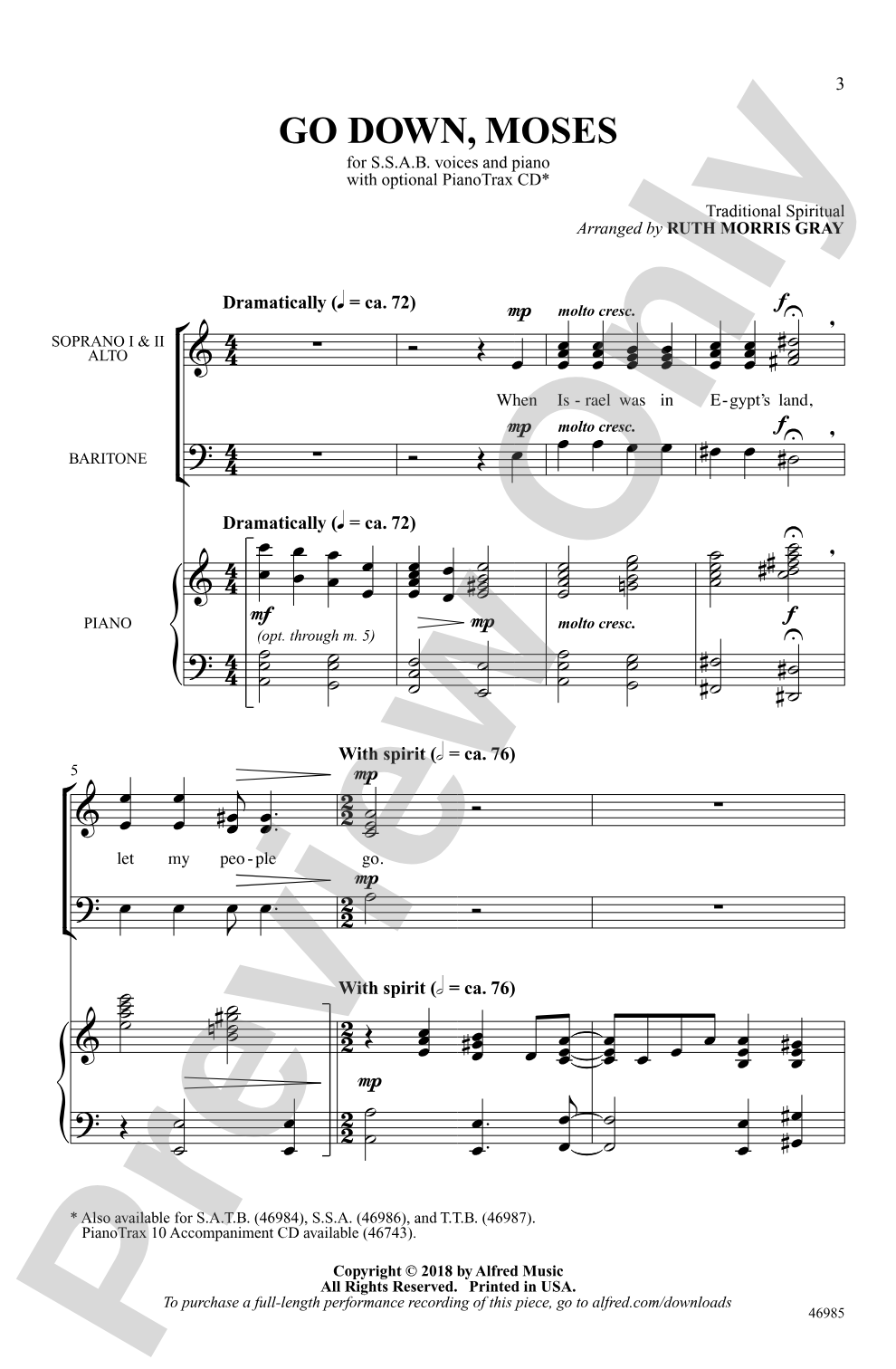
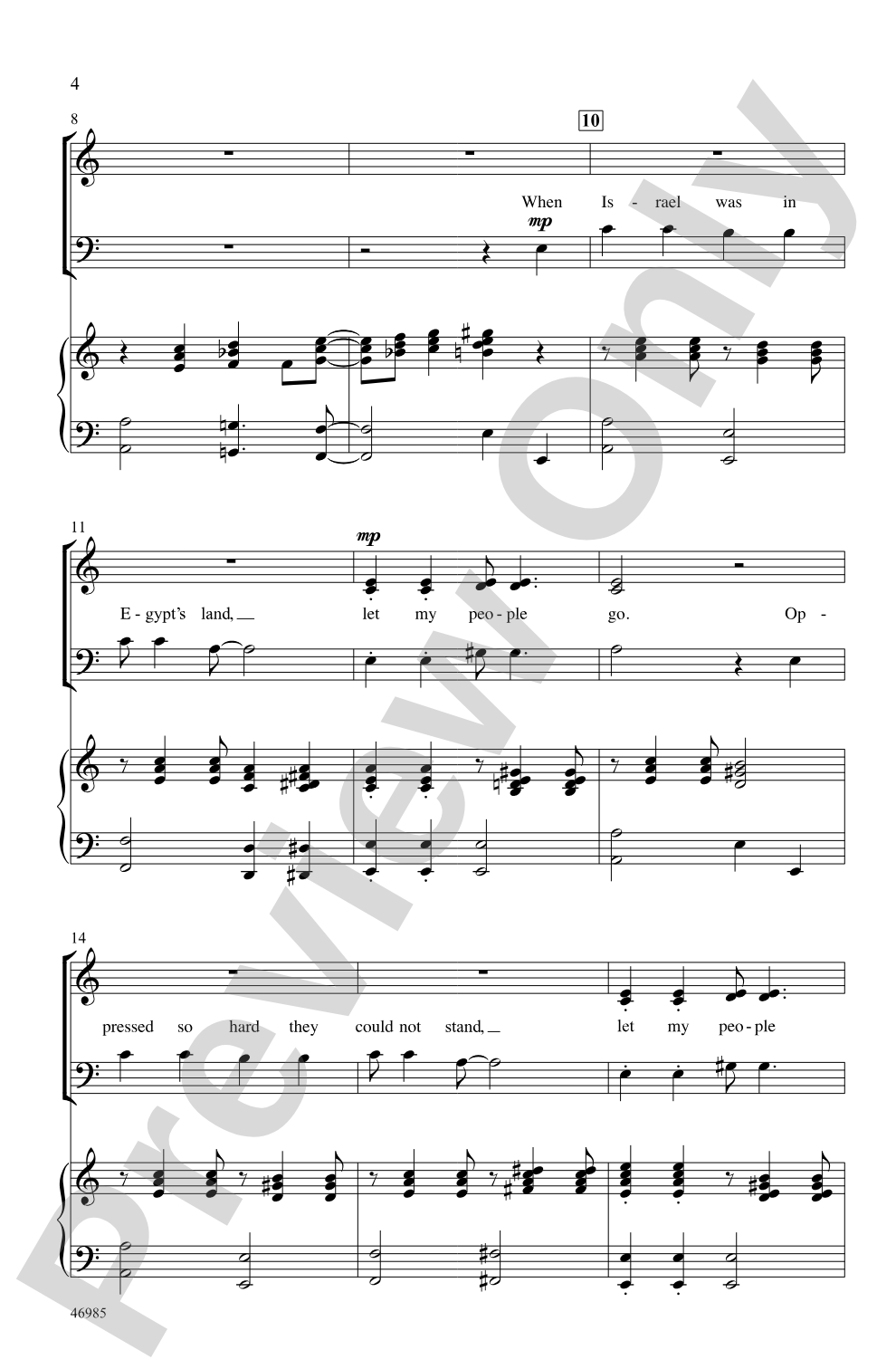
Edge-of-your-seat excitement! Substantial contrasts in dynamics and articulation make this arrangement of the traditional spiritual a fitting entry point into the study of the style. Embrace the drama and storytelling of the classic struggle between the Israelites and Pharaoh, while knowing that you're also giving your singers solid choral repertoire.


Go Down, Moses: SSAB Choral Octavo isn't in MakeMusic Cloud just yet...but it could be. Let us know you'd like to see it, and you'll help shape what comes next. In the meantime, start a free trial and dive into thousands of interactive titles your students can play along with today.
Request This Title
Tell us you want it.
Start Your Free Trial
Explore everything that's ready to play right now.
Sample Audio
1
Audio File
--:--
0:00
0:00
Sample Video
Additional Details
Series:
Alfred Choral Designs
Publisher:
Alfred Music
Page Count:
12
SKU:
00-PO-0005842
More about this title
About the Arranger: Ruth Morris Gray

Ruth Morris Gray directs choirs at Rosemead High School in California, where she has shaped the choir program since 2004. She holds a Bachelor of Music in Piano Performance and Composition from Biola University and a Master of Arts in Music Composition from UC Santa Barbara, credentials that anchor her work as both an educator and creative voice.
With over 100 published choral compositions to her name, Gray has established herself as a prolific voice in choral writing. Beyond the classroom and rehearsal hall, she performs, composes, and travels with her husband Douglas, drawing inspiration from a life lived fully across music and beyond.
Why we love this
Gray's arrangement builds genuine dramatic tension through precise dynamic and articulation choices, giving singers concrete interpretive decisions to make rather than leaving the spiritual's power to chance. The writing sits comfortably for three-part mixed voices while delivering the emotional weight of this essential American choral repertoire, making it ideal for choirs ready to deepen their engagement with spirituals without overextending their range or complexity.
What to expect
The energy shifts between quiet, almost whispered moments of prayer and full-voiced declarations of freedom, keeping singers and listeners on high alert. The arrangement honors the spiritual's roots in struggle and triumph while creating space for singers to inhabit the story as their own.
Who it's for
This octavo works well for developing three-part mixed choirs seeking to build confidence with spirituals, as well as more experienced ensembles looking for a fresh, dramatically engaging arrangement. It suits singers who are ready to handle substantial emotional and dynamic range but benefit from clear compositional scaffolding.
How to get the most out of it
- Shape the dynamic contrasts deliberately; treat sudden drops in volume as moments of vulnerability rather than technical reductions, and let surges in intensity feel like inevitable emotional releases.
- Articulation patterns carry the storytelling here. Crisply define where the text lands and where it breathes to honor the narrative arc of deliverance.
- Balance the voice parts carefully during moments of textural density so that no single line overshadows the spiritual's collective power.
- Allow time in rehearsal for singers to connect emotionally with the Exodus story itself. Understanding what they're singing about deepens both interpretation and commitment.
How to use it
Pair this with other spirituals or freedom songs to build a thematic concert segment, or place it strategically in a mixed program where its emotional peaks provide a natural climax. Its contest and festival appeal also makes it a strong choice for spring competition seasons when you want repertoire that showcases both musicality and character depth.
Skills your students will build
- Managing dramatic dynamic shifts and sustaining soft singing with clarity
- Interpreting articulation marks as tools for storytelling rather than technical markers
- Balancing three-part mixed voicing in passages of high textural density
- Connecting emotional context to musical choices in spiritual repertoire