

Go Down, Moses: SSATB, a cappella Choral Octavo
Traditional Spiritual / arr. (with new music) Greg Gilpin
Item: 00-PO-0000115
$1.85
Minimum order quantity: 20 copies
Pickup currently not available
Related Items
Go Down, Moses: SSATB, a cappella Choral Octavo |
$1.85
|
View |
Description
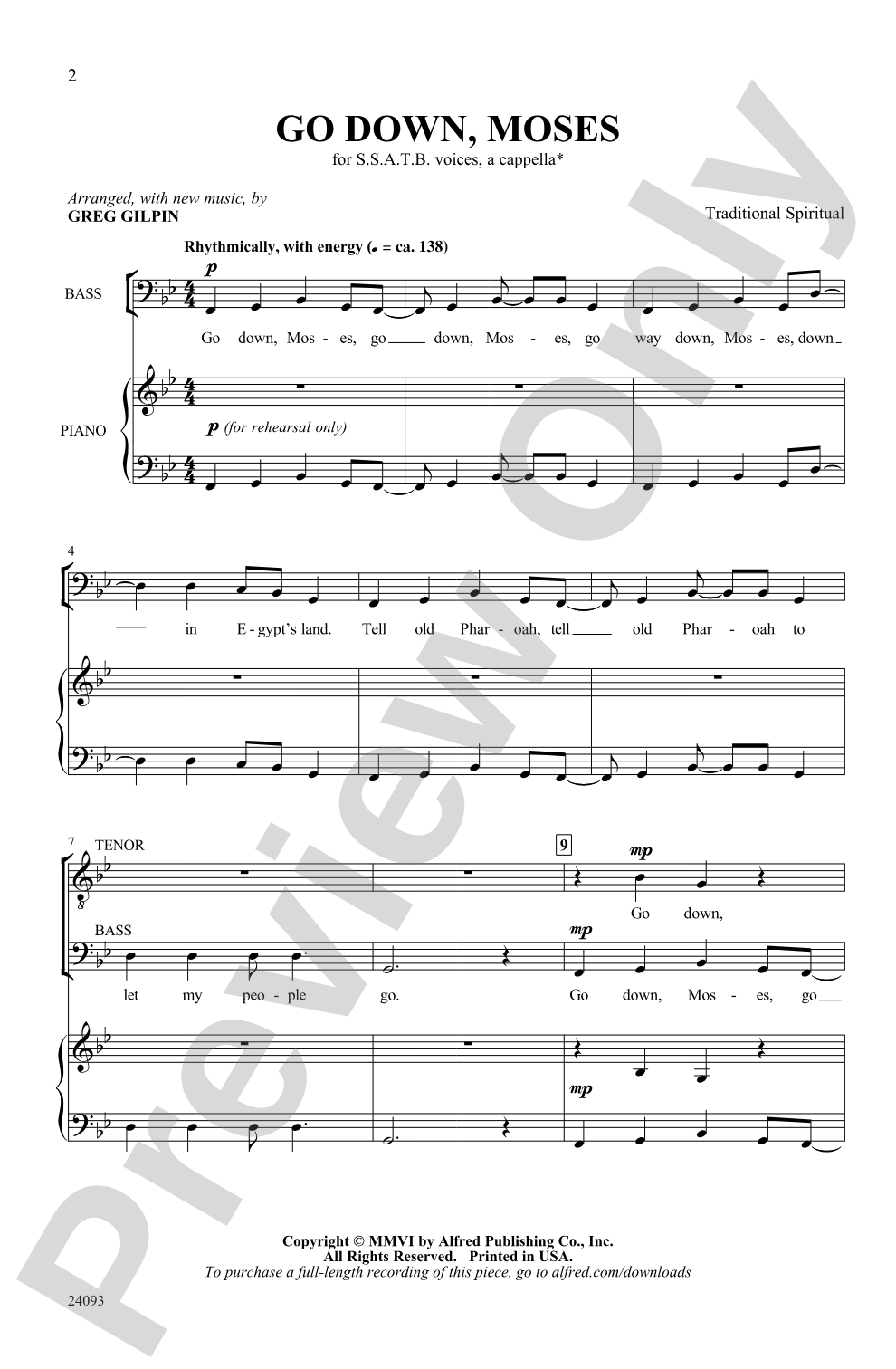
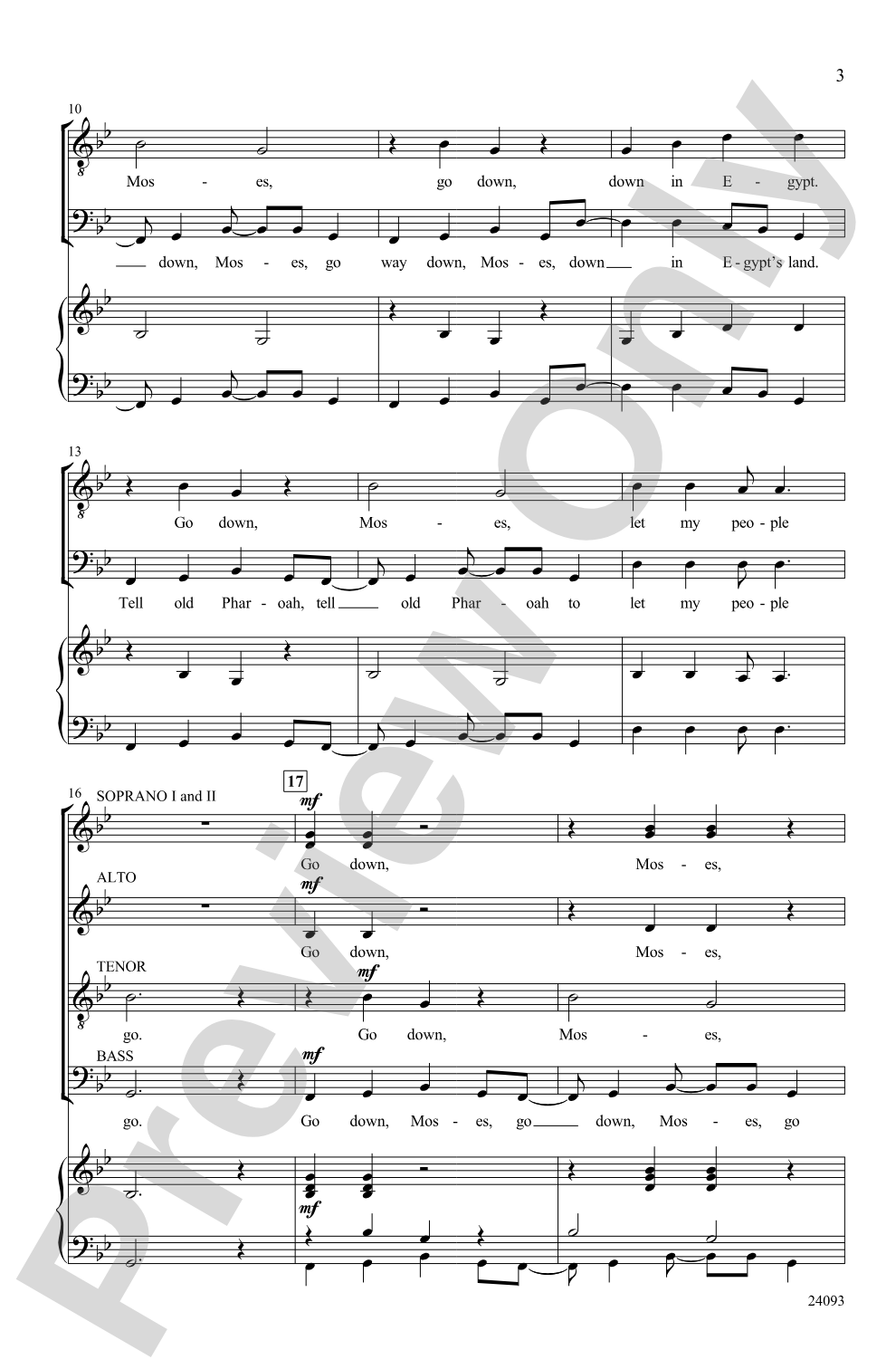
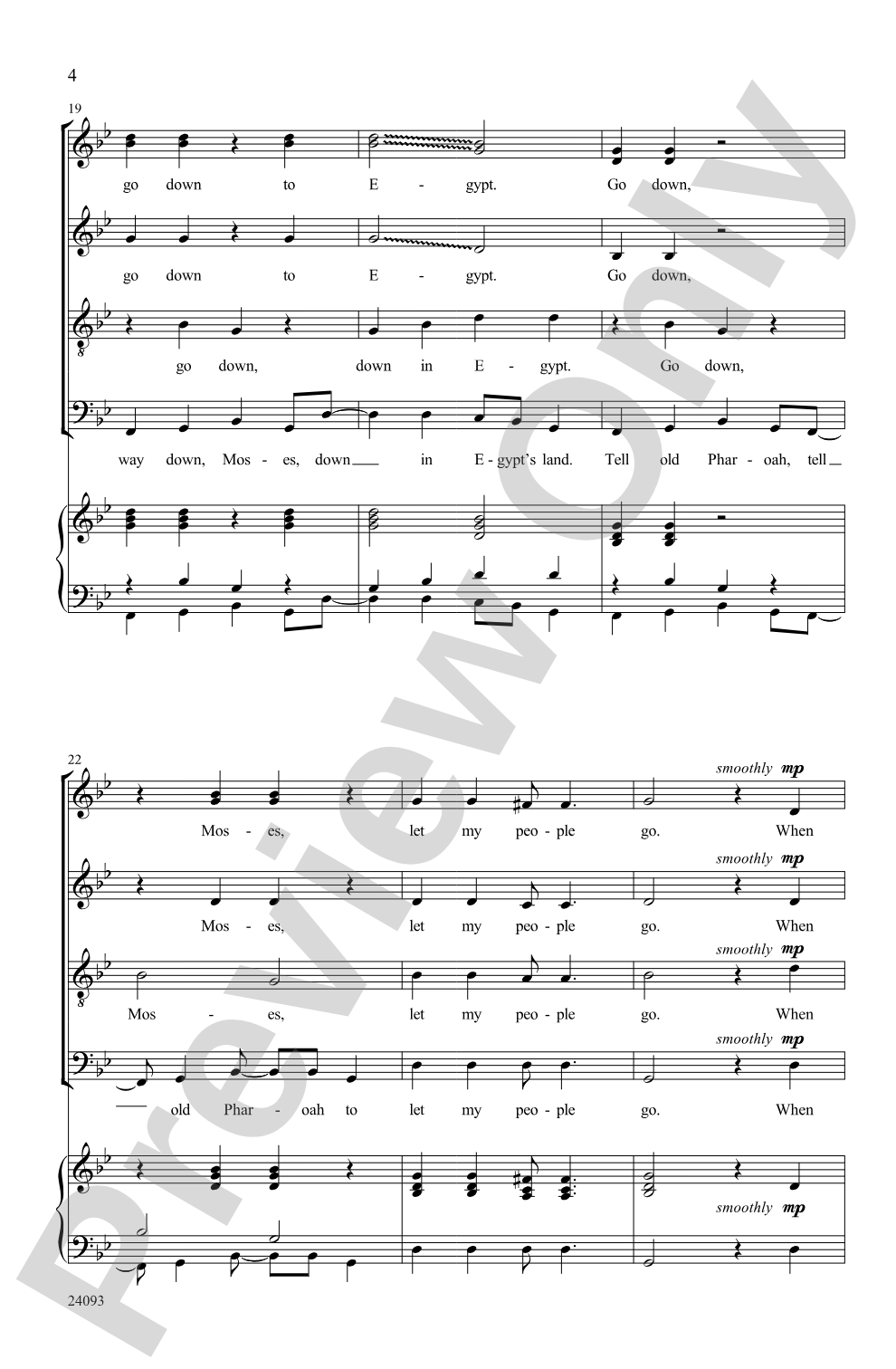
Rhythmic vocal parts are added one by one over the bass section's walking line, creating a multi-layered a cappella arrangement that is uniquely satisfying to sing and equally exhilarating to hear. An age-old spiritual with an innovative sound!


Go Down, Moses: SSATB, a cappella Choral Octavo isn't in MakeMusic Cloud just yet...but it could be. Let us know you'd like to see it, and you'll help shape what comes next. In the meantime, start a free trial and dive into thousands of interactive titles your students can play along with today.
Request This Title
Tell us you want it.
Start Your Free Trial
Explore everything that's ready to play right now.
Sample Audio
1
Audio File
--:--
0:00
0:00
Sample Video
No sample videos found.
Additional Details
Series:
Alfred Choral Designs
Publisher:
Alfred Music
Page Count:
16
SKU:
00-PO-0000115
More about this title
About the Arranger: Greg Gilpin

Greg Gilpin is an ASCAP-recognized choral composer and arranger whose work spans concert halls across the country and around the world. He has conducted performances at Carnegie Hall, Lincoln Center, Ryman Auditorium, the Sydney Opera House, Royal Festival Hall, and Harpa Concert Hall, establishing himself as a significant voice in American choral music. As Director of Educational Choral Publications for Shawnee Press, Gilpin shapes the repertoire available to school and community choirs nationwide.
Beyond the concert stage, Gilpin has ventured into film scoring and received recognition for his work on the award-winning short "Rosie's Rescue." He has also created fresh arrangements of familiar repertoire, most notably collaborating with opera singer Angela Brown on a world premiere version of "What Child is This?" performed by the Indianapolis Symphonic Choir. An active member of ACDA, NAfME, and SAG-AFTRA, Gilpin continues to compose, conduct, and teach while bringing his organizational expertise to the professional sphere.
Why we love this
Gilpin's layering technique transforms a familiar spiritual into something that feels both rooted in tradition and strikingly contemporary. The slow accumulation of rhythmic vocal lines over the walking bass creates genuine textural interest that keeps singers engaged and audiences riveted, making this arrangement memorable without sacrificing the spiritual's emotional core.
What to expect
The piece unfolds with hypnotic momentum. As each layer joins the bass, the texture deepens and gains kinetic energy, building spiritual intensity through interlocking rhythms rather than dynamic crescendos. The result feels both intimate and powerful, grounded in the spiritual's history while sounding urgent and alive.
Who it's for
This arrangement works well for choirs comfortable with moderate rhythmic complexity and a cappella singing. It suits both concert choirs seeking repertoire with genuine harmonic and textural sophistication and community ensembles looking to expand beyond traditional spiritual arrangements.
How to get the most out of it
- Establish the bass line first and let it anchor the entire ensemble. The walking line provides the harmonic and rhythmic foundation that allows upper voices to sit securely as they enter.
- Shape the entry of each new vocal layer as a distinct musical moment. Slight dynamic adjustments at each new entrance help the audience follow the arrangement's architecture.
- Balance the texture carefully so that no single voice part overwhelms the others. The richness comes from all voices contributing equally, not from soloists standing out.
- Pay attention to rhythmic precision in the layered sections. The interaction between the bass line and the added rhythmic parts creates the arrangement's driving energy, so lock in timing across all sections.
How to use it
Use this as a centerpiece in a program exploring African American sacred music, where its contemporary sonic approach creates a powerful conversation with other spirituals. It also works beautifully as a closing piece, its rhythmic propulsion and accumulated texture creating a memorable final impression.
Skills your students will build
- Singing a cappella with secure intonation while balancing complex rhythmic layering
- Maintaining a steady part while listening to independent rhythmic figures in other voices
- Understanding how harmonic color emerges from layered vocal entries
- Performing spirituals with stylistic authenticity while engaging with modern arranging techniques