Glory Sheet Music Preview

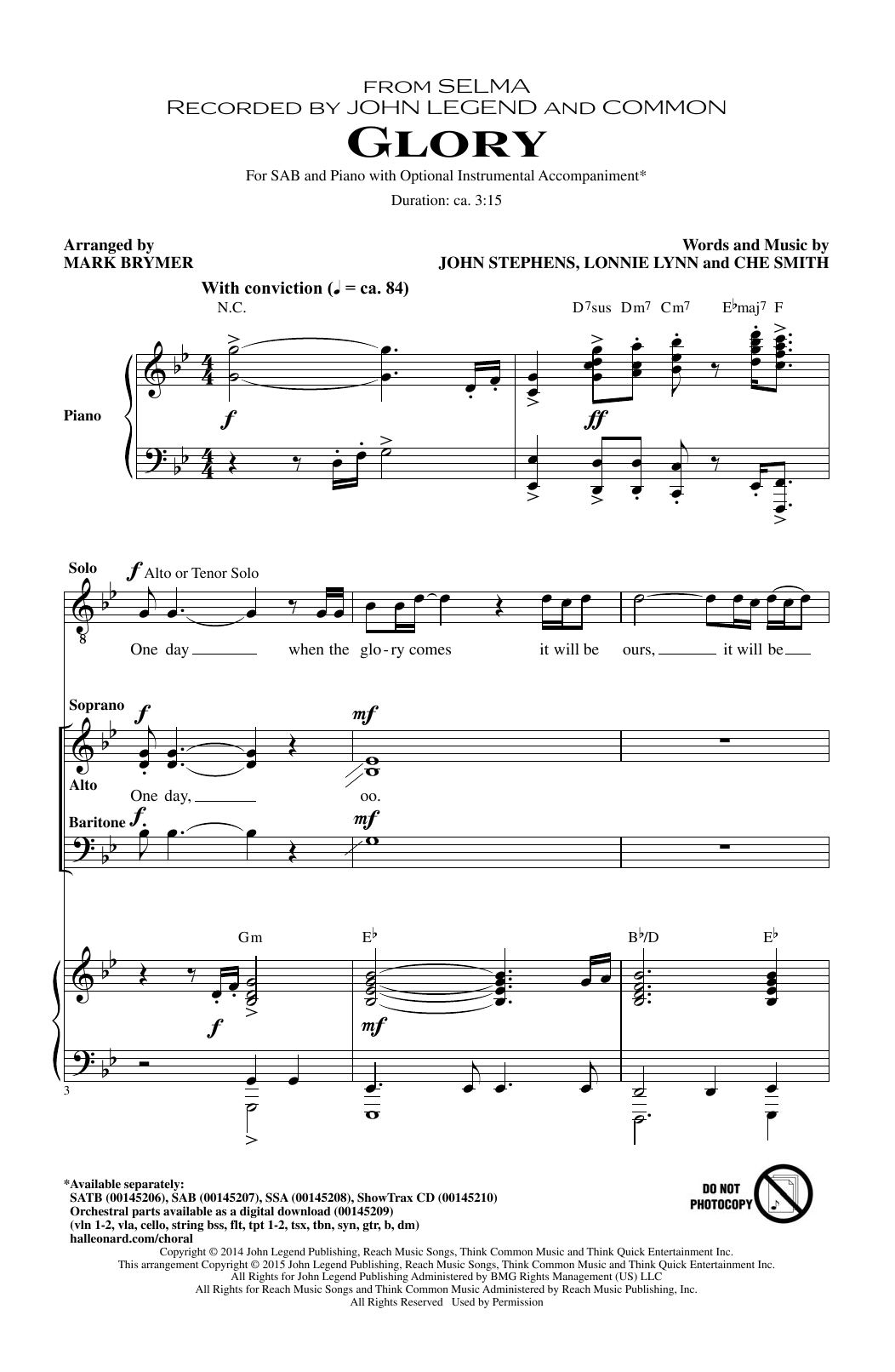
Glory: SAB Choral Octavo

As performed by John Legend / As performed by John Stephens / As performed by Lonnie Lynn / As performed by Common / As performed by Che Smith / As performed by Common John Legend / Arranged by Mark Brymer

Item: 35-DS00317118

Digital Download
$2.99
Description

Glory: SAB Choral Octavo isn't in MakeMusic Cloud just yet...but it could be. Let us know you'd like to see it, and you'll help shape what comes next. In the meantime, start a free trial and dive into thousands of interactive titles your students can play along with today.

Sample Audio
No sample audio found.
Sample Video
Additional Details
Publisher: Hal Leonard
Page Count: 14
SKU: 35-DS00317118

More about this title

About the Artist: John Legend

John Legend emerged as one of the most significant voices in contemporary R&B and pop, building a career on sophisticated vocal control, emotional authenticity, and genre-crossing collaborations. His work as a performer, songwriter, and producer reflects a deep musical literacy that extends from classical training through jazz and soul traditions into modern pop, making him a natural fit for high-profile film and television projects.

Why we love this

Mark Brymer's arrangement captures the weight and urgency of the original while making it accessible for developing three-part ensembles. The piece balances powerful unison moments with genuine three-part writing that gives each voice meaningful music, and the contemporary pop idiom speaks directly to student singers who connect with this material emotionally.

What to expect

The music radiates conviction and hope without sentimentality. Brymer captures the soaring, almost anthemic quality of the original while maintaining an intimate human center, creating space for genuine emotional expression from singers who understand what they're performing.

Who it's for

This works for upper elementary through early high school choirs who have reliable sight-reading skills and can sustain contemporary singing without losing intonation. It's also an excellent choice for programs looking to program current repertoire alongside traditional concert material.

How to get the most out of it

  • Treat the dynamic architecture seriously. The arrangement builds momentum through layered entries, so resist the urge to sing full volume early; let dynamics serve the arc of the piece.
  • Lock the alto line during parallel section work. This voice often carries harmonic foundation and clarity here improves overall blend and releases pressure on sopranos to over-sing.
  • Address the contemporary phrasing vocabulary. This isn't classical repertoire, so encourage legit singing that sits naturally rather than operatic extension or overly tight jazz phrasing.
  • Anchor baritones (or basses if you're doubling the part) to ensure the harmonic foundation feels grounded, especially during moments that sit in lower ranges.

How to use it

This pairs naturally with concert programming focused on film and television music, or consider it as a contemporary anchor for a program exploring social themes through popular song. It also serves as an accessible entry point into slightly more advanced three-part writing for choirs transitioning from unison or two-part work.

Skills your students will build

  • Reading and sustaining three-part harmony in contemporary idiom
  • Dynamic shaping in non-classical contexts
  • Phrase placement and legit singing technique in pop and R&B styles
  • Understanding harmonic function through accessible contemporary writing
  • Emotional communication and performance maturity

You May Also Like