Glorious Sight: Viola Sheet Music Preview

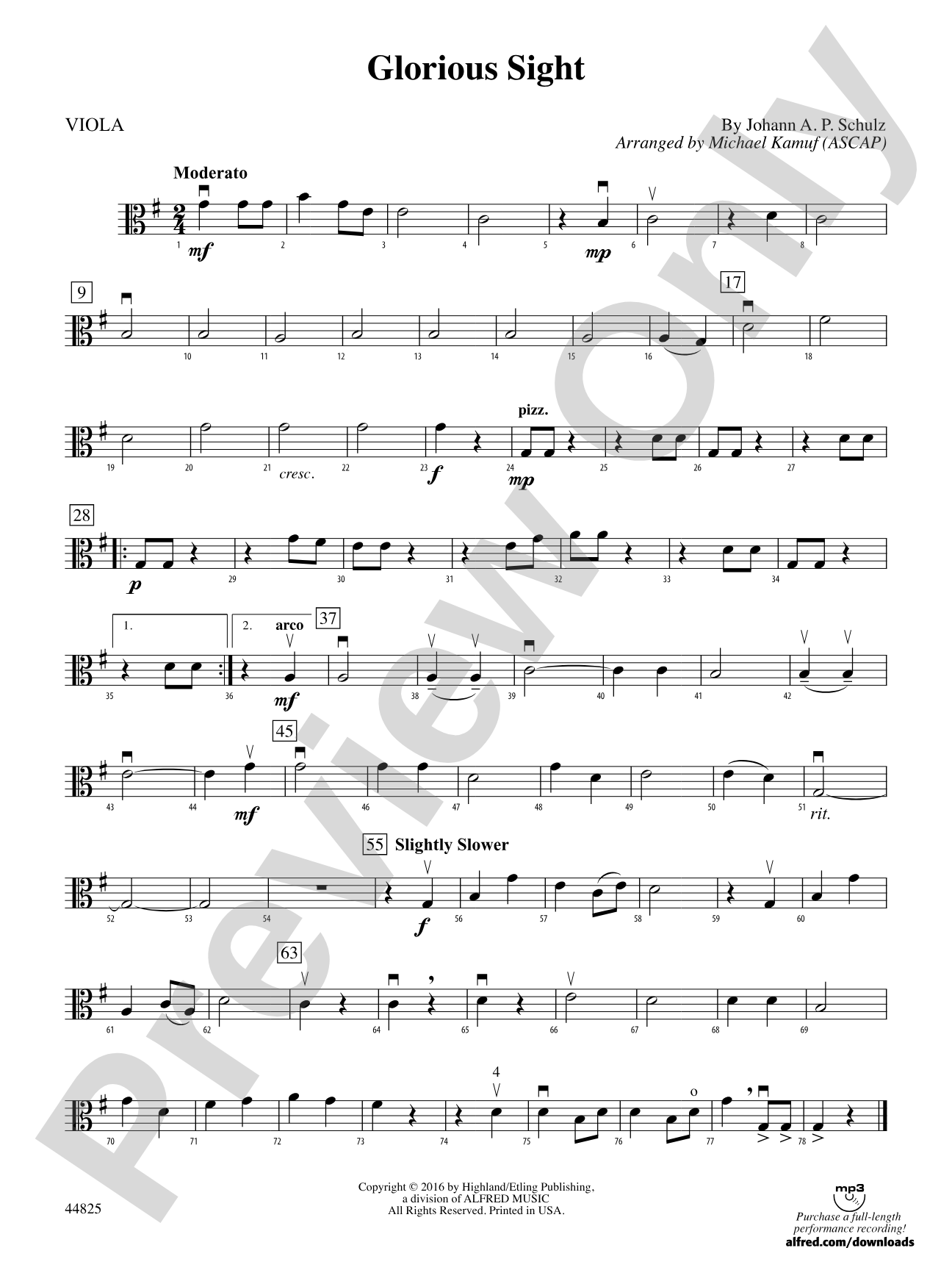
Glorious Sight: Viola

By Johann A. P. Schulz / arr. Michael Kamuf

Grade: 1.5

Item: 00-PC-0017342_VA1

Digital Download
$5.99
Description
Glorious Sight is a bright, sparkling setting of "O, Come Little Children," arranged by Michael Kamuf, that will delight audiences and players; this arrangement will become a classic. Includes optional sleigh bells. Correlated to Sound Innovations for String Orchestra, Book 1, Level 5. (1:45)

Don't just read it, hear it, play along with it, and watch your students grow with it. In MakeMusic Cloud, Glorious Sight: Viola comes alive with professional accompaniment, adjustable tempo, and built-in practice tools that turn solo practice into real progress.

Sample Audio
0:00
0:00
Sample Video
Additional Details
Series: Sound Innovations for String Orchestra
Publisher: Alfred Music
Page Count: 78
SKU: 00-PC-0017342_VA1

More about this title

About the Composer: Johann A. P. Schulz

Johann Abraham Peter Schulz (1747-1800) composed during the Classical era when simpler, more singable melodies were gaining favor across Europe. His works for children and families remain some of the most enduring pedagogical and devotional music from the period, valued for their directness and emotional clarity.

Schulz spent much of his career in Copenhagen and Berlin, where he contributed significantly to the development of German vocal music. His gift for crafting memorable melodies that work equally well in home, school, and church settings has ensured that pieces like "O, Come Little Children" continue to reach young musicians nearly 250 years after they were written.

Why we love this

Michael Kamuf's orchestration captures everything that makes this melody beloved while perfectly matching the technical reality of early intermediate string players. The optional sleigh bells add festive color without requiring specialized musicians, making this arrangement genuinely flexible for various performance contexts. It reads freshly even though the tune is familiar, giving students something that feels singable and accessible yet still sounds polished in concert.

What to expect

Bright and warm, like stepping into candlelit spaces on a winter evening. The arrangement sparkles through clear orchestration and a melody that draws audiences in immediately, creating the feeling of something both timeless and freshly heard.

Who it's for

String orchestras at the early intermediate level, particularly those preparing winter or holiday concerts. Directors seeking repertoire that students can learn quickly while maintaining strong musical standards will find this arrangement especially useful when programming flexibility matters.

How to get the most out of it

  • Anchor the piece with steady eighth-note pulse in the accompanying strings; the simplicity of the arrangement means rhythmic clarity becomes the foundation for all musical shaping.
  • Balance the melodic line so it sits slightly forward without dominating; this tune thrives on a warm, blended sound across all parts.
  • If using sleigh bells, have them enter during the second statement of the melody to add surprise and lift without overwhelming the opening presentation.
  • Tune carefully in the upper register where violins carry the primary melody; intonation challenges tend to emerge at higher positions even at this accessible level.

How to use it

This works beautifully as a concert opener that establishes a holiday mood without requiring substantial rehearsal time, freeing energy for more demanding pieces on the same program. It pairs naturally with other seasonal literature and gains additional impact when programmed alongside contemporary arrangements or original compositions from the same repertoire level.

Skills your students will build

  • Playing sustained melodic lines with consistent vibrato and tone production
  • Maintaining independent rhythmic accompaniment patterns in supporting voices
  • Tuning in ensemble contexts with attention to vertical sonority and balance
  • Responding to subtle dynamic shaping and phrasing in straightforward harmonic progressions
  • Reading and executing optional percussion parts while maintaining instrumental focus

You May Also Like