
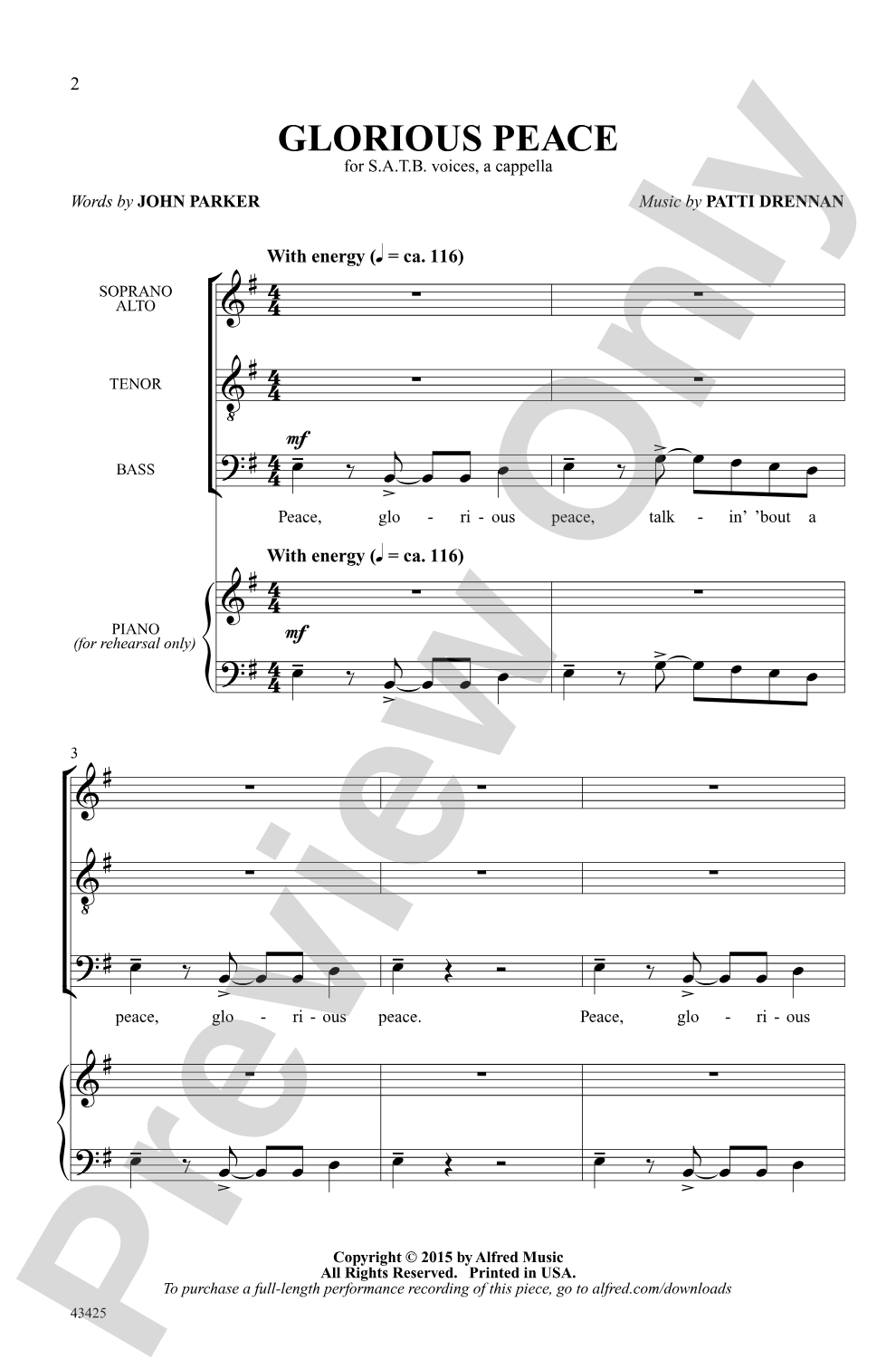

Glorious Peace: SATB, a cappella Choral Octavo
Words by John Parker, music by Patti Drennan
Item: 00-PO-0003359
$2.00
Minimum order quantity: 20 copies
Pickup currently not available
Description
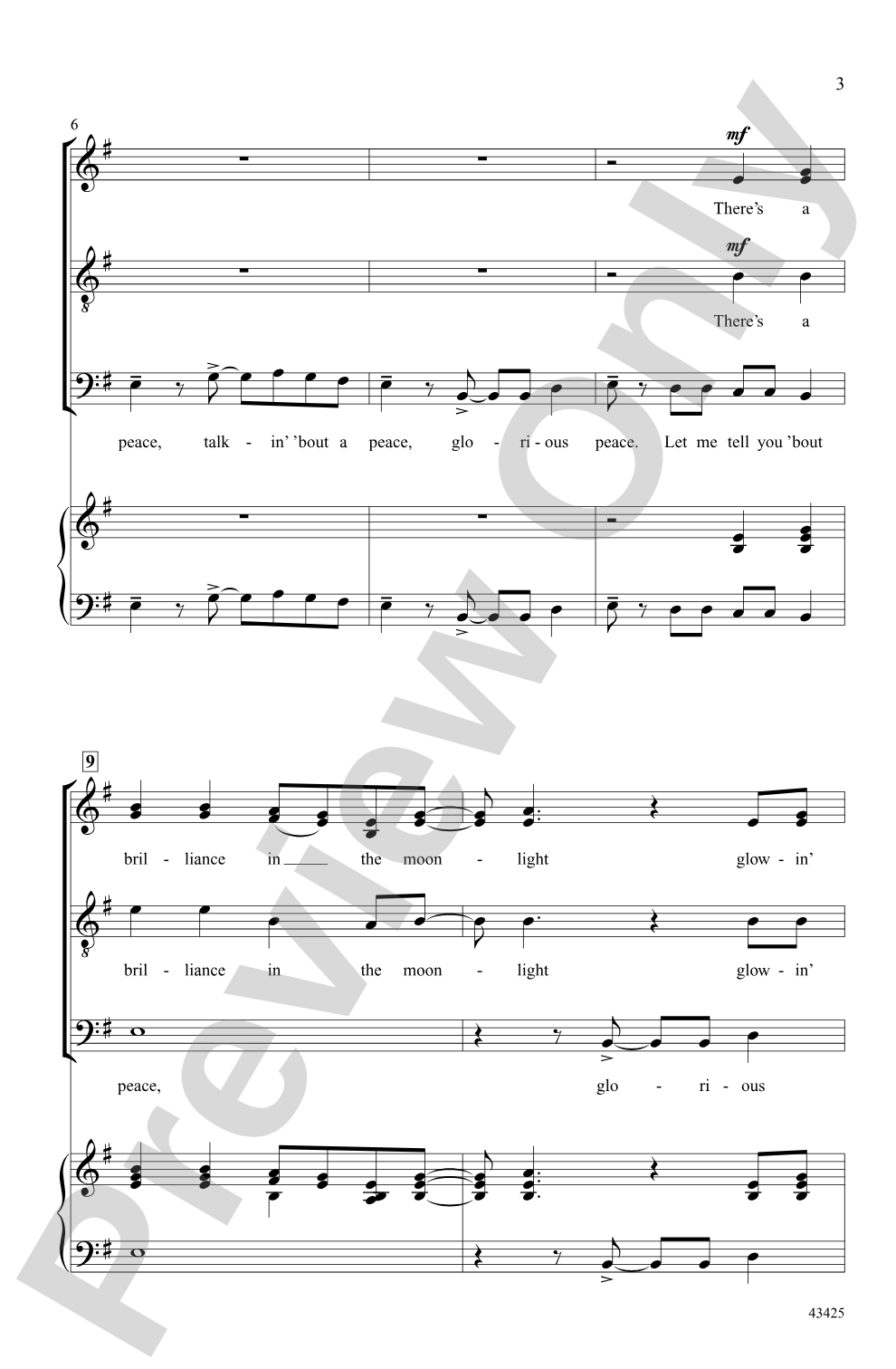
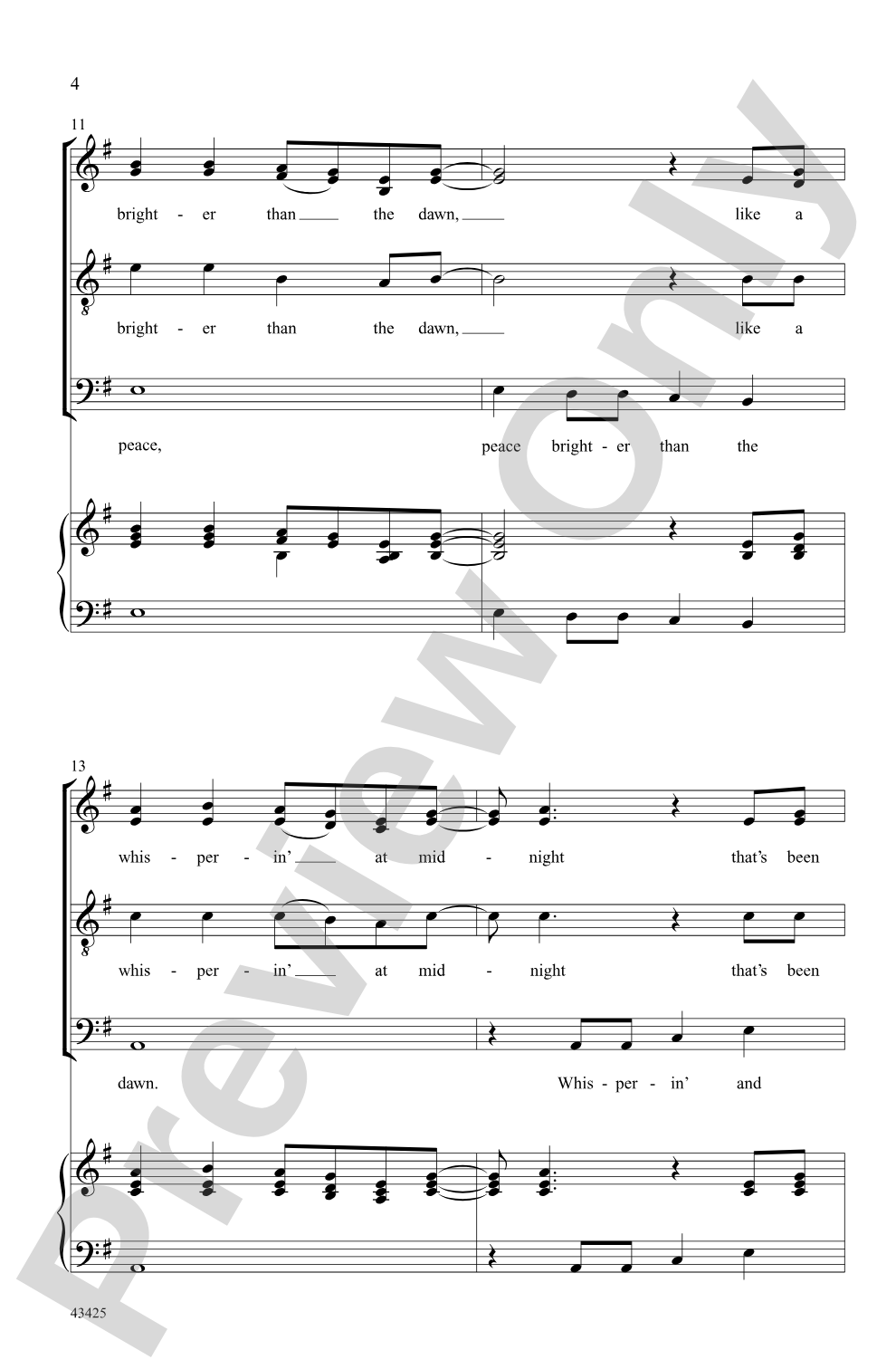
A syncopated opening riff in the lower voices lays the groundwork for this quintessential a cappella spiritual. When the other voices join, we begin a journey of texture, harmonic development, and form, indicative of the great spiritual tradition. Strong choral writing as the glorious piece unfolds.-


Glorious Peace: SATB, a cappella Choral Octavo isn't in MakeMusic Cloud just yet...but it could be. Let us know you'd like to see it, and you'll help shape what comes next. In the meantime, start a free trial and dive into thousands of interactive titles your students can play along with today.
Request This Title
Tell us you want it.
Start Your Free Trial
Explore everything that's ready to play right now.
Sample Audio
1
Audio File
--:--
0:00
0:00
Sample Video
No sample videos found.
Additional Details
Series:
Alfred Choral Designs
Publisher:
Alfred Music
Page Count:
16
SKU:
00-PO-0003359
More about this title
About the Composer: Patti Drennan

Patti Drennan studied music education at Oklahoma State University and later earned a graduate degree in music education from the University of Oklahoma. She spent 28 years teaching choral music in Norman Public Schools, first at West Mid-High School where she received Teacher of the Year recognition, then at Norman High School where she directed four choirs that earned consistent superior ratings. In 2004, the Oklahoma Choral Directors Association honored her with the Director of Distinction Award.
Drennan has become one of the most prolific choral composers in America, with over 425 published octavos and more than two million copies in circulation. She has worked as a clinician and workshop presenter across 19 states, Canada, and major conferences including the Texas Music Educators Convention. Her compositions have reached significant venues, including a piece from "Sing for the Cure" performed at Carnegie Hall. Since retiring from classroom teaching in 2004, she has continued composing, arranging, leading music reading sessions for publishers, and directing composer weekends for churches throughout North America.
Why we love this
The opening syncopated riff in the lower voices immediately captures attention and establishes the spiritual idiom with authenticity rather than imitation. Drennan's handling of texture and harmonic progression creates genuine musical development that rewards careful listening and engaged singing, making this a piece your choir will grow into rather than one they simply perform through.
What to expect
The piece opens with rhythmic energy and forward motion, then unfolds into rich harmonic territory as voices layer and interact. You experience a sense of building collective purpose, the kind of spiritual power that comes from careful writing rather than bombast.
Who it's for
SATB choirs at intermediate to advanced levels who have developed secure blend and intonation in a cappella singing. Singers who understand the spiritual tradition and can engage with both the rhythmic vitality and harmonic sophistication of the piece will find this rewarding.
How to get the most out of it
- Bring the lower voice riff into focus during the opening measures so the syncopation sits cleanly in the ensemble's ear before upper voices enter.
- Shape the harmonic development section with slight dynamic gradation to clarify the voice leading without oversinging the phrase.
- Balance the textural changes thoughtfully; when voices combine and separate, let the architectural clarity of Drennan's writing show rather than blending everything into one texture.
- Mark breathing points strategically to maintain line integrity while accommodating the a cappella context.
How to use it
This works beautifully in a concert centered on spirituals or sacred choral music, where it can stand alongside traditional spirituals to show the continuing evolution of the genre. It also suits occasions celebrating peace and community, pairing well with other contemporary sacred works.
Skills your students will build
- Singing secure intonation in a cappella SATB texture
- Maintaining rhythmic clarity with syncopated lower voice lines
- Following harmonic progressions and textural shifts across phrase boundaries
- Balancing individual voice parts while supporting the overall sonic architecture