
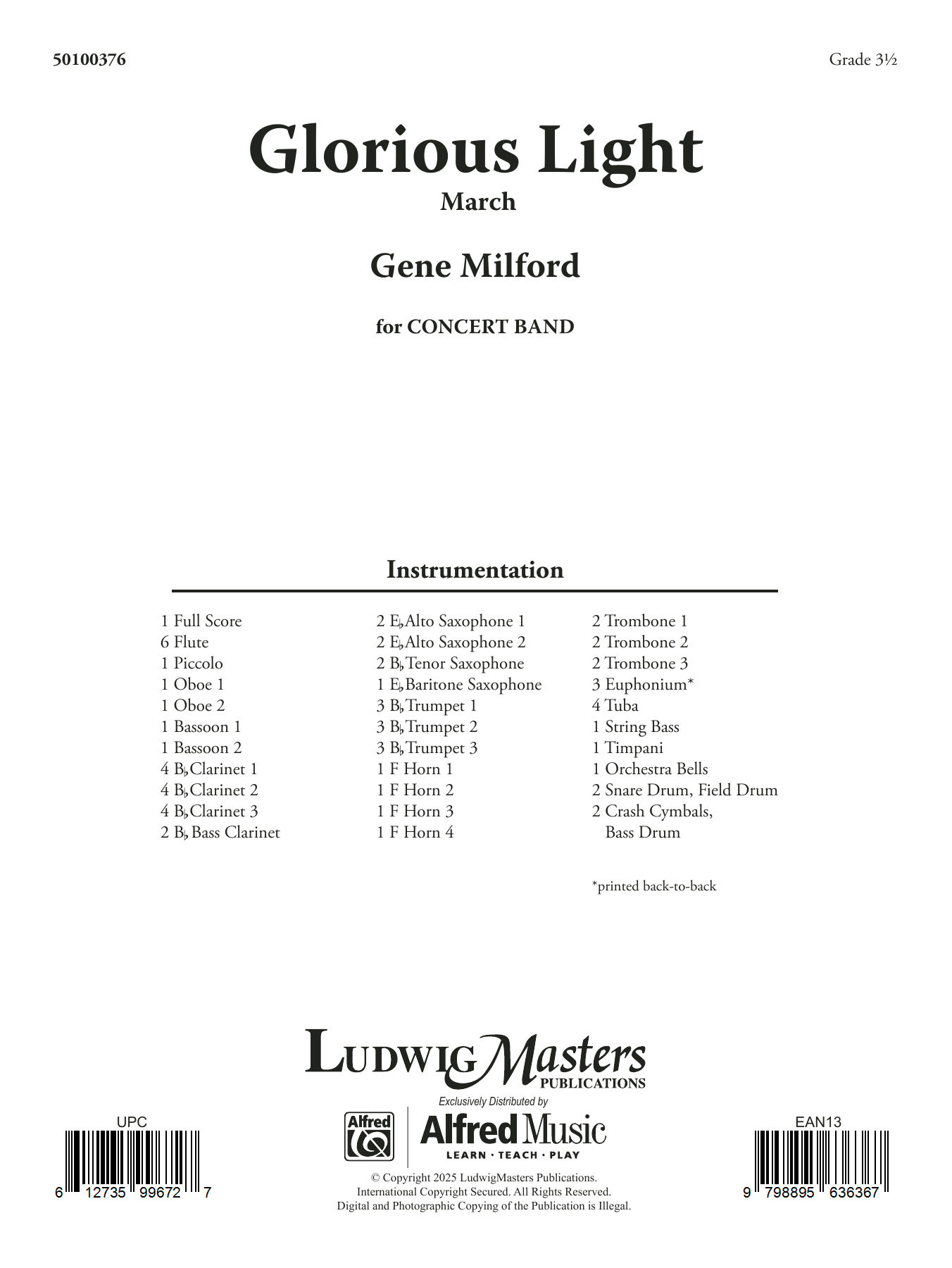

Glorious Light March: Concert Band Conductor Score & Parts
By Gene Milford
Grade: 3.5
Item: 35-PK01701662
$75.00
Pickup currently not available
Buy Extra Parts (Digital PDF Download)
Parts Added to Cart!
Description
A fine original march in the style of the masters, GLORIOUS LIGHT is a tuneful foot-tapper. There are a few harmonic surprises to keep your group on its toes, so to speak. This is perfect for a contest or festival performance.


Discover MakeMusic Cloud: thousands of interactive titles your students can play along with today.
Sample Audio
No sample audio found.
Sample Video
No sample videos found.
Additional Details
Publisher:
Hal Leonard
SKU:
35-PK01701662
More about this title
Why we love this
Glorious Light strikes that rare balance between accessibility and genuine musicality. The harmonic shifts keep players engaged without overwhelming a Grade 3.5 ensemble, and the straightforward march structure means your students can focus on phrasing and articulation rather than decoding complex rhythms.
What to expect
Glorious Light has the forward momentum and melodic confidence of a classic march, complete with the kind of harmonic turns that make you sit up in your seat. It's the sort of piece that sounds bigger and more sophisticated than its Grade 3.5 designation might suggest.
Who it's for
Bands at the intermediate level looking for a march with substance beyond simple repetition. This works equally well for a group preparing contest material or one seeking a crowd-pleasing opener that still respects the audience's musical intelligence.
How to get the most out of it
- Bring out the contrasts between sections by adjusting dynamics carefully; the harmonic surprises land hardest when the surrounding material sits in a clear dynamic plane.
- Lock the articulation in the low woodwinds and brass during the main theme to anchor the tune, then lighten slightly during secondary material to create shape across the form.
- Lean into the rhythmic precision of the march pulse without letting it feel mechanical; this ensemble will respond well to a conductor who moves with energy but breathes naturally through phrase endpoints.
How to use it
Consider this as your festival entry or contest selection; it's compact enough to fit into a varied concert program but substantial enough to hold its own in a competitive setting. You might also pair it with something lyrical in the same concert to show the range of your ensemble's capabilities.
Skills your students will build
- Steady march tempo and consistent pulse maintenance
- Dynamic shaping across full instrumental sections
- Recognizing and executing harmonic changes without disrupting forward motion
- Balancing tune clarity when melody passes between voices