

Gloria Patri (from Lauda Jerusalem): SATB Choral Octavo
From Lauda Jerusalem
Music by Antonio Vivaldi / ed. and arr. Patrick M. Liebergen
Item: 00-PO-0005257
$2.25
Minimum order quantity: 20 copies
Pickup currently not available
Description
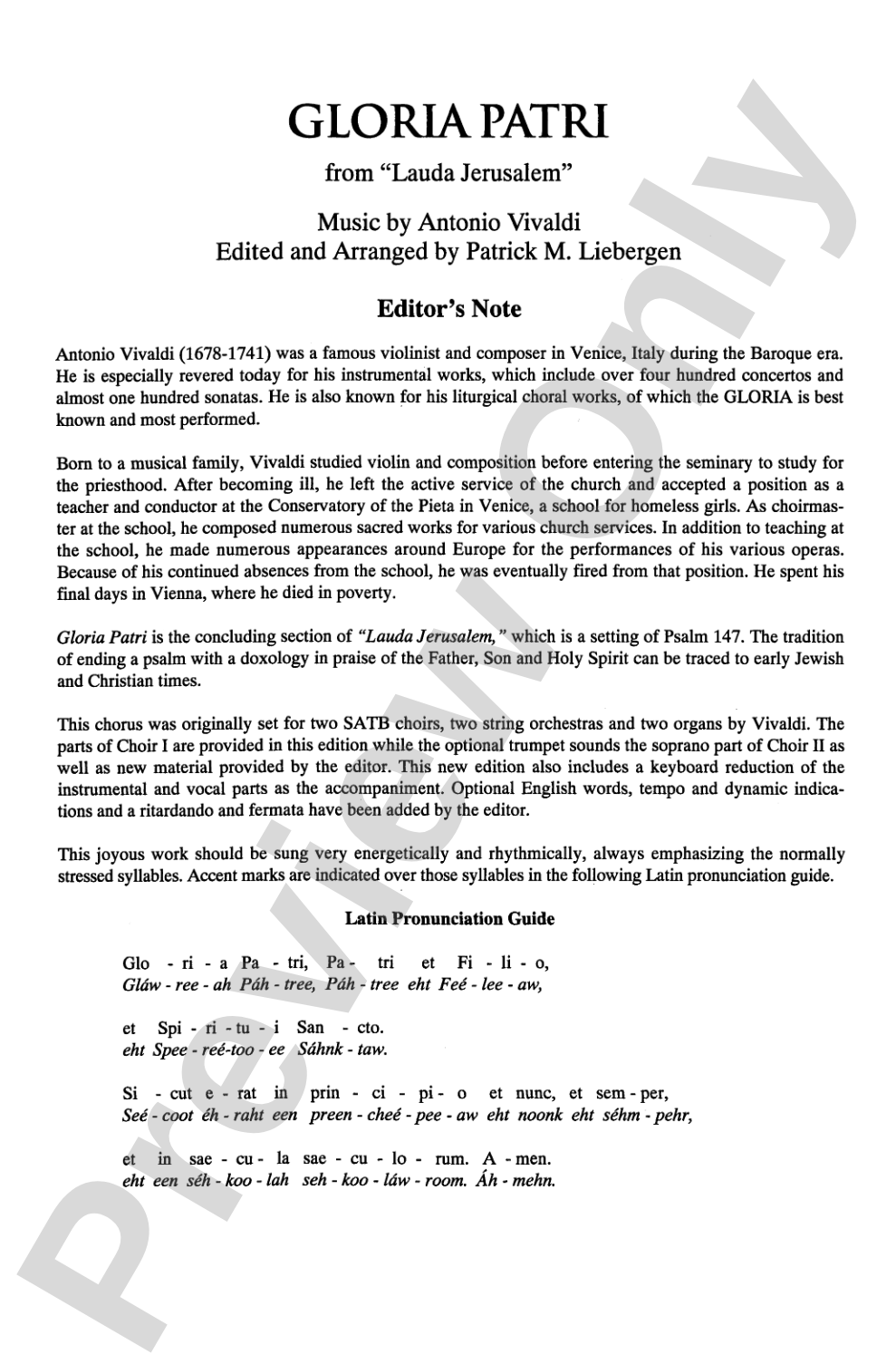
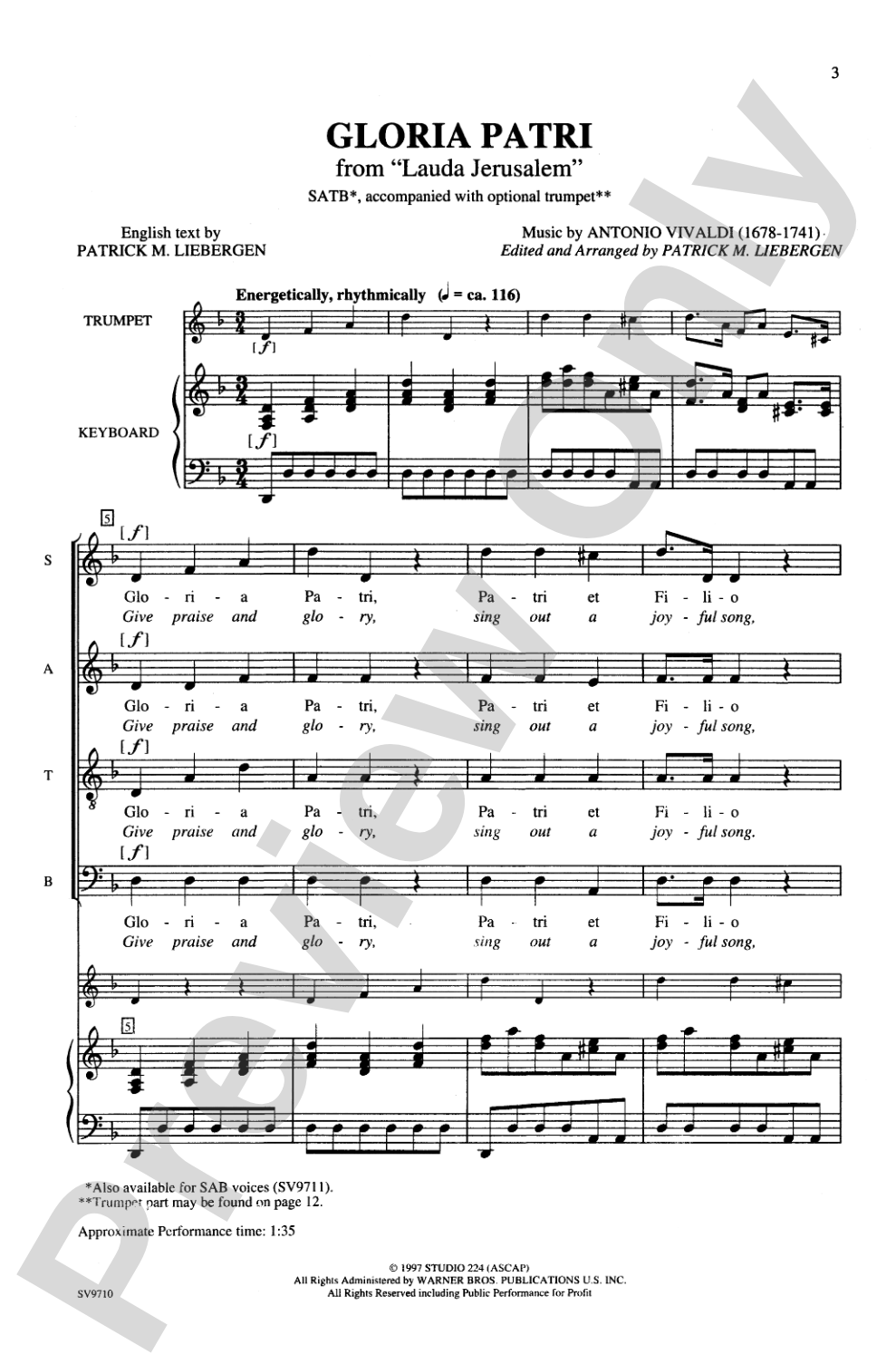
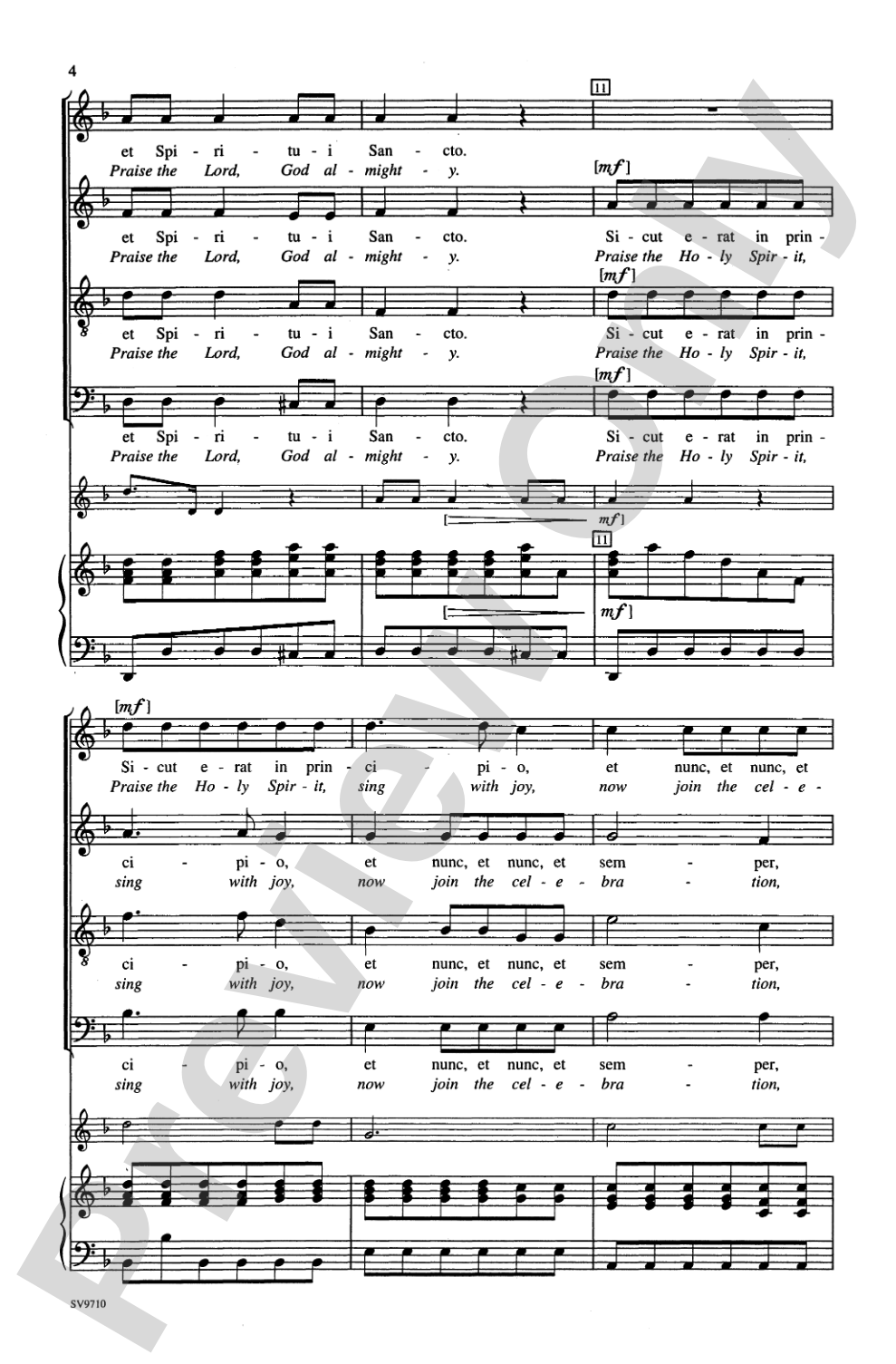
Patrick Liebergen has provided us with a well-crafted edition from the final section of Vivaldi's setting of Psalm 147. This energetic chorus will add a joyous touch to any concert. Latin pronunciation guide and alternate English text are included.


Gloria Patri (from Lauda Jerusalem): SATB Choral Octavo isn't in MakeMusic Cloud just yet...but it could be. Let us know you'd like to see it, and you'll help shape what comes next. In the meantime, start a free trial and dive into thousands of interactive titles your students can play along with today.
Request This Title
Tell us you want it.
Start Your Free Trial
Explore everything that's ready to play right now.
Sample Audio
No sample audio found.
Sample Video
No sample videos found.
Additional Details
Series:
Alfred Archive Edition: Studio PR Catalog
Publisher:
Alfred Music
Page Count:
12
SKU:
00-PO-0005257
Instrumentation:
Opt. Trumpet
More about this title
About the Composer: Antonio Vivaldi
Antonio Vivaldi (1678-1741) was a Venetian priest, virtuoso violinist, and one of the most prolific composers of the Baroque era. He created over 500 concertos, dozens of operas, and substantial sacred vocal works while teaching at the Ospedale della Pietà, a music conservatory for orphaned girls in Venice. His influence on instrumental form and his distinctive harmonic language shaped the development of the concerto and influenced composers across Europe.
Vivaldi's sacred music, though less performed today than his instrumental works, demonstrates the same rhythmic vitality and melodic inventiveness that define his style. His psalm settings and Gloria movements combine Latin liturgical texts with energetic orchestration and clear, singable vocal lines. These works remain valuable for choirs seeking Baroque repertoire that engages both singers and audiences with straightforward musical architecture and genuine joy.
Why we love this
This movement offers everything a director wants from a Vivaldi choral work: propulsive energy, texturally clear writing, and the kind of "Gloria" text that audiences immediately recognize as celebratory. Liebergen's arrangement respects the original while making it accessible to accomplished high school and college choirs, and the optional trumpet parts add flexibility for programs with varying instrumental resources.
What to expect
Bright and celebratory, with the propulsive momentum typical of Vivaldi's fast movements. The harmonic language is direct and tonal, built on clear cadential gestures that give singers a sense of architectural shape. There's genuine festivity here, the kind that translates immediately to listeners.
Who it's for
This octavo suits accomplished SATB choirs at the high school, college, or community level. The writing assumes secure music readers and singers with some experience navigating Baroque text underlay and rhythmic independence.
How to get the most out of it
- Maintain consistent, forward-moving tempo throughout. This is energetic writing that loses its character if allowed to drag; the continuo harmony propels the piece forward more than any rubato.
- Balance the four voices clearly so that individual lines remain distinct during homophonic sections. SATB passages work best when no voice disappears into the texture.
- Shape the "Gloria Patri" text with conviction. These familiar words deserve articulate, confident delivery rather than careful or tentative phrasing.
- If using the optional trumpet parts, ensure they lock with the alto and soprano lines without overshadowing the choir's independence in passage work.
How to use it
Place this as a strong closer to a concert or as the final movement in a liturgical program built around Baroque sacred music. Its brief duration (the original context as a Gloria doxology) makes it ideal as a palate-cleanser between longer works or as the capstone to a concert that explores vocal writing across the Baroque era.
Skills your students will build
- Performing Baroque text underlay with accuracy and understanding of Latin pronunciation
- Maintaining independence within four-part homophonic textures while preserving ensemble blend
- Sustaining forward harmonic motion through clear cadential gesture recognition
- Balancing optional instrumental parts with choral independence in mixed ensemble writing