
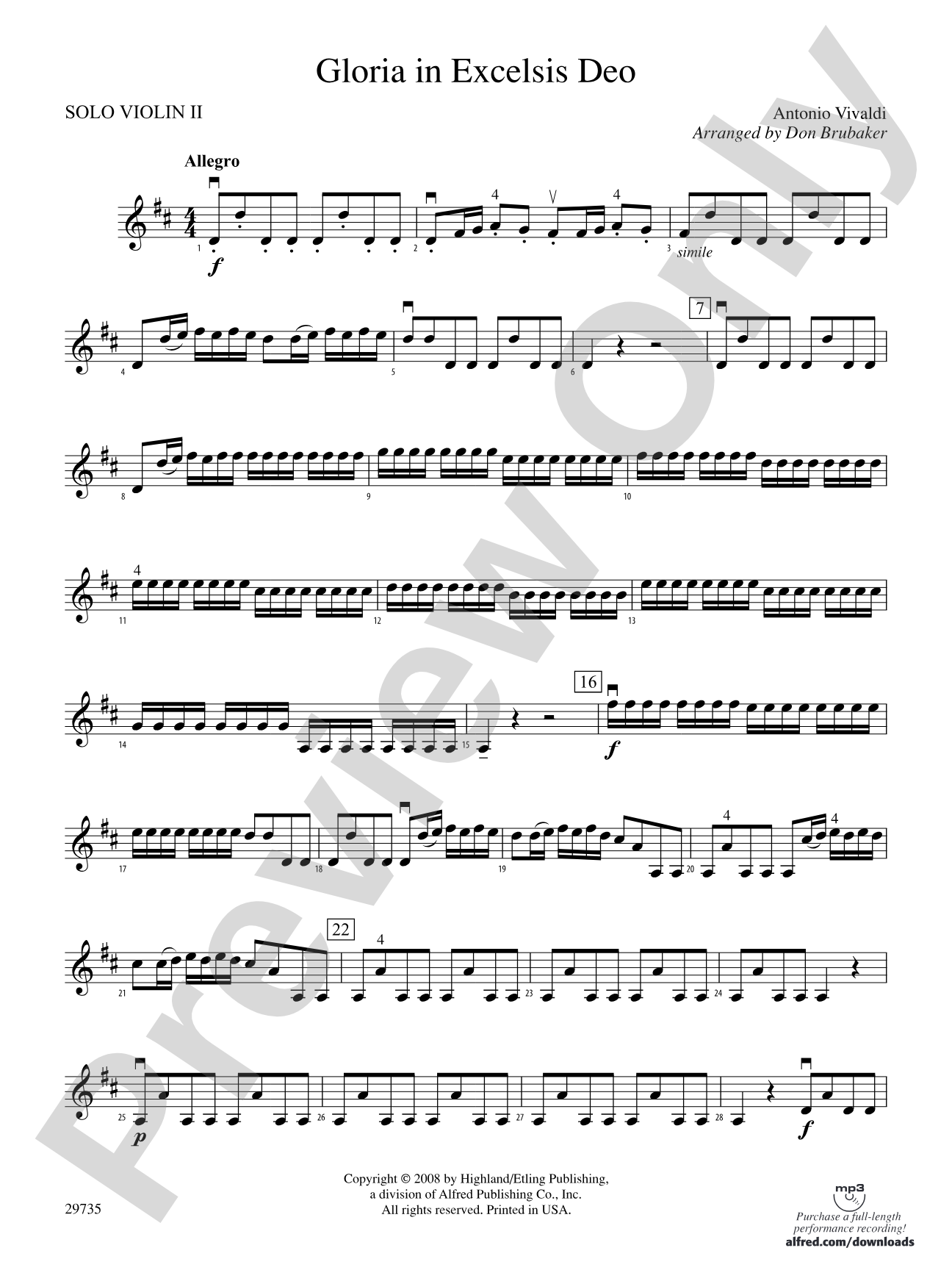

Gloria In Excelsis Deo: Solo 2nd Violin
By Antonio Vivaldi / arr. Don Brubaker
Grade: 2
Item: 00-PC-0001588_SVN2
$7.99
Pickup currently not available
Description
Looking to introduce your orchestra to the glorious music of Antonio Vivaldi? This string orchestra arrangement of the first movement from Vivaldi's choral masterwork is the perfect introduction for young string players. It retains the composer's key of D Major and features solo/soli parts for your advanced players. The opportunity to teach or reinforce hooked bowing and the bow lift is present in each section of the orchestra. Everyone in your orchestra will enjoy the rhythmic vitality and harmonic beauty of this enduring masterwork. (2:15) This title is available in MakeMusic Cloud.


Don't just read it, hear it, play along with it, and watch your students grow with it. In MakeMusic Cloud, Gloria In Excelsis Deo: Solo 2nd Violin comes alive with professional accompaniment, adjustable tempo, and built-in practice tools that turn solo practice into real progress.
Open in the Player
Jump straight in and assign it today.
Start Your Free Trial
Open this title and explore the full library in minutes.
Sample Audio
1
Audio File
--:--
0:00
0:00
Sample Video
Additional Details
Series:
Highland/Etling String Orchestra
Publisher:
Alfred Music
Page Count:
82
SKU:
00-PC-0001588_SVN2
More about this title
About the Composer: Antonio Vivaldi
Antonio Vivaldi (1678-1741) stands as one of the Baroque era's most prolific and inventive composers. A virtuoso violinist and priest who spent much of his career in Venice, Vivaldi wrote over 500 concertos and numerous sacred vocal works that defined the ritornello form and established the modern concerto grosso. His compositional output reveals an obsession with clarity, rhythmic precision, and instrumental color that made his music immediately popular across Europe and continues to captivate audiences today.
Vivaldi's sacred choral works, including the Gloria, showcase his gift for creating music that is both technically sophisticated and immediately engaging. The driving rhythms, bright harmonic language, and clear melodic lines in the Gloria have made it a staple of both professional orchestras and student ensembles for centuries. His influence on subsequent composers cannot be overstated; Bach himself arranged several Vivaldi concertos to study the master's harmonic ingenuity.
Why we love this
This arrangement preserves the infectious energy and dance-like rhythms of Vivaldi's original while remaining wholly accessible to a Grade 2 orchestra. The retained key of D Major and the built-in solo opportunities let you feature your strongest players without sidelining the rest of the ensemble. You get a legitimate masterwork that will energize your students and audiences alike, not a simplified skeleton of something greater.
What to expect
Brilliant, buoyant, and alive with Baroque energy. The opening announces itself with infectious joy, driving eighth-note figures that seem to pull the entire ensemble forward. Lyrical moments give way to rhythmic vitality that makes young players feel like they're part of something grand and professional.
Who it's for
String orchestra directors working with players at the Grade 2 level who want to build rhythmic confidence and bow control through genuine repertoire rather than etudes. This works equally well for intermediate students tackling their first Baroque masterwork and for younger ensembles ready to move beyond folk song arrangements.
How to get the most out of it
- Establish the hooked bow at slow tempo before rehearsing at performance speed. Have students practice the articulation pattern on open strings, ensuring the hook is sharp and the lift precise.
- Balance the solo and soli passages carefully so featured players project without drowning out the supporting strings. This often requires the soloists to sit slightly forward in their chairs.
- Shape phrases with subtle dynamic swells rather than sudden crescendos. Baroque style favors terraced dynamics, so think of moving between clear dynamic levels rather than continuous gradual changes.
- Lock the rhythm section (violas and cellos/basses) first. Once their quarter-note and eighth-note patterns are rock solid, the first violins and second violins can confidently sit on top.
How to use it
Program this as a concert opener to establish energy and engagement immediately, or pair it strategically with a slower movement to showcase the range of your string players' abilities. It also works beautifully as a festival or contest piece, offering judges a chance to hear both technical precision and Baroque style interpretation from an intermediate ensemble.
Skills your students will build
- Hooked bowing and clean bow lifts across articulated passages
- Playing in D Major with confident intonation on the second and third positions
- Baroque rhythmic style and terraced dynamics
- Balancing solo/soli lines with ensemble accompaniment
- Reading and responding to conductor cues in fast-moving sections