
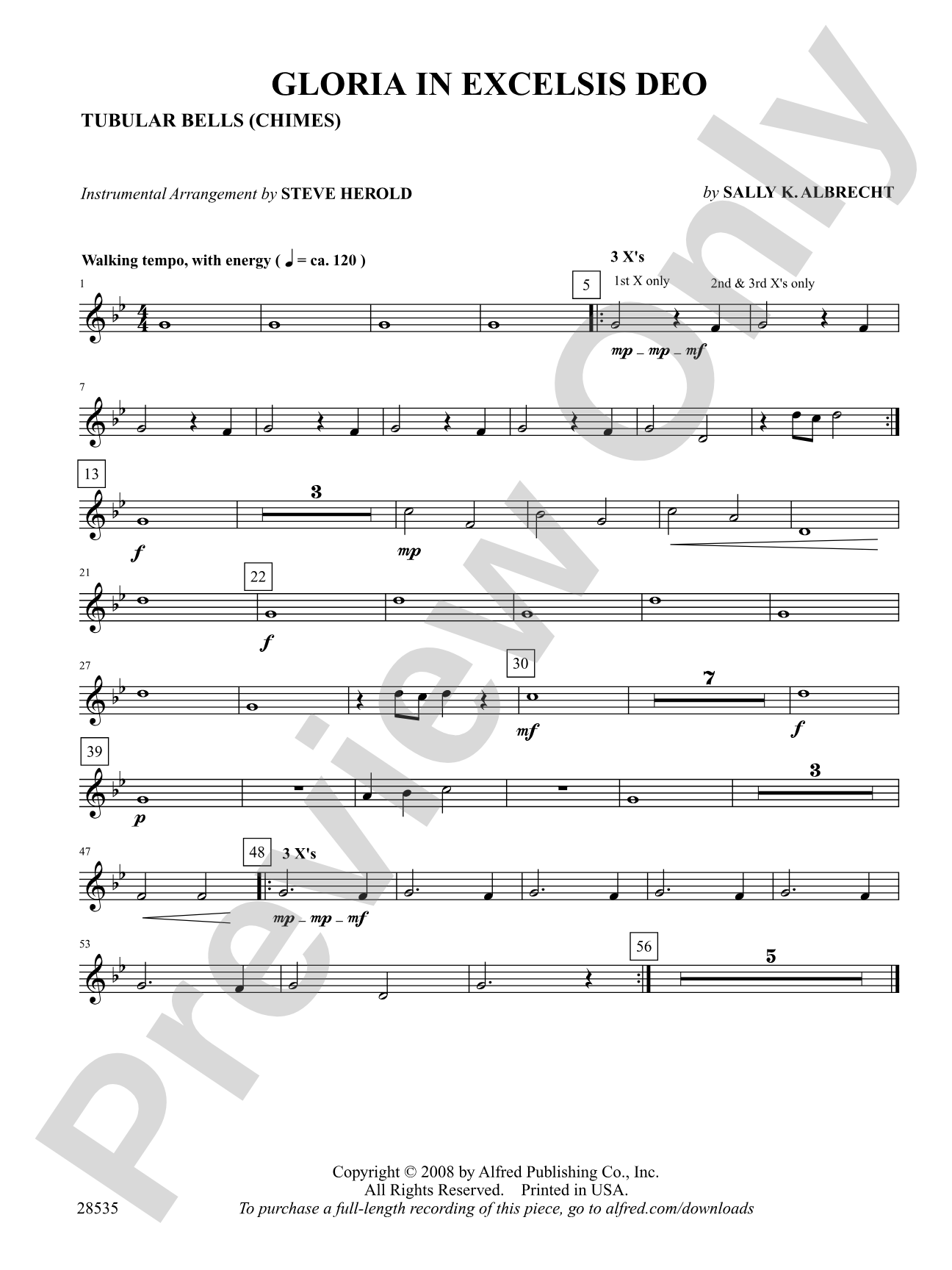

Gloria in Excelsis Deo: Mallets: Choral SoundPax
Words and music by Sally K. Albrecht
Item: 00-PC-0001334_M1
$3.00
Pickup currently not available
Description
An artful setting of the familiar "Gloria" text, which features infections rhythms, layered melody lines, and fantastic optional percussion parts . . . all in a minor key. Effective as a processional, or perfect for a dynamic change of pace in your program. Impressive for concerts or contests any time of year. Includes parts for 2 trumpet, 2 trombone, chimes, glockenspiel., timpani, percussion, and snare drum.


Don't just read it, hear it, play along with it, and watch your students grow with it. In MakeMusic Cloud, Gloria in Excelsis Deo: Mallets: Choral SoundPax comes alive with professional accompaniment, adjustable tempo, and built-in practice tools that turn solo practice into real progress.
Open in the Player
Jump straight in and assign it today.
Start Your Free Trial
Open this title and explore the full library in minutes.
Sample Audio
1
Audio File
--:--
0:00
0:00
Sample Video
No sample videos found.
Additional Details
Series:
Alfred Choral Designs
Publisher:
Alfred Music
Page Count:
20
SKU:
00-PC-0001334_M1
Instrumentation:
SoundPax
More about this title
About the Composer: Sally K. Albrecht

Sally K. Albrecht has shaped choral music education for over thirty years as a composer, conductor, and clinician with a distinctive focus on movement and physicality in singing. Her prolific catalog includes more than 600 published choral works and 75 larger musicals and songbooks; she has been a consistent recipient of the ASCAP Special Music Award since 1987. She spent decades leading publications at major educational music publishers, most recently as Director of School Choral, Vocal, and Elementary Publications for Alfred Music, and has conducted festival choirs at Lincoln Center, Carnegie Hall, and The Kennedy Center.
Albrecht holds degrees from Rollins College (B.A. in Music and Theater, 1976) and the University of Miami (M.A. in Drama, 1977; M.M. in Accompanying, 1979). She has taught at Oakland University in Michigan, Jersey City State College in New Jersey, and Meredith College in North Carolina. In recognition of her sustained contributions to music and leadership, she received the Distinguished Alumna Award from both the University of Miami Frost School of Music and Rollins College in 2021. She resides in Wake Forest, North Carolina with her husband, composer and arranger Jay Althouse.
Why we love this
Albrecht transforms a beloved liturgical text by setting it in a minor key with rhythmic vitality and layered vocal lines that feel fresh without abandoning the text's gravity. The optional percussion and brass parts expand the ensemble's sound dramatically, creating a piece that works equally well as a processional opener or as the kind of unexpected contrast that energizes a concert setlist. This is the kind of sacred music that holds its own in competition or worship contexts.
What to expect
The minor key gives this Gloria a contemplative undertone even as the rhythms drive forward with purpose. Layered melodies weave together like a sacred dialogue, building depth and texture, while optional brass and percussion add brightness and celebration that contrasts beautifully with the harmonic minor foundation.
Who it's for
This piece serves choirs at the intermediate-to-advanced level who are comfortable with rhythmic complexity and can balance layered textures. It works for choirs seeking sacred repertoire with contemporary energy, whether for liturgical use, concert programming, or festival competition.
How to get the most out of it
- Balance the layered melodies by checking that no single line drowns out the others; the minor key and rhythmic complexity demand precise blend work in rehearsal.
- If using the optional brass and percussion, bring these sections in gradually during rehearsals so singers can lock the foundation first, then add color.
- Consider the piece's function: if programming it as a processional, secure precise entrances and steady tempo; if using it mid-concert, let the key change work as a programmatic pivot point.
- Tap into the rhythmic energy through deliberate articulation and phrasing; Albrecht's "infectious rhythms" need committed execution from the vocal parts to land.
How to use it
Program this as a festival or concert opener to establish an elegant but energetic tone, or use it mid-program to shift the mood with harmonic and rhythmic color. In liturgical settings, the processional option makes it an effective entrance piece for worship services, particularly during seasons when the familiar text needs a contemporary musical expression.
Skills your students will build
- Reading and sustaining layered melodic lines in a minor key
- Navigating syncopated and "infectious" rhythmic figures with precision
- Balancing blend across multiple independent vocal parts
- Coordinating with optional brass and percussion in a choral context
- Interpreting sacred text with musical nuance in a non-traditional harmonic setting