

Gloria In Excelsis: SAB Choral Octavo
Music by Jay Althouse
Item: 00-PO-0004451
$2.25
Minimum order quantity: 20 copies
Pickup currently not available
Related Items
Gloria In Excelsis: SAB Choral Octavo |
$2.25
|
View |
Description
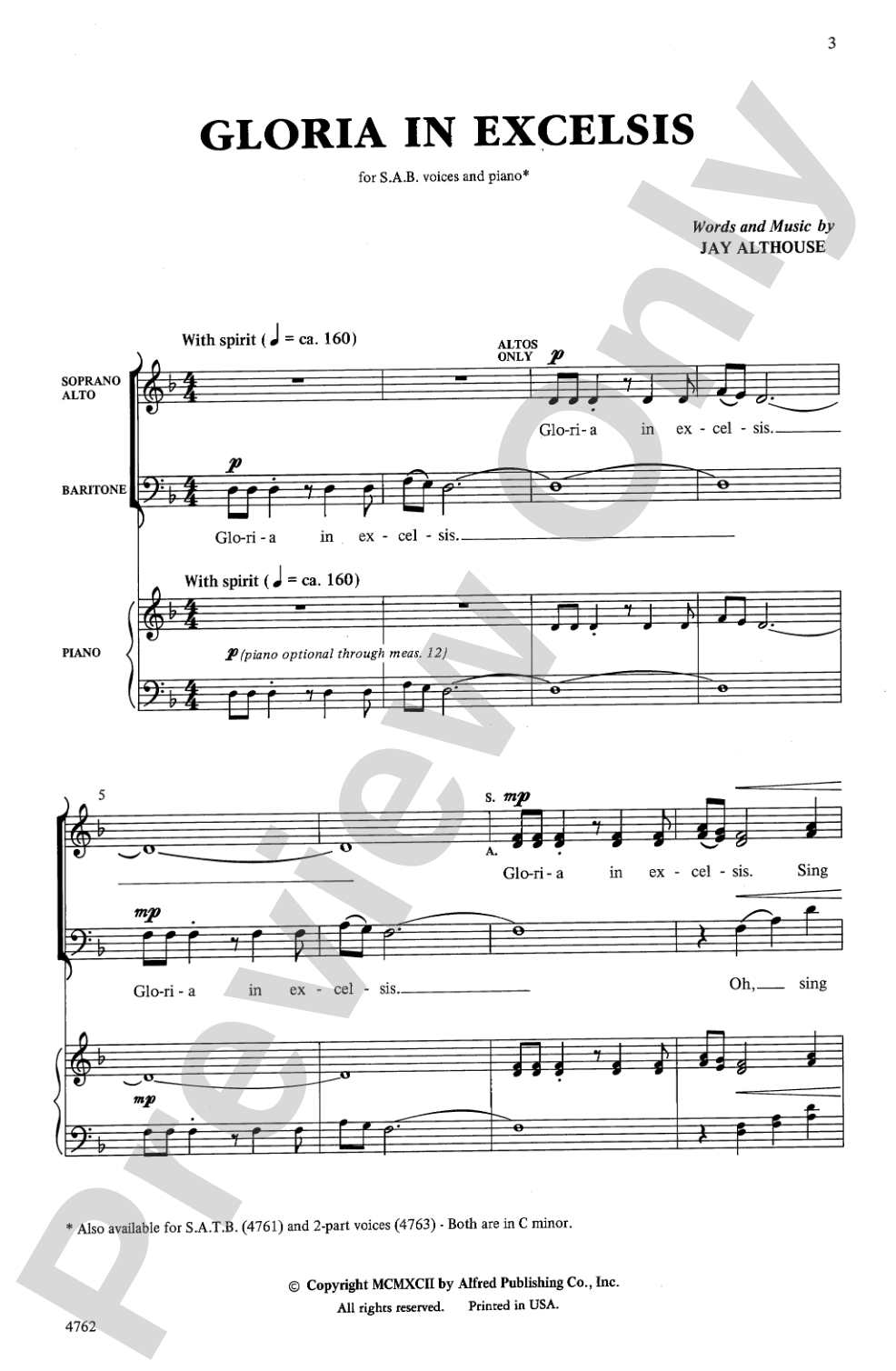
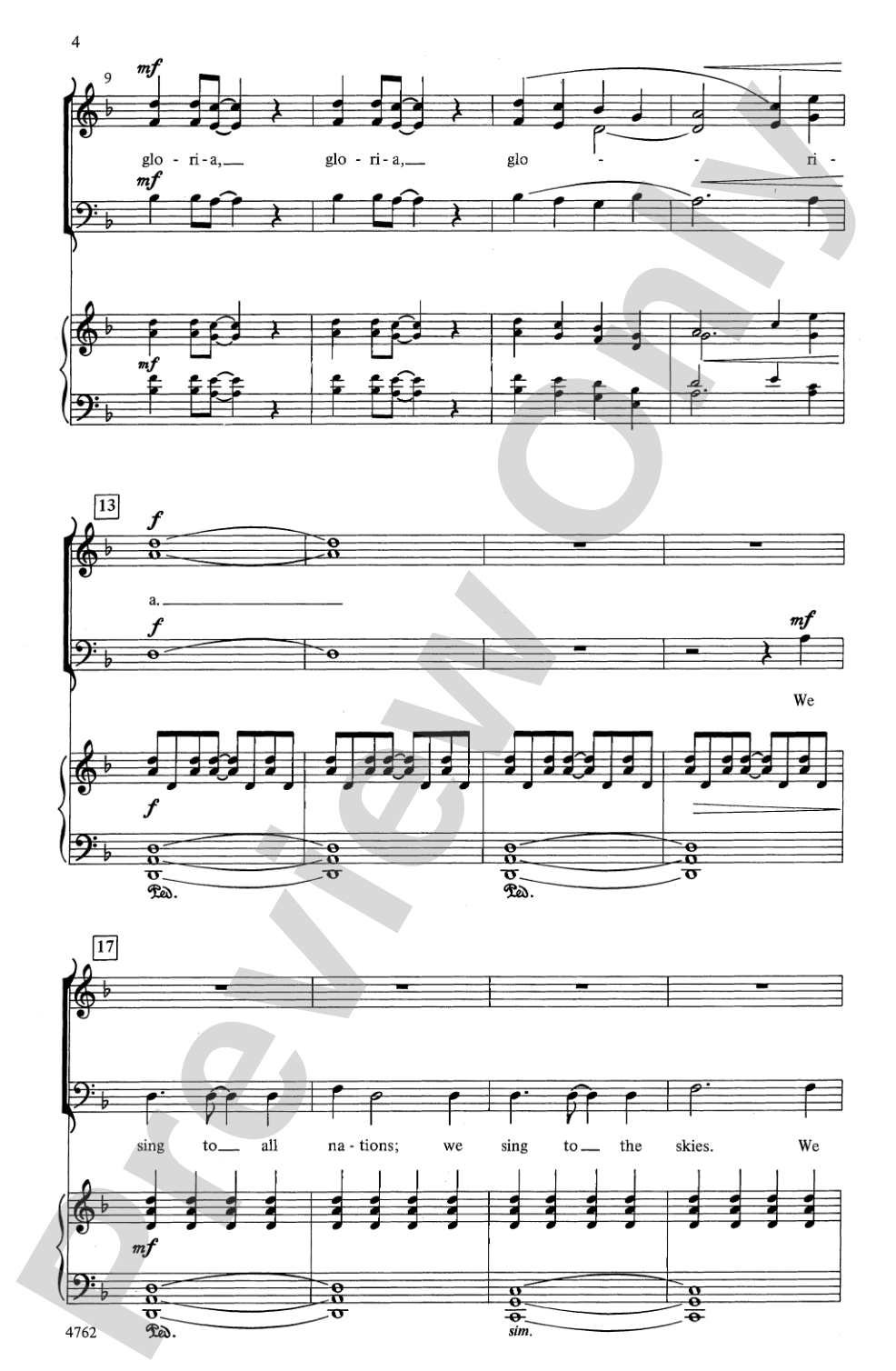
A hushed choral opening explodes with excitement when the piano enters at measure 12. Full of energy and vitality which drive to a powerful climax. Mixes traditional Latin with a secular English text. Dramatic dynamic changes and a powerful (but not difficult) piano part guarantee success. For concerts, contests and festivals.


Gloria In Excelsis: SAB Choral Octavo isn't in MakeMusic Cloud just yet...but it could be. Let us know you'd like to see it, and you'll help shape what comes next. In the meantime, start a free trial and dive into thousands of interactive titles your students can play along with today.
Request This Title
Tell us you want it.
Start Your Free Trial
Explore everything that's ready to play right now.
Sample Audio
No sample audio found.
Sample Video
No sample videos found.
Additional Details
Series:
Alfred Archive Edition: Alfred Choral Designs
Publisher:
Alfred Music
Page Count:
12
SKU:
00-PO-0004451
More about this title
About the Composer: Jay Althouse

Jay Althouse holds degrees in Music Education and Music from Indiana University of Pennsylvania, where he was honored as a Distinguished Alumnus. Early in his career, he worked for eight years in rights and licensing at a major educational music publisher, serving on the Executive Board of the Music Publishers Association of America. This experience shaped his deep understanding of what choirs need and how music reaches performers.
As a composer, Althouse has created more than 800 works for choirs at every level, performed widely across the English-speaking world. He is a writer member of ASCAP and a regular recipient of the ASCAP Special Award for his compositions. Beyond his choral output, he has co-written children's musicals with Sally K. Albrecht, compiled respected vocal solo collections, co-authored The Complete Choral Warm-up Book and Accent on Composers, and written numerous classroom resources including Ready to Read Music and One-Page Composer Bios. His collaborative choral work I Hear America Singing was performed by the San Francisco Girls and Boys Choirs at President Barack Obama's Inauguration in 2009. Althouse has served the North Carolina Master Chorale and currently sits on the National Advisory Board of the Folk Art Society of America.
Why we love this
The contrast between that opening hush and the explosive entrance at measure 12 gives you a genuine moment of drama that audiences feel immediately. Althouse balances the Latin text with English words without either overwhelming the other, creating a piece that honors tradition while speaking directly to contemporary singers. The piano part carries real musical weight without demanding advanced technique, so your accompanist stays engaged while your singers do the heavy lifting.
What to expect
A moment of quiet reverence that cracks open into celebration. The piece pulses with genuine vitality once the piano arrives, building layers of energy until it reaches a peak that feels earned rather than forced. The blend of sacred and secular text creates an unusual emotional space—familiar yet fresh.
Who it's for
Intermediate to advanced SAB choirs performing at concerts, contests, or festivals. This piece works especially well for choirs comfortable with contrasting dynamic and textural demands but not yet reading complex chromatic harmony or extended ranges.
How to get the most out of it
- Shape the opening measures with restraint. The hushed beginning sets up the impact of the piano entrance, so resist the urge to add vibrato or volume too early.
- Work the dynamic changes as a ensemble. Mark your scores with exact dynamic levels at each shift so the contrast reads clearly to the audience and doesn't feel accidental.
- Let the piano anchor the piece. When it enters at measure 12, it drives the momentum forward. Your singers should follow its energy rather than fight it.
- Consider how staging can enhance the drama. The special features note suggests movement and staging options; even simple repositioning during the quiet opening can focus attention before the turn.
How to use it
Program this as an opening number to set a contemplative tone before shifting to more energetic pieces, or place it midway through a concert where its dynamic arc provides contrast. The dramatic build makes it effective for contest or festival settings where judges notice thoughtful pacing and control.
Skills your students will build
- Maintaining consistent soft dynamics and intonation in the opening measures
- Responding to sudden textural and dynamic shifts with ensemble precision
- Coordinating with an active piano accompaniment
- Blending three-part harmony while keeping vocal lines clear and independent
- Building intensity gradually toward a climax without oversinging