

Gloria (from the Twelfth Mass): SAB Choral Octavo
From the Twelfth Mass
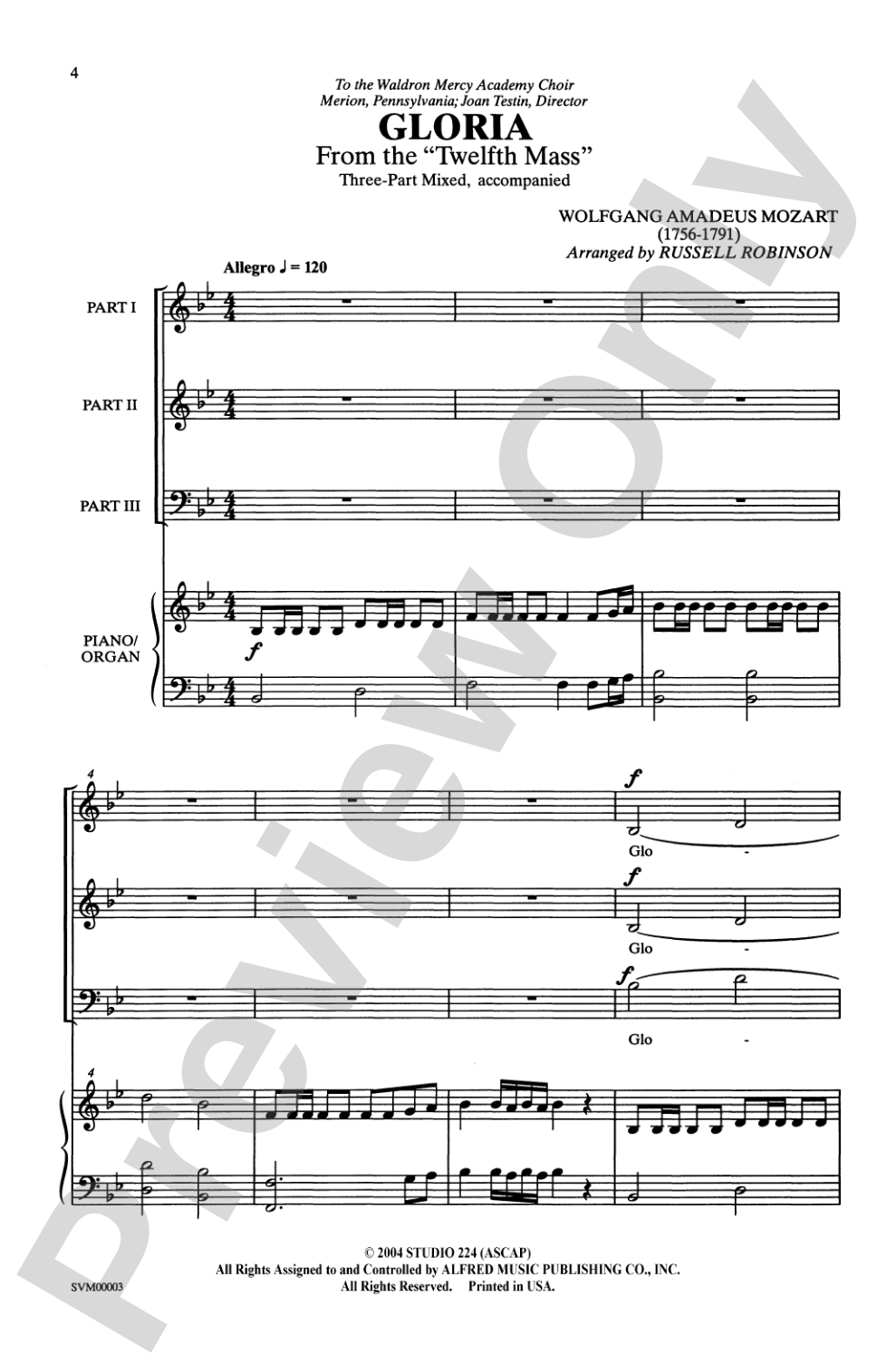
By Wolfgang Amadeus Mozart / arr. Russell Robinson
Item: 00-PO-0005313
$3.50
Minimum order quantity: 20 copies
Pickup currently not available
Description
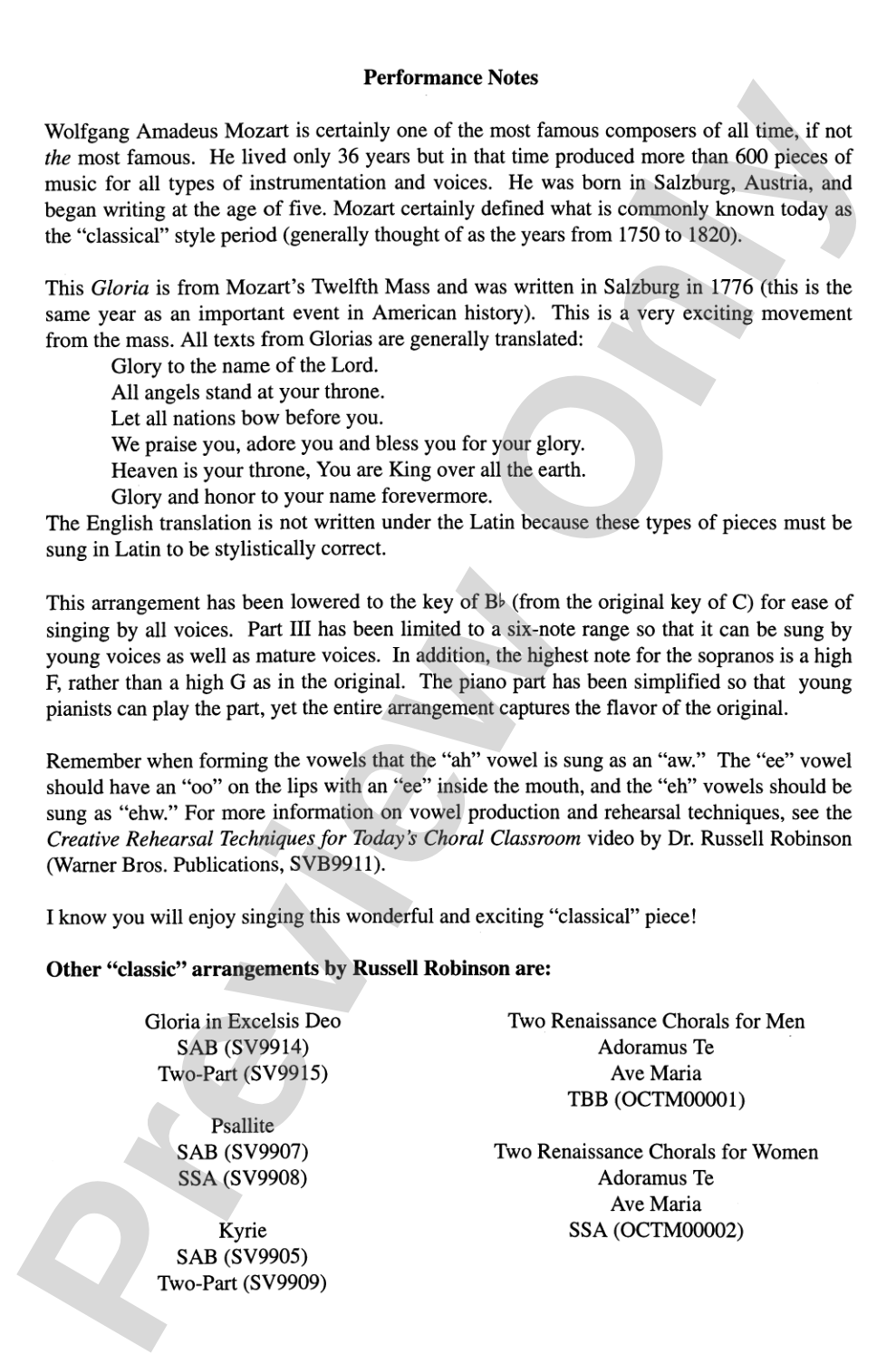
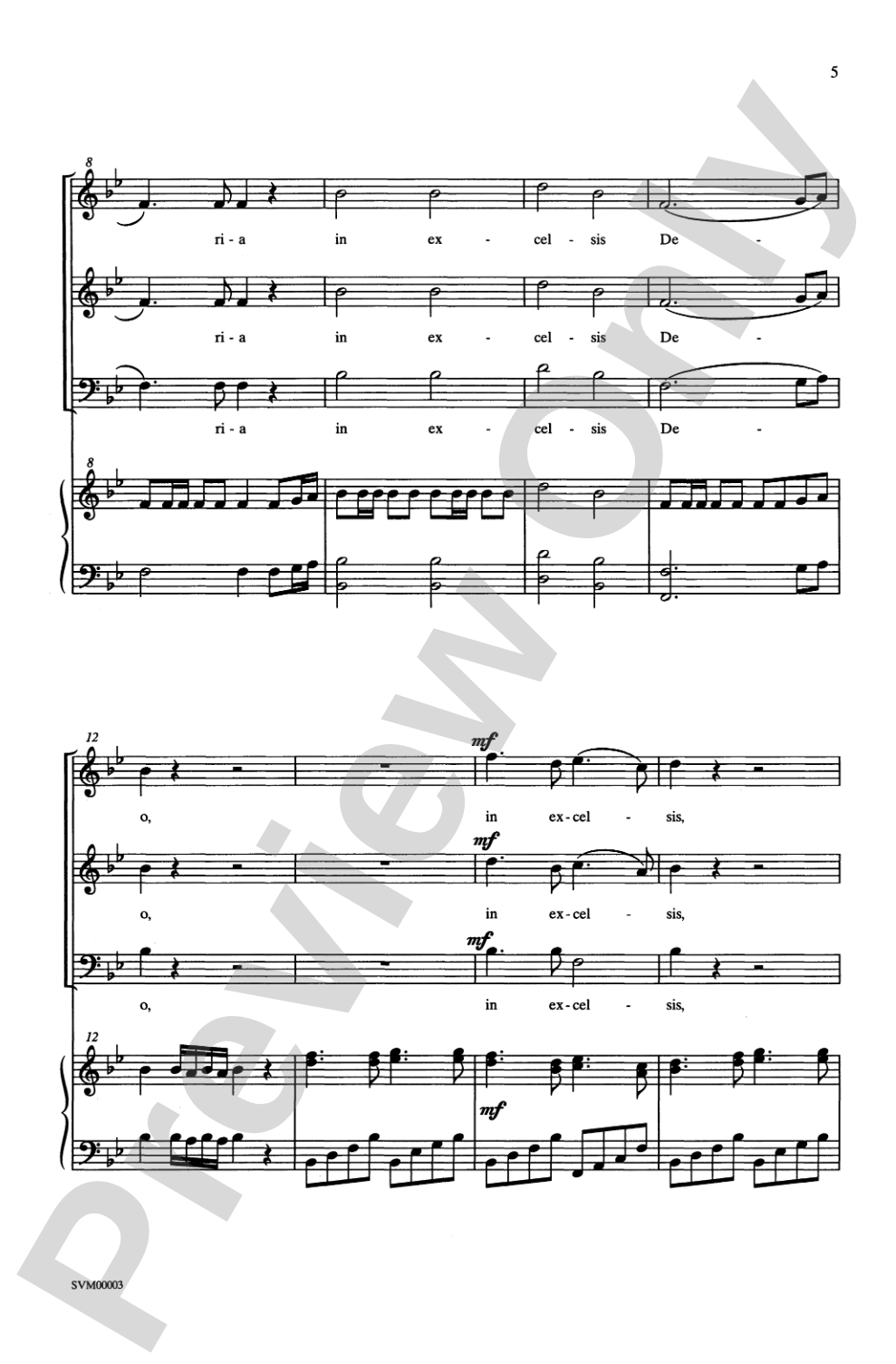
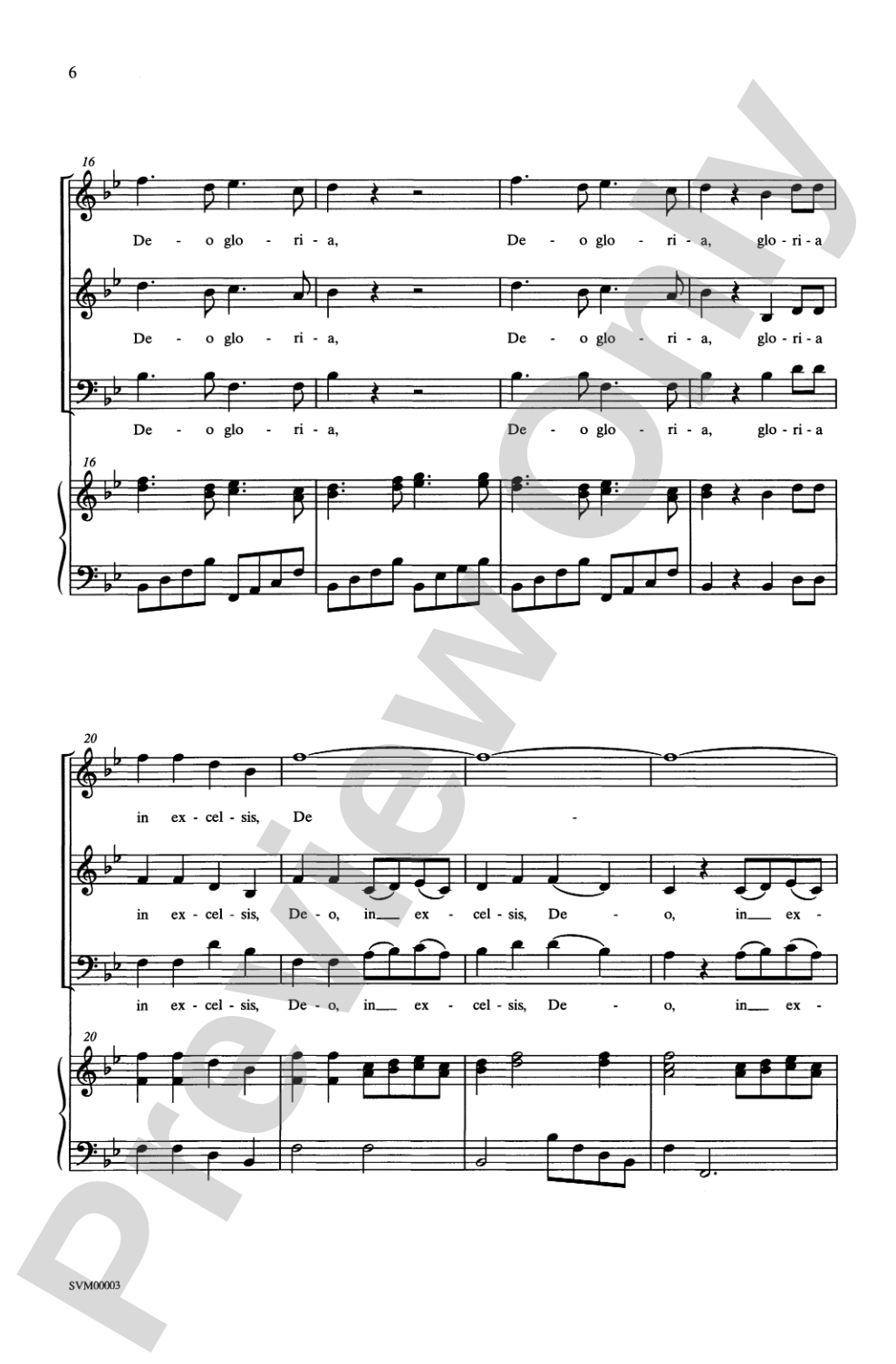
Dedicated to the 2000 Georgia All-State Middle School Mixed Chorus, this Latin text Gloria is beautifully arranged by Russ Robinson in a setting that is accessible to all choirs. The key has been lowered to B[b] from the original key of C to allow an ease of singing by all voices. A perfect festival piece, this is a valuable addition to the collection of other classics arranged by Russ.


Gloria (from the Twelfth Mass): SAB Choral Octavo isn't in MakeMusic Cloud just yet...but it could be. Let us know you'd like to see it, and you'll help shape what comes next. In the meantime, start a free trial and dive into thousands of interactive titles your students can play along with today.
Request This Title
Tell us you want it.
Start Your Free Trial
Explore everything that's ready to play right now.
Sample Audio
No sample audio found.
Sample Video
No sample videos found.
Additional Details
Series:
Alfred Archive Edition: Studio PR Catalog
Publisher:
Alfred Music
Page Count:
20
SKU:
00-PO-0005313
More about this title
About the Composer: Wolfgang Amadeus Mozart
Wolfgang Amadeus Mozart (1756-1791) composed over 600 works across every major genre, establishing himself as one of history's most prolific and versatile musicians. His sacred music, including 19 masses, demonstrates technical mastery and profound spiritual depth; the Twelfth Mass in C major stands among his most performed liturgical works, blending classical elegance with genuine devotional character.
Why we love this
Robinson's arrangement respects Mozart's musical architecture while making the Gloria genuinely singable for middle school ensembles. The key transposition to B-flat removes a persistent barrier to choir comfort without sacrificing the piece's luminous character, and the SAB voicing distributes the melodic and harmonic material in ways that allow every section to feel essential rather than relegated to filler parts.
What to expect
The Gloria radiates Classical restraint and grace. Bright passages alternate with moments of tender reverence, and Mozart's text painting creates natural dramatic shape without bombast. Singing this piece feels like participating in something both dignified and joyful, with the Latin words carrying weight and meaning.
Who it's for
This arrangement suits middle school choirs and emerging high school ensembles seeking a genuine masterwork that doesn't demand advanced vocal technique or sight-reading ability. Directors programming festival repertoire or building a sacred music foundation will find this especially valuable; the reduced key and three-part writing make it accessible without feeling simplified.
How to get the most out of it
- Observe the text-driven phrasing in the Gloria section; Mozart's setting aligns with Latin syntax, so breathe at natural clause breaks rather than arbitrary musical moments.
- Balance the altos and tenors when they carry the inner harmonic voices. These lines support the structure but need clarity to prevent muddiness in sustained passages.
- Shape the "Laudamus te" and "Gratias agimus" sections with gentle dynamic rise and fall to reflect the gratitude embedded in the Latin text without exaggerating expression.
- Use the 20-page score to identify spots where divisi occurs and plan rehearsal strategies for addressing any balance challenges in your particular vocal distribution.
How to use it
This works beautifully in a spring choral festival program or a concert built around sacred classics from different eras. Its moderate length (20 pages) and accessible voicing make it an ideal choice for pairing with Renaissance motets or later Romantic sacred pieces, allowing you to demonstrate how different compositional periods approached the same liturgical text.
Skills your students will build
- Singing Latin text with correct vowel shapes and pronunciation
- Balancing independent melodic lines within a SAB texture
- Sustaining longer phrases while maintaining legit vocal technique
- Following text-driven phrasing in classical sacred music
- Reading and performing Classical period harmonic language