
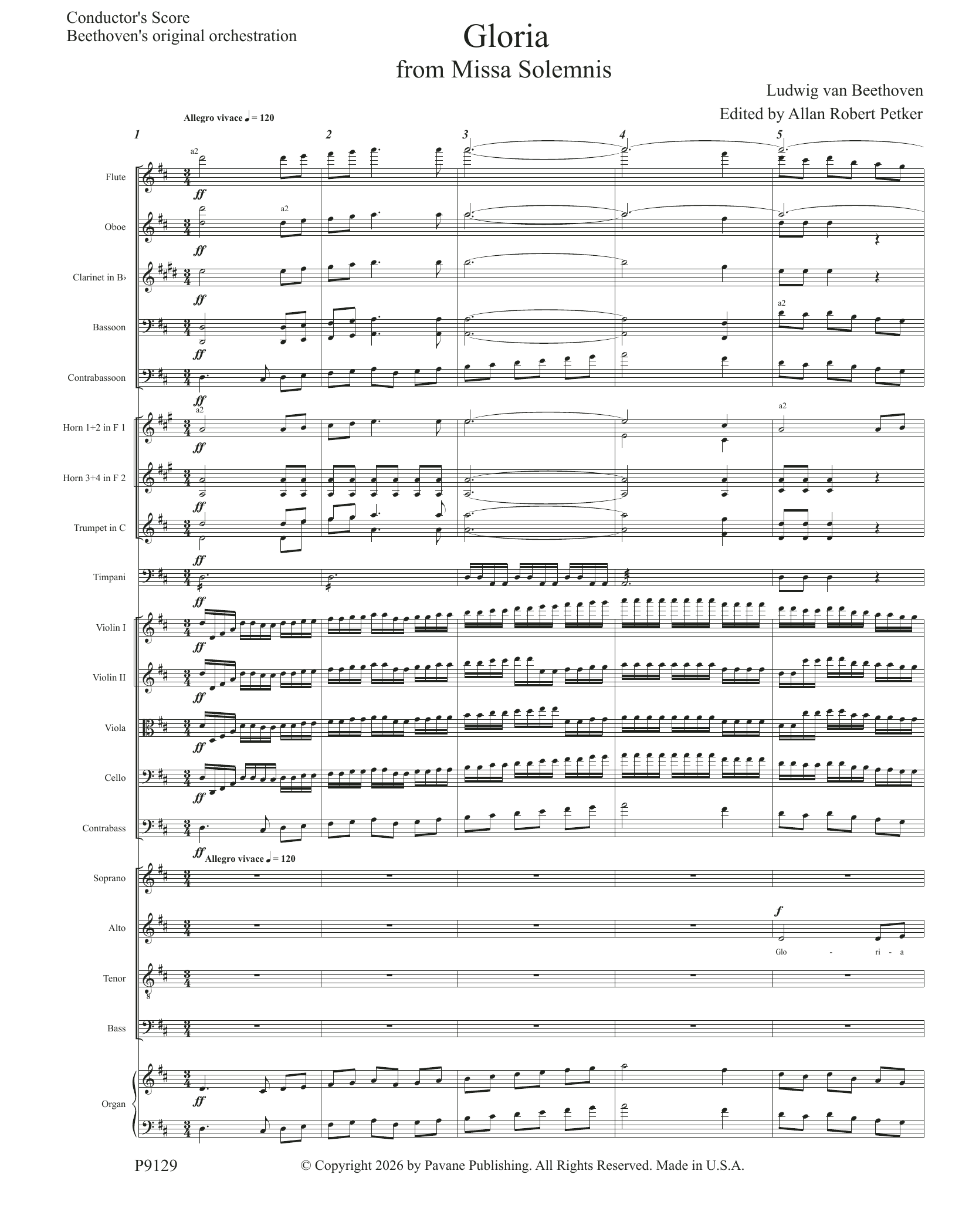

Gloria From Missa Solemnis (arr. Petker) (Full Orchestra): Choral Instrumental Pak
By Ludwig Van Beethoven / Arranged by Allan Robert Petker
Item: 35-PK01827016
$100.00
Pickup currently not available
Buy Extra Parts (Digital PDF Download)
Parts Added to Cart!
Description
Full Orchestra accompaniment score and parts


Gloria From Missa Solemnis (arr. Petker) (Full Orchestra): Choral Instrumental Pak isn't in MakeMusic Cloud just yet...but it could be. Let us know you'd like to see it, and you'll help shape what comes next. In the meantime, start a free trial and dive into thousands of interactive titles your students can play along with today.
Request This Title
Tell us you want it.
Start Your Free Trial
Explore everything that's ready to play right now.
Sample Audio
No sample audio found.
Sample Video
No sample videos found.
Additional Details
Publisher:
Hal Leonard
SKU:
35-PK01827016
More about this title
About the Composer: Ludwig Van Beethoven
Ludwig van Beethoven (1770–1827) fundamentally transformed the symphony and concerto, expanding their emotional range and structural possibilities. His work bridges Classical form with Romantic expression, and his choral writing set the standard for generations of composers who followed.
Why we love this
Petker's orchestration makes one of Beethoven's most jubilant choral movements accessible to ensembles that might otherwise lack the resources to program it. The Gloria radiates confidence and joy, and this arrangement preserves that infectious energy while fitting the practical needs of community and school orchestras.
What to expect
A surge of light and affirmation fills the hall. Beethoven's Gloria moves forward with propulsive energy, its melodies confident and singable, and the orchestration supports without overwhelming. You feel the classical certainties of C major and predictable harmonic motion, but with Romantic warmth and occasional unexpected pivots that keep the ear engaged.
Who it's for
Choral directors and orchestra directors running strong community or school programs who want to program a substantial work without the complexity of staging or the expense of a full symphonic arrangement. This is ideal for groups with solid singers and competent orchestral players seeking a concert closer with real weight.
How to get the most out of it
- Balance the choral line carefully against the full orchestra; the singers should project without straining, especially through climactic moments where the accompaniment thickens.
- Establish a solid harmonic foundation in the string section before layering in winds, which will help the singers find their pitch across longer phrases.
- Give attention to the text setting and articulation patterns, which drive the rhythmic momentum and prevent the piece from sagging even at moderate tempos.
- Rehearse the orchestra and chorus separately first to lock down their respective parts, then integrate gradually to ensure the ensemble doesn't lose coordination during quick harmonic changes.
How to use it
Place this as a second half opener or finale on a concert pairing it with lighter classical works or earlier period pieces; its jubilant character and familiar harmonic language make it an ideal anchor point for mixed programming. The piece also serves well as a spring concert centerpiece, where fuller attendance and outdoor venues can accommodate both chorus and orchestra.
Skills your students will build
- Singing sustained melodic lines while tracking a moving harmonic foundation
- Coordinating choral and instrumental entrances across longer formal structures
- Balancing dynamic control in ensemble contexts with multiple voice parts
- Reading and responding to tempo and articulation cues in score-based rehearsal
- Maintaining intonation stability in major keys with frequent harmonic motion